

Maddy summaryHB 137, the "Gabe Torres Act," expands death benefits under North Carolina's Public Safety Employees' Death Benefits Act to include public safety workers (like police, fire, and emergency personnel) who are killed while traveling to or from work. The bill amends the law to define "official duties" to explicitly cover commuting between home and work, as well as travel for training or responding to emergencies. It also appropriates $300,000 in recurring funds for these expanded benefits, effective July 1, 2025. This change directly affects eligible families of covered public safety employees who die during work-related travel, ensuring they qualify for death benefits previously limited to on-duty incidents.
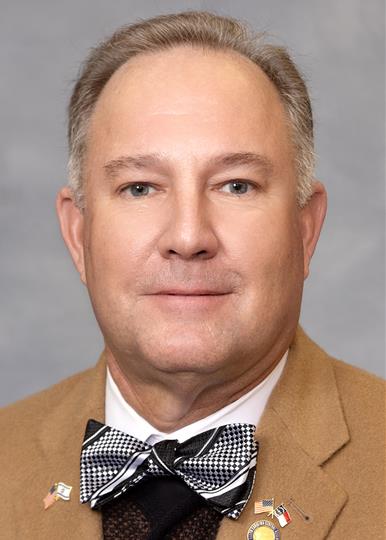
Rep. Jeff McNeely
Sponsored bills
Maddy summaryHB 276 expands the definition of "killed in the line of duty" for firefighters to include deaths caused by specific cancers that previously qualified them for benefits under North Carolina's Firefighters' Cancer Insurance Program. The bill adds seven specific cancers (like mesothelioma and testicular cancer) to the list and includes any cancer diagnosis that already provided benefits under the existing program. It also formally links the Firefighters' Health Benefits Pilot Program to the Cancer Insurance Program, ensuring consistent coverage, and appropriates $2 million annually for related death benefits starting July 1, 2025. This change directly affects firefighters diagnosed with covered cancers and their families, who will now qualify for death benefits under the Public Safety Employees' Death Benefits Act.
Maddy summaryHB 52, the "Protect Those Who Serve and Protect Act of 2025," increases penalties for assaults against public safety personnel and their animals. It creates a new Class I felony offense for throwing, spraying, or projecting substances (like water) at public safety officers or law enforcement/search and rescue animals while they are on duty or due to their role. The bill also prohibits intentionally pointing laser devices at these protected individuals or animals during duty. These changes update existing assault laws to explicitly cover a wider range of emergency workers (including firefighters, medical staff, National Guard members, and school employees) and add specific protections for animals used in public safety.
Maddy summaryHB 43 designates the Carolina BalloonFest in Statesville as North Carolina's official state balloon rally. The bill amends state law to formally recognize this annual October event, which has been held since 1974 and features hot air balloon activities, entertainment, and community fundraising. This designation is ceremonial and does not create new regulations or funding, simply granting the festival official status under state statute.
Maddy summaryHB 362 prohibits the intentional release of substances or technologies within North Carolina aimed at altering weather, temperature, or sunlight - including stratospheric aerosol injection (SAI), cloud seeding, and electromagnetic emissions. It defines "atmospheric modification" broadly to cover activities affecting climate, agriculture, health, or security, while explicitly excluding licensed pesticide applications by aircraft. The law makes it illegal to intentionally inject or disperse materials for such purposes and directs the Environmental Management Commission to create implementing rules. This bill directly affects entities or individuals conducting weather-altering experiments or technologies within the state. The measure is currently in committee referral after passing its first reading in the North Carolina House.
Maddy summaryHB 11 would allow North Carolina taxpayers to deduct overtime pay, up to $2,500 in bonus pay (defined as cash awards for workplace dedication), and reported tips from their taxable income. It applies to individuals and married couples filing jointly, with each spouse eligible for separate deductions. The bill specifically defines "bonus pay" to exclude tips and requires taxpayers to provide documentation to claim the deduction. This policy change would take effect for tax returns filed in 2025.
Maddy summaryHB 319 appropriates $500,000 from the state General Fund to Hispanic Grassroots, a nonprofit organization serving North Carolina's Hispanic community. The funds will support its existing education outreach programs, including scholarship assistance for private school choices, small business development, healthcare education, and civics classes to help residents navigate government services. This one-time grant, effective July 1, 2025, directly benefits Hispanic Grassroots' current services for Hispanic residents across the state. The bill does not create new programs but provides targeted funding for established community initiatives.
Maddy summaryHB 314 creates a faster legal process for property owners (or their authorized representatives) to remove people occupying their residential property without legal right, excluding tenants who have overstayed their lease. To use this process, the owner must file a sworn affidavit with the clerk of court (paying a $25 fee) proving the occupant entered unlawfully after the owner acquired the property, was told to leave, paid no rent, and isn’t a tenant. Law enforcement must remove the occupant within 24 hours of receiving the affidavit, with the owner able to change locks afterward. The bill specifically excludes occupants with valid leases or rental agreements and requires proof that no other legal agreement or payment exists.
Maddy summaryHB 2 requires North Carolina public high schools to accept cash for admission to interscholastic athletic events and provide free entry to seniors with a Tar Heel Card (issued by the Department of Health and Human Services). It directly affects students, families, and seniors attending high school sports events by changing payment rules for admission fees. The bill mandates that schools must accept cash at the gate and honor Tar Heel Cards for free admission upon presentation. These requirements apply starting the 2025-2026 school year. The law amends state education rules governing athletic activity fees.
Maddy summaryHB 49, the Filial Debt Fairness Act, clarifies North Carolina's filial responsibility law by explicitly stating that adult children are **not liable for debts their parents incurred** (such as medical bills or loans). The bill amends Section 14-326.1 to clarify that while adult children may still face misdemeanor charges for failing to support a sick or unable-to-work parent (without reasonable cause), they cannot be held responsible for their parents' pre-existing debts. This directly affects adult children who might otherwise be sued for their parents' financial obligations. The law aims to prevent unintended liability for parents' debts while maintaining the existing requirement for children to support parents in need.