

Maddy summaryHB 365, the Workforce Education Act, revises North Carolina's community college funding model to base allocations on student enrollment in workforce-focused programs like career training and continuing education, starting in 2025-2026. It creates an Enrollment Increase Reserve (funded with $6 million initially) to provide additional support to colleges experiencing enrollment growth exceeding 5% or 325 students, preventing funds from reverting to the general budget. The bill also expands funding for cooperative high schools in underserved areas, with tiered payments based on county development status (e.g., $740,000 for first high schools in "Tier One" regions). These changes directly affect community colleges, public school students accessing career programs, and participating high schools seeking to expand workforce education opportunities.
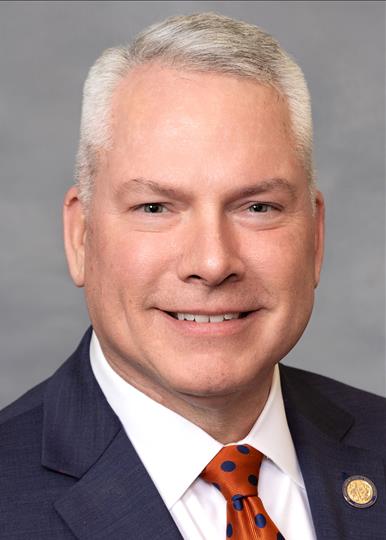
Rep. Grant Campbell
Sponsored bills
Maddy summaryHB 11 would allow North Carolina taxpayers to deduct overtime pay, up to $2,500 in bonus pay (defined as cash awards for workplace dedication), and reported tips from their taxable income. It applies to individuals and married couples filing jointly, with each spouse eligible for separate deductions. The bill specifically defines "bonus pay" to exclude tips and requires taxpayers to provide documentation to claim the deduction. This policy change would take effect for tax returns filed in 2025.
Maddy summaryHB 242 adds freestanding psychiatric hospitals (licensed, Medicare-certified facilities primarily providing psychiatric care that are not state-owned) to North Carolina’s Medicaid Healthcare Access and Stabilization Program (HASP). This expands the existing program - which currently reimburses acute care hospitals - to include these psychiatric hospitals, providing them with increased Medicaid reimbursements. The funding will come from a new quarterly assessment levied on the psychiatric hospitals themselves, calculated as a percentage of their hospital costs. The bill does not change patient eligibility but alters how these specific hospitals receive Medicaid payments through the HASP program.
Maddy summaryHB 2 requires North Carolina public high schools to accept cash for admission to interscholastic athletic events and provide free entry to seniors with a Tar Heel Card (issued by the Department of Health and Human Services). It directly affects students, families, and seniors attending high school sports events by changing payment rules for admission fees. The bill mandates that schools must accept cash at the gate and honor Tar Heel Cards for free admission upon presentation. These requirements apply starting the 2025-2026 school year. The law amends state education rules governing athletic activity fees.
Maddy summaryHB 49, the Filial Debt Fairness Act, clarifies North Carolina's filial responsibility law by explicitly stating that adult children are **not liable for debts their parents incurred** (such as medical bills or loans). The bill amends Section 14-326.1 to clarify that while adult children may still face misdemeanor charges for failing to support a sick or unable-to-work parent (without reasonable cause), they cannot be held responsible for their parents' pre-existing debts. This directly affects adult children who might otherwise be sued for their parents' financial obligations. The law aims to prevent unintended liability for parents' debts while maintaining the existing requirement for children to support parents in need.
Maddy summaryHB 289 adds one new seat to North Carolina's Criminal Justice Education and Training Standards Commission, specifically allowing the North Carolina Police Benevolent Association (PBA) to select a full-time sworn law enforcement officer to serve on the Commission. This amendment increases the Commission's membership from 35 to 36 members by adding the PBA representative to the existing list of appointed positions. The initial appointee selected by the PBA would serve a three-year term beginning July 1, 2025, with subsequent appointees serving three-year terms as determined by the PBA. The bill does not change training standards or requirements, only the composition of the Commission that oversees them.
Maddy summaryHB 296 establishes a $89.5 million program to provide financial assistance to North Carolina corn farmers who suffered crop losses due to 2024 disasters like drought and hurricanes in USDA-designated disaster counties. Farmers must verify losses using USDA forms or equivalent documentation within 45 days, with payments calculated using county yield averages and state price data. Funds can only be used for agricultural recovery expenses like replanting or equipment repair, and recipients must provide proof of eligible spending. The program builds on existing state disaster funds and requires strict documentation to prevent misuse, with potential audits and repayment for inaccurate claims.
Maddy summaryHB 310 proposes a constitutional amendment to North Carolina that would require all eminent domain takings (government seizure of private property) to serve a "public use" and mandate fair compensation determined by a jury. It directly affects property owners, local governments, and utilities by restricting when property can be taken and ensuring compensation is set through a jury trial. The bill also updates existing law (G.S. 40A-3) to clarify which entities (like utilities or local governments) may exercise eminent domain for specific projects. The amendment must be approved by voters in the 2026 general election to take effect.
Maddy summaryHB 280 allocates $30,000 in one-time state funds to support the North Carolina Senior Tar Heel Legislature, a program for older residents to engage with state policy. The funding, from the General Fund for the 2025-2026 fiscal year, covers operational costs for this existing program established under state law. It directly affects the Senior Tar Heel Legislature by providing financial resources for its activities. The bill becomes effective July 1, 2025, and does not create new policy but enables the program's continued operation.
Maddy summaryHB 222 appropriates $217 million from the State Emergency Response Fund to North Carolina's Office of Recovery and Resiliency (NCORR) for homeowner recovery projects related to Hurricanes Matthew and Florence. The bill requires NCORR to submit detailed monthly reports on fund usage, including expenditures and project progress, and mandates weekly financial reports to the State Auditor for oversight. It also establishes a public online dashboard tracking funds versus actual spending and includes a clawback provision to return unused funds to the Savings Reserve after projects conclude. The law revises NCORR's responsibilities, ending its role in future storm recovery programs.