

Maddy summaryHR 563 adopts the permanent rules for the North Carolina House of Representatives during the 2025 Regular Session. These rules establish procedural guidelines including session hours (e.g., no Friday sessions in January and February, adjournment by 10:00 PM on Mondays and 9:00 PM on other days), quorum requirements, and the order of business for legislative proceedings.
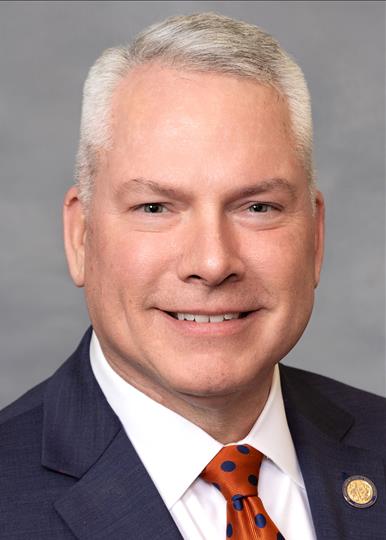
Rep. Grant Campbell
Sponsored bills
Maddy summaryThis bill's title ("Ensuring Patient Safety with Mail Order Medications") does not match its actual content. The bill, formally titled "AN ACT REVISING ABORTION-INDUCING DRUG LAWS," restricts the mailing of abortion-inducing drugs in North Carolina. It prohibits mailing such drugs to pregnant women unless a qualified physician provides in-person counseling 72 hours prior, all other informed consent requirements are met, and the drugs are FDA-approved. Violations carry $5,000 fines per offense or Class H felony charges, and the bill creates civil remedies allowing women, parents, or the Attorney General to sue for damages or injunctions. The bill is currently pending in committee (referred March 31, 2025) and would take effect December 1, 2025.
Maddy summaryHB 566 establishes a competitive grant program to support North Carolina's Principal Fellows Program, directly affecting school leader preparation programs and future principals. It provides forgivable scholarship loans to participants in these programs (repaid only if they don’t work in North Carolina schools) and grants to eligible entities to develop innovative principal training methods. The bill sets specific grant terms, including 2-6 year durations for loan programs and 1-year terms for innovation grants, with funding capped at $250,000 per recipient annually. Recipients must report on key metrics like program completers’ placement rates in high-need schools and their performance evaluations. The program also allocates funds for administrative costs and program monitoring, requiring public sharing of non-identifiable materials to promote best practices.
Maddy summaryHB 523 allows certified school social workers in North Carolina public schools to qualify for education-based salary supplements if they hold a master's degree (or higher), regardless of whether a master's degree is required for their state license. This directly affects school social workers who meet the degree requirement but previously might have been ineligible due to licensure rules. The bill amends state law to include them in the eligibility group for these supplements, which were previously limited to certain roles like school nurses or personnel where a master's degree was licensure-required. The law appropriates $500,000 for the 2025-2026 school year to fund this change and takes effect July 1, 2025.
Maddy summaryHB 534 appropriates $700,000 from North Carolina's General Fund for the 2025-2026 fiscal year to establish sexual assault nurse examiner (SANE) training programs at Rowan-Cabarrus Community College and Wake Technical Community College. Each college receives $350,000 to hire a full-time faculty member ($105,000), a clinical coordinator ($105,000), purchase equipment/supplies ($45,000), and cover program development and accreditation costs ($95,000). The bill directly affects these two community colleges and future healthcare professionals seeking SANE certification. It creates a concrete funding mechanism to expand training capacity for nurses specializing in sexual assault victim care.
Maddy summaryHB 488 modifies North Carolina's school grading system to separate achievement (current student performance) and growth (improvement over time) scores for all schools. It requires the State Board of Education to assign distinct letter grades (A-F) for both achievement and growth using specific scoring scales (e.g., 85+ for an A in achievement, 90+ for an A in growth). Schools must display both grades prominently on their websites, and parents of students at schools earning a D or F in either category receive written notice. The overall school performance grade combines achievement (80%) and growth (20%) scores on a 100-point scale. This bill directly affects all public schools in North Carolina and their reporting requirements.
Maddy summaryHB 486 appropriates $1 million from North Carolina's General Fund to Blue Star Families, Inc., a nonprofit organization, for specific military family support programs. The funds will directly support military spouses through career development (via a Fayetteville chapter), strengthen military families, and provide caregiver services for veterans and military personnel. The allocation is structured as $400,000 for career programs, $300,000 for family strengthening, and $300,000 for caregiver services, all for the 2025-2026 fiscal year. The bill becomes effective July 1, 2025, and focuses solely on funding existing nonprofit services without altering laws or creating new requirements.
Maddy summaryHB 47, the Disaster Recovery Act of 2025 - Part I, allocates $524 million from the Helene Fund to support recovery efforts in North Carolina counties impacted by Hurricane Helene. The bill directs funds to specific programs including home reconstruction ($120 million), agricultural crop loss assistance ($200 million), road and bridge repairs ($100 million), small business infrastructure grants ($55 million), debris removal ($20 million), fire department equipment ($10 million), and tourism promotion ($4 million). These resources directly assist residents, farmers, local governments, and businesses in designated hurricane-affected counties by addressing immediate rebuilding needs and supporting economic recovery. The bill requires programs to align with federal disaster recovery guidelines to maximize potential federal reimbursement, with reporting requirements for certain initiatives.
Maddy summaryHB 430 would raise North Carolina's legal sales age for all tobacco and nicotine products (including e-cigarettes and vaping devices) to 21. It requires retailers to obtain a tobacco sales permit and verify customers' ages using acceptable ID. The bill directly affects tobacco retailers (who must get permits) and youth under 21 (who would be barred from purchasing these products). Key provisions include defining "vapor products" and establishing penalties for violations, such as fines up to $1,000 for repeat offenses.
Maddy summaryHB 463 establishes a supplemental insurance plan for North Carolina first responders diagnosed with specific mental health conditions (like anxiety, depression, or PTSD) directly resulting from their job. It provides three key benefits: up to $5,000 annually for out-of-pocket mental health costs, 75% of salary or $5,000 monthly (max 12 weeks/year) for leave due to treatment, and disability benefits (75% salary or $5,000/month, max 36 months) if unable to work. Eligibility requires a job-related diagnosis, current employment as a defined first responder (including police, firefighters, EMTs, and dispatchers), and exclusion from workers' compensation benefits. The plan aims to support recovery and return to duty while limiting benefits to cover gaps not met by other sources.