

Maddy summaryHB 846 provides tuition discounts for children of teachers with significant experience in North Carolina public schools. Specifically, it offers a 50% tuition discount for children of 12-year teachers, a 75% discount for children of 16-year teachers, and full tuition waivers for children of 20-year teachers (defined as teachers with 20+ years of service). The discounts apply to children aged 17-24 enrolled in college, limited to 54 months for bachelor's degrees or program completion. The bill appropriates $2 million for the 2025-2026 fiscal year to fund these waivers and requires a report on costs by February 2026. It does not address the broader "retention and recruitment" elements mentioned in the title, as the provided text focuses solely on tuition provisions.
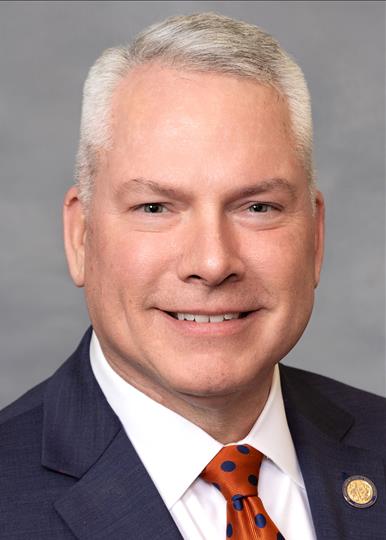
Rep. Grant Campbell
Sponsored bills
Maddy summaryHB 883 establishes a grant program for North Carolina school districts to cover extraordinary costs for students with disabilities, particularly for placements outside regular schools (like private special education programs or homebound settings). School districts can apply for 75% reimbursement of eligible costs - such as specialized staff salaries, materials, or private school tuition - provided these costs exceed four times the state average per-pupil expenditure for disabilities. The bill requires annual IEP reviews, mandates that districts maintain legal responsibility for students in private placements, and directs the Department of Public Instruction to report on placements and costs by March 2026. It appropriates $1 million for the 2025-2026 fiscal year to fund this program.
Maddy summaryHB 384 would allow enlisted members of the North Carolina National Guard (ranks E-1 to E-5) who live in North Carolina to deduct their federal basic military pay from their state income tax. This policy change applies only to their federal service pay, not other income, and would take effect for taxes filed in 2025 and later. The bill amends North Carolina’s tax code to include this deduction for qualifying National Guard members. It does not alter federal tax treatment or apply to higher ranks or other military personnel.
Maddy summaryHB 800 directs North Carolina's Department of Health and Human Services to study the effectiveness of state child care programs like NC Pre-K and Smart Start, including funding allocation and quality rating systems, with findings due by April 2026. It also allocates $10 million for a pilot program that automatically enrolls preschool-age children (8 weeks-5 years) of full-time licensed child care teachers in state subsidy programs, provided teachers commit to completing early childhood education coursework within 18 months. The pilot targets counties with the highest historical child care capacity loss, requires centers to accept standard subsidy rates without extra fees, and mandates quarterly participation reports starting in 2026. This directly affects licensed child care teachers and their preschool children, aiming to improve child care access and workforce retention.
Maddy summaryHB 790 prohibits the sale of tobacco, vape, and alternative nicotine products within 1,000 feet of any public or nonpublic school building. It directly affects vape and tobacco shops located near schools, banning sales in those zones while excluding home schools and colleges. The law includes an exception for incidental sales tied to a business's primary operations but classifies violations as Class 2 misdemeanors. The bill takes effect December 1, 2025, and applies to offenses occurring on or after that date.
Maddy summaryHB 796, the Student Mental Health Line Awareness Act, requires all North Carolina public schools serving grades 6-12 to print three specific suicide prevention contact numbers on new student identification cards. The mandated information includes the 988 Lifeline (call/text), Crisis Text Line (text HOME to 741741), and the NC Statewide Warmline (1-855-733-7762), displayed prominently on the ID. Schools must verify these numbers are current annually and use updated contact information. The bill applies to local school boards, charter schools, regional schools, and laboratory schools, but explicitly states it does not require issuing student IDs. It takes effect for the 2025-2026 school year.
Maddy summaryHB 794 mandates the North Carolina State Highway Patrol to study and develop recommendations on four specific areas: overall and regional staffing needs, and overall and rank-specific salary scales. The study requires the Patrol to assess staffing requirements based on state and regional needs, along with salary structures for all ranks. The Patrol must submit findings and recommendations to relevant legislative committees by March 1, 2026. This bill is procedural and does not enact new policies or funding; it solely requires a study to inform future legislative decisions.
Maddy summaryHB 780 appropriates $2 million to expand the All Pro Dad program in North Carolina through Family First, Inc., funding school-based chapters, father-child engagement events, and parenting resources. It also creates the "Responsible Fatherhood NC" program under the Department of Health and Human Services, requiring a nonprofit manager to run a statewide media campaign, provide father-focused resources, and promote existing fatherhood initiatives. The bill directs grants to community organizations addressing fathers' needs - such as employment, child support, and parenting skills - with priority given to areas facing high unemployment, incarceration, or single-parent households. The program directly supports North Carolina fathers and their children, aiming to improve family well-being through increased paternal involvement.
Maddy summaryHB 382 allows North Carolina's Wildlife Resources Commission to issue elk hunting permits through a raffle and an auction for the 2026 season. Residents can enter a $20-per-ticket raffle (max 30 tickets for $500), while a nonprofit focused on elk conservation must conduct an auction where the nonprofit keeps ≤25% of proceeds, with all other funds going to elk conservation. Permits are nontransferable, and the Commission must reserve 50% of raffle permits for North Carolina residents in future seasons. All revenue supplements existing elk management funding, and the Commission must report annually on program effectiveness to legislative committees.
Maddy summaryHB 664 removes positron emission tomography (PET) scanners from North Carolina's Certificate of Need (CON) review process. This means healthcare facilities seeking to purchase PET scanners will no longer need state approval through the CON program. The bill specifically repeals a section of state law (G.S. 131E-176(16)f1.8) that previously required this review. The change directly affects hospitals and medical centers planning to acquire PET scanning equipment. This is a procedural adjustment to reduce regulatory requirements for a specific medical technology.