

Maddy summaryHB 78 prohibits North Carolina law enforcement agencies and officers from assisting U.S. Immigration and Customs Enforcement (ICE) with immigration enforcement activities - such as arrests or warrant service - in places of religious worship (churches, synagogues, etc.), elementary/secondary schools, and hospitals. The bill makes any agreements with ICE that violate this prohibition void and could lead to suspension or loss of law enforcement certification for officers who ignore the ban. It explicitly states that state law enforcement may still enforce North Carolina’s laws as usual, but not for immigration enforcement in these protected locations. The bill applies to all current and future law enforcement agreements involving ICE.
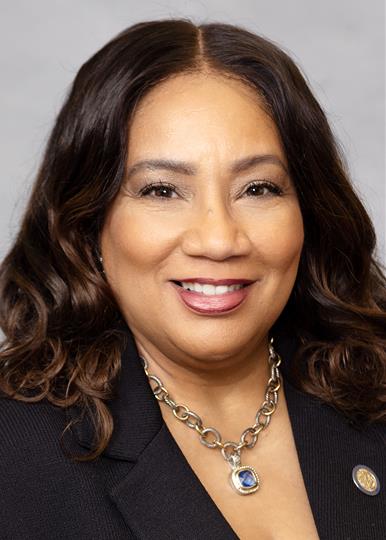
Rep. Amber Baker
Sponsored bills
Maddy summaryHB 77 requires North Carolina state agencies to evaluate the cumulative environmental impact of proposed permits on minority and low-income communities before approving them. It directly affects developers seeking permits for mining, solid waste facilities, hazardous waste sites, and other projects, as well as the communities near these sites. Key provisions mandate that agencies deny permits if proposed actions would disproportionately harm these communities when considering existing pollution sources in the area, and require detailed impact analyses in all relevant reports and plans. The law takes effect July 1, 2025, applying to pending permit applications on that date.
Maddy summaryHB 80 prohibits North Carolina law enforcement agencies and officers from assisting U.S. Immigration and Customs Enforcement (ICE) with immigration enforcement at farms or construction sites. The bill specifically bans police and sheriffs from helping ICE arrest individuals or serve removal warrants on agricultural land (including farming, livestock processing) or on permitted construction sites with valid permits. It also voids any existing agreements between local law enforcement and ICE that would violate this rule, and officers who violate it risk losing their certification. The law does not prevent local police from enforcing state laws but explicitly separates immigration enforcement from agricultural and construction site operations.
Maddy summaryHB 90 provides a 3% cost-of-living adjustment (COLA) to retirement allowances for retirees in North Carolina's Teachers', State Employees', Judicial, Legislative, and Local Governmental Retirement Systems. The increase applies to retirees who retired on or before specific dates (ranging from July 1, 2024, to January 1, 2025), with those who retired later receiving a proportional increase based on months served during 2024-2025. The bill appropriates $250 million from the General Fund to fund this adjustment, effective July 1, 2025. It directly affects current retirees in these five systems by increasing their monthly payments.
Maddy summaryHB 60 increases Medicaid dental reimbursement rates from 35% to 46% of average dentist charges (2023 rates) to align with neighboring states. The bill allocates $52 million annually from North Carolina's General Fund, matched by $95 million in federal funds, to cover this rate increase starting July 1, 2025. It directly affects dentists who accept Medicaid patients and Medicaid beneficiaries seeking dental care, aiming to boost provider participation and prevent costly emergency treatments. The change addresses years of stagnant rates that reduced dental provider enrollment in Medicaid.
Maddy summaryHB 65 authorizes North Carolina's Division of Motor Vehicles to issue a special license plate for members of the Sigma Gamma Rho Sorority. The plate would display the sorority's symbol, name, and motto "Greater Service, Greater Progress" on vehicles owned by registered members. This bill adds the Sigma Gamma Rho plate to the existing list of special registration plates under state law. It does not change vehicle fees or impose new requirements, simply expanding plate options available to eligible sorority members.
Maddy summaryHB 39 excludes motor vehicles owned by veterans with a 100% disability rating certified by the U.S. Department of Veterans Affairs from North Carolina property tax. It amends state tax law to add these vehicles as a designated exempt class under G.S. 105-275. The exclusion applies to vehicles registered on or after January 1, 2026. This policy directly affects eligible disabled veterans who own motor vehicles, reducing their property tax burden. The bill does not change eligibility criteria or tax rates for other vehicle classes.
Maddy summaryHB 55 appropriates $250,000 annually from the General Fund to the Department of Health and Human Services for the Autism Society of North Carolina's IGNITE Program. The funds will support activities and education groups designed to help young adults with autism develop independence and social skills during their transition to adulthood. This recurring funding applies to the 2025-2027 fiscal biennium and becomes effective July 1, 2025. The bill directly affects the Autism Society of North Carolina and the young adults with autism it serves through the IGNITE Program.
Maddy summaryHB 36 requires North Carolina's Department of Veterans and Military Affairs to improve maintenance at all four state veterans cemeteries, directly affecting veterans' families and cemetery operations. The bill mandates addressing specific issues like headstone installation delays, equipment damage to graves, drainage problems, debris, and poor grounds appearance, while allowing military groups to volunteer for upkeep. It also directs the department to review and adjust funeral service policies, including chapel-only options, service duration, attendee limits, and grave visitation rules during services. The department must submit a report on these changes to legislative committees by October 1, 2025.
Maddy summaryHB 12 would require North Carolina and all its local governments to observe Eastern Standard Time year-round, eliminating the biannual clock changes for daylight saving time. This bill directly affects state agencies, local municipalities, and residents by keeping the state on standard time permanently, as permitted under federal law (the Uniform Time Act of 1966). The key provision amends state law to mandate year-round standard time, aligning with a federal provision that allows states to forgo daylight saving time. The bill would take effect on March 8, 2026, if enacted. This is a procedural change to time observance, not a new policy affecting services or regulations.