

Maddy summaryHB 280 allocates $30,000 in one-time state funds to support the North Carolina Senior Tar Heel Legislature, a program for older residents to engage with state policy. The funding, from the General Fund for the 2025-2026 fiscal year, covers operational costs for this existing program established under state law. It directly affects the Senior Tar Heel Legislature by providing financial resources for its activities. The bill becomes effective July 1, 2025, and does not create new policy but enables the program's continued operation.
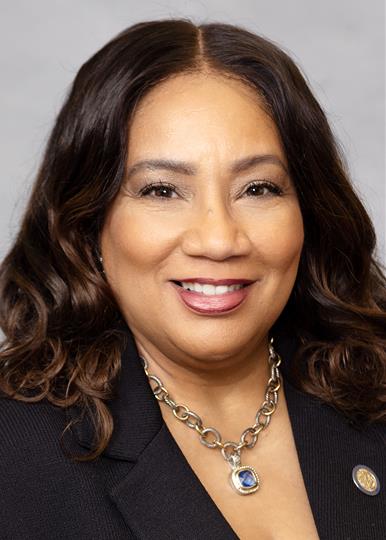
Rep. Amber Baker
Sponsored bills
Maddy summaryHB 269, the "Workforce Freedom and Protection Act," bans non-compete agreements for most North Carolina workers earning under $75,000 annually, prohibiting employers from restricting job mobility after termination or requiring such agreements as a condition of employment. It also directs the Legislative Research Commission to study occupational licensing requirements in key industries like construction, cosmetology, and healthcare to identify unnecessary barriers that may raise costs for consumers or limit job access. The study will evaluate licensing rules based on public safety justification, economic impact, and comparison to national standards, with recommendations for potential reforms. The bill does not immediately change existing licensing but sets a process for reviewing requirements that may disproportionately affect low- and moderate-income workers. The non-compete ban takes effect July 1, 2025.
Maddy summaryHB 267 automatically expunges court records for certain eviction cases in North Carolina, directly affecting tenants (defendants) in summary ejectment proceedings. It requires clerks to automatically delete records 30 days after cases are voluntarily dismissed before a possession order is issued. For cases where defendants win on the merits or lose but wait three years, they may petition for expungement after proving housing stability (e.g., consistent rent payments and no new eviction filings). The bill takes effect October 2025, with required court forms to be developed by September 2025.
Maddy summaryHB 29 would allow tribal enrollment cards issued by State or federally recognized North Carolina tribes to be used as valid ID for purchasing alcohol and tobacco. It amends existing state laws to explicitly include these cards alongside driver's licenses, passports, and military IDs when verifying a customer's age at point-of-sale. Businesses selling alcohol or tobacco would be permitted to accept tribal cards as proof of age under the same rules as other official identification. The policy change would take effect on December 1, 2025, if the bill is enacted.
Maddy summaryHB 262 designates a specific overpass on Interstate 74 crossing South Main Street in Laurinburg, Scotland County, as the "Chief Robert Lee Malloy Overpass." The bill requires the North Carolina Department of Transportation to formally name the structure in honor of Chief Malloy, a local law enforcement officer. This is a ceremonial naming resolution with no policy changes or financial impact, directly affecting the public infrastructure location. The bill is procedural and non-substantive, focusing solely on commemoration.
Maddy summaryHB 260 allows the City of Raeford to redirect $3 million in existing sewer infrastructure funds to extend sewer lines to the Cameron Heights community or other water/wastewater projects. It amends a previous law (S.L. 2023-134) to expand the eligible uses of these allocated funds. The bill directly affects Raeford’s infrastructure planning and the Cameron Heights neighborhood by providing flexibility for sewer system improvements. This is a concrete policy change that modifies how specific state funds may be spent, without creating new funding.
Maddy summaryHB 263 restores local government authority to change zoning to less dense or fewer permitted uses (down-zoning) in Durham and Person Counties and the Cities of Durham and Roxboro, without requiring written consent from all affected property owners. The bill rewrites state law to allow counties or cities to initiate down-zoning amendments directly, reversing a previous requirement (from S.L. 2024-57) that mandated owner consent. This change applies retroactively to December 11, 2024, meaning zoning ordinances affected by the prior law will revert to their pre-December 11 status. The bill directly affects local governments’ zoning powers and property owners in the specified jurisdictions, without altering other zoning processes.
Maddy summaryHB 259 establishes a $127,500 pilot grant program for North Carolina public schools to support participation in Science Olympiad competitions during the 2025-2026 school year. The program provides funding to cover registration fees, materials, travel, and teacher stipends for schools that did not have a Science Olympiad team in the previous year, prioritizing these applicants. Public school units must apply by August 31, 2025, and funds must supplement - not replace - existing school budgets. The Department of Public Instruction will report participation data and unfunded applications to the legislature by May 1, 2026.
Maddy summaryHB 103 exempts members of North Carolina-recognized tribes from needing hunting, trapping, or fishing licenses when hunting or fishing on tribal land (requiring ID verification) or off tribal land (requiring ID plus compliance with reporting, hunter education, and federal stamp rules). It directly affects tribal members recognized under Chapter 71A of North Carolina law, both on tribal property and in state waters/lands outside tribal areas. The bill amends licensing rules to remove fee requirements while maintaining other regulatory obligations like wildlife reporting and federal stamp purchases. It becomes effective October 1, 2025.
Maddy summaryHB 241 allocates $15.8 million in one-time state funds for specific projects in Person County and nearby areas. It provides $10 million for Roxboro’s wastewater plant repairs, $800,000 for Person County’s splash pad construction, and $5 million for Piedmont Community College’s health/trades center equipment. The funds are directed to these specific entities via grants from the Office of State Budget and Management for the 2025-2026 fiscal year. The bill becomes effective July 1, 2025, with no policy changes beyond the funding allocations.