

Maddy summaryHB 374 allocates $3.95 million to fund a financial assistance program for small local governments through the North Carolina Association of Regional Councils of Governments (NCARCOG). It directs NCARCOG to hire 32 additional finance professionals to help small towns and public authorities with financial compliance, prioritizing those with limited resources on the State Treasurer’s assistance list. The bill also provides $3.9 million for NCARCOG to develop a disaster response plan, including training for local financial administration, assistance with federal disaster funds, and infrastructure repair support. These funds, effective July 1, 2025, aim to improve financial management and disaster resilience for smaller communities across North Carolina.
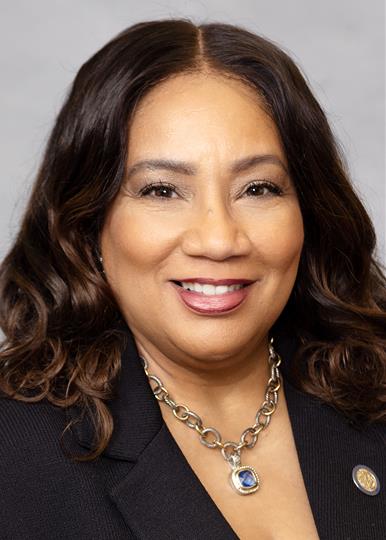
Rep. Amber Baker
Sponsored bills
Maddy summaryHB 367 requires North Carolina's State Crime Laboratory to provide sexual assault victims with updates on the status of their examination kits. Victims will be notified if their kit cannot be tested, if testing is declined for reasons other than untestability, or if the kit is scheduled for destruction. The law mandates that the lab develop procedures for these notifications but specifies victims must provide and maintain current contact information. This law takes effect October 1, 2025, applying to all kits submitted before, on, or after that date.
Maddy summaryHB 366 revives North Carolina's pistol permit law and expands it to require permits for purchasing long guns (like shotguns and rifles), in addition to pistols. It directly affects anyone buying firearms within the state, requiring a sheriff-issued permit after a background check and verification of good moral character. The permit, valid for five years, must be presented during purchases and includes security features to prevent counterfeiting. Exemptions apply to antique firearms and historic edged weapons, but the law applies to all other pistol and long gun transactions starting December 1, 2025.
Maddy summaryHB 361 allocates $1.8 million for training county register of deeds employees, $500,000 for a public awareness campaign about real property fraud, and $30 million in grants to county offices for technology upgrades. The grants will fund digitizing records, purchasing scanning equipment, upgrading software, enhancing digital security, and improving network systems to prevent deed and title fraud. An additional $1 million is reserved for county offices without existing fraud detection systems. The bill becomes effective July 1, 2025, directly affecting county register of deeds offices and the public through reduced fraud risks.
Maddy summaryHB 365, the Workforce Education Act, revises North Carolina's community college funding model to base allocations on student enrollment in workforce-focused programs like career training and continuing education, starting in 2025-2026. It creates an Enrollment Increase Reserve (funded with $6 million initially) to provide additional support to colleges experiencing enrollment growth exceeding 5% or 325 students, preventing funds from reverting to the general budget. The bill also expands funding for cooperative high schools in underserved areas, with tiered payments based on county development status (e.g., $740,000 for first high schools in "Tier One" regions). These changes directly affect community colleges, public school students accessing career programs, and participating high schools seeking to expand workforce education opportunities.
Maddy summaryHB 371 requires North Carolina's Division of Motor Vehicles to provide driver's license handbooks and written tests in Khmer and any language spoken by at least 2% of the state's population. This directly affects applicants who speak these languages by offering materials in their preferred language during the licensing process. The key provision mandates the DMV to add these language options to its standard services, moving beyond English-only requirements. The law takes effect on January 1, 2026.
Maddy summaryHB 242 adds freestanding psychiatric hospitals (licensed, Medicare-certified facilities primarily providing psychiatric care that are not state-owned) to North Carolina’s Medicaid Healthcare Access and Stabilization Program (HASP). This expands the existing program - which currently reimburses acute care hospitals - to include these psychiatric hospitals, providing them with increased Medicaid reimbursements. The funding will come from a new quarterly assessment levied on the psychiatric hospitals themselves, calculated as a percentage of their hospital costs. The bill does not change patient eligibility but alters how these specific hospitals receive Medicaid payments through the HASP program.
Maddy summaryHB 340 requires North Carolina's State Board of Education to develop or purchase a screening assessment to identify academically or intellectually gifted students in all sixth-grade classrooms across public middle schools. The bill directly affects all sixth graders in North Carolina public middle schools by mandating universal screening for gifted identification. Key provisions include appropriating $7 million in recurring state funds for the 2025-2026 fiscal year to cover assessment costs and requiring the screening to be administered to every sixth grader. The law becomes effective July 1, 2025, with the Department of Public Instruction responsible for implementing the screening process.
Maddy summaryHB 325 establishes a two-year pilot program (2025-2026 and 2026-2027) to fund public school field trips to North Carolina's Legislative Building. It provides up to $2,000 per school for transportation costs (bus rental, fuel, driver pay) to participating schools, prioritizing those in counties designated as "Tier 1" under state law. The program is funded with $1.5 million annually from the General Fund, requiring schools to submit budget applications by October 1 and reporting usage to the legislature by February 15 each year. The bill directly affects public school units statewide, with priority given to schools in designated underserved counties.
Maddy summaryHB 289 adds one new seat to North Carolina's Criminal Justice Education and Training Standards Commission, specifically allowing the North Carolina Police Benevolent Association (PBA) to select a full-time sworn law enforcement officer to serve on the Commission. This amendment increases the Commission's membership from 35 to 36 members by adding the PBA representative to the existing list of appointed positions. The initial appointee selected by the PBA would serve a three-year term beginning July 1, 2025, with subsequent appointees serving three-year terms as determined by the PBA. The bill does not change training standards or requirements, only the composition of the Commission that oversees them.