

Maddy summaryHB 611 requires North Carolina public schools to increase full-time assistant principal positions based on student enrollment, directly affecting all local school districts. It mandates funding to achieve specific student-to-assistant-principal ratios: 1:90 students in the 2025-2026 school year ($23.56 million) and 1:80 students starting in 2026-2027 ($57.57 million), with funds supplementing but not replacing existing budgets. The bill, effective July 2025, directs the Department of Public Instruction to allocate these funds through the school building administration allotment. This policy change aims to support school operations and develop future principals by expanding administrative staffing.
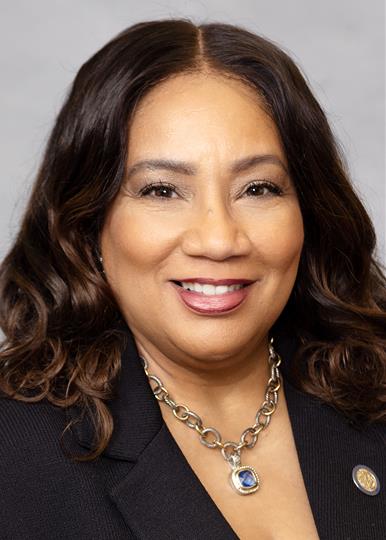
Rep. Amber Baker
Sponsored bills
Maddy summaryHB 603 creates a $40 million revolving loan fund within North Carolina's Housing Finance Agency to cover preconstruction costs (like land surveys, permits, and site work) for workforce housing projects. It directly affects developers building housing affordable to households earning 60%-120% of local median income, requiring them to contribute 20%-35% in project equity. The fund reserves 80% of loans for high-priority counties (tier 1-2) and 20% for other counties, with each loan capped at $1 million. The program requires annual reporting on loan details and becomes effective July 1, 2025.
Maddy summaryHB 604 creates two grant programs to support economic development: the Rural Community Development Grant Program and the Downtown Revitalization Grant Program. Both programs allocate $40 million each from the state budget for 2025-2026, providing grants to local governments (counties and municipalities) to fund projects that improve community amenities like grocery stores, childcare, parks, or downtown infrastructure. Grants require a 1:1 local match, max $2 million per award, and must align with comprehensive plans for revitalization or community growth. The programs aim to reverse rural depopulation, attract business investment, and enhance downtown livability through targeted, competitive funding.
Maddy summaryHB 617 creates a $20 million grant program for North Carolina small farmers with gross income under $300,000, funding equipment (like harvest machinery), infrastructure (such as fencing), and cold storage. It also lowers the income threshold for farm sales tax exemption from $10,000 to $7,500 annually, expanding eligibility for tax relief. The bill directly affects small farmers meeting these income criteria by providing financial support through grants and reduced tax burdens. Grants require applications and prioritize those facing economic hardship, with funding allocated for specific purposes like equipment and the FarmsSHARE program.
Maddy summaryHB 580 updates North Carolina election laws based on recommendations from the State Board of Elections. It requires county boards to keep absentee ballot request records confidential until voting begins, then make daily lists of approved absentee applications public. The bill also sets specific timing rules for counting different ballot types (e.g., election day ballots must start counting immediately after polls close, while early voting ballots can start between 9 AM-5 PM on election day) and mandates counties to notify voters of fixable absentee ballot errors (like missing signatures) with a deadline to correct them by 12 PM on the third business day after the election. These changes directly affect county election boards and voters requesting absentee ballots.
Maddy summaryHB 588 aims to improve the number and quality of school psychologists in North Carolina through multiple funding initiatives. It provides a $650 monthly salary boost and a 12% supplement for certified school psychologists (totaling $8.1 million), establishes a $5 million grant program to fund signing bonuses (up to $5,000) for recruiting new psychologists with a one-year commitment requirement, and creates a $5 million internship program offering stipends at starting salaries. Additionally, it allocates $5 million for a virtual training program at Appalachian State University and $1.6 million to expand school psychology programs at five UNC institutions to double graduate output. The bill also includes an interstate licensure compact to facilitate practice across state lines, with all programs requiring annual reporting to the legislature.
Maddy summaryHB 571 appropriates $500,000 from the state General Fund to the Department of Public Safety for a grant program treating police officers diagnosed with PTSD. It directly affects North Carolina police officers who have received a clinical PTSD diagnosis. The key provision establishes a state-funded grant program to cover treatment costs, with funds allocated for the 2025-2026 fiscal year. The program becomes effective July 1, 2025, and focuses solely on providing financial support for treatment, not on expanding eligibility or altering diagnosis standards.
Maddy summaryHB 545 bans the sale, possession, or transfer of "ghost guns" (unserialized firearms lacking a manufacturer's serial number) and "undetectable firearms" (like plastic or 3D-printed guns that evade metal detectors). It directly affects individuals and businesses that manufacture, sell, or possess these weapons, except for federally licensed firearm manufacturers under ATF rules. The law defines undetectable firearms as those failing airport-style metal detector scans or being made entirely of non-metal materials. Violations carry Class I felony penalties, and the bill takes effect December 1, 2025.
Maddy summaryHB 564 provides a 2% cost-of-living adjustment for retirees in North Carolina's Teachers' and State Employees' Retirement System, Consolidated Judicial Retirement System, and Legislative Retirement System. It increases retirement payments for retirees who retired on or before specific dates (July 1, 2024, for most systems, or January 1, 2025, for the Legislative system) and offers a prorated increase for those retiring between July 1, 2024, and June 30, 2025. The bill appropriates $106.2 million from the General Fund to fund this adjustment, effective July 1, 2025. This policy change directly affects current retirees in these systems by increasing their monthly benefits.
Maddy summaryHB 550 updates North Carolina legislators' travel reimbursement rates to match the current federal IRS business mileage rate and federal employee per diem rates for meals and lodging, effective for travel starting in 2027. It directly affects all state legislators traveling for official legislative duties, including committee work and sessions. The bill sets mileage reimbursement to the IRS standard rate (referencing specific IRS notices) and aligns per diem allowances with federal rates for Raleigh-based travel, as detailed in the 2024 IRS notices. This eliminates separate state rates, instead tying allowances to ongoing federal updates. The change applies to all travel, including out-of-state trips where legislators may choose a flat $26/day meal rate plus lodging receipts.