

Maddy summaryHB 653 lowers the federal funding threshold that would trigger loss of Medicaid coverage for North Carolina's newly eligible expansion recipients. Currently, coverage would end if federal funding for this group drops below 90% compared to non-expansion recipients; the bill reduces this threshold to a lower percentage. If funding falls below the new threshold, Medicaid coverage for this group must discontinue promptly, with state agencies required to notify lawmakers and CMS. The bill affects only those added to Medicaid through the 2014 expansion, not all Medicaid beneficiaries.
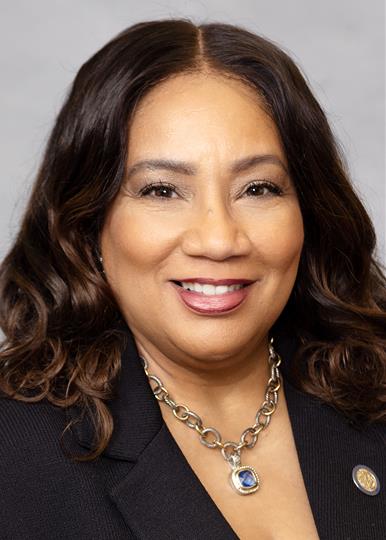
Rep. Amber Baker
Sponsored bills
Maddy summaryHB 644 requires North Carolina's Department of Transportation to study traffic congestion near Fort Bragg, specifically between Vass Road and N.C. Highway 87, using $500,000 in highway funds for the 2025-2026 fiscal year. The study must identify economic benefits of reducing congestion and examine options like expanded rail routes and other surface transportation solutions. This bill directly affects the Fort Bragg military installation and surrounding communities by funding a traffic analysis, but does not implement any traffic solutions itself. It becomes effective July 1, 2025, after the study period.
Maddy summaryHB 658 allows licensed optometrists in North Carolina to provide telehealth services (remote video consultations) to patients within the state, without requiring the optometrist to be physically present in North Carolina or hold a license in the state where they are located during the consultation. This directly affects optometrists licensed in North Carolina who wish to offer remote care to NC patients. The bill specifies that telehealth practice must follow all existing optometry laws and Board rules, and the North Carolina Board of Examiners in Optometry must create implementing rules by December 2025 covering patient records, diagnoses, and telehealth standards. The law takes effect on October 1, 2025.
Maddy summaryHB 621 appropriates $1.5 million from North Carolina's General Fund for the 2025-2026 fiscal year to provide a directed grant to Safe Alliance, Inc. for its Umbrella Center in Charlotte. The funds will directly support the center's services for victims of domestic violence, sexual assault, child abuse, elder abuse, and human trafficking by enabling additional land acquisition and a deceleration lane. The bill requires the funds to be used specifically for expanding these victim services and infrastructure. It becomes effective July 1, 2025, and is currently pending in the House Appropriations Committee.
Maddy summaryHB 599 provides a 7.5% across-the-board salary increase for all North Carolina Forest Service (NCFS) employees, directly affecting approximately 500+ state workers. The bill appropriates $2.6 million for the 2025-2026 fiscal year (effective July 1, 2025) and an additional $5.2 million for 2026-2027 (effective July 1, 2026) from the state general fund. These increases are funded through recurring annual appropriations, meaning the funding is guaranteed each year. The bill requires no new policy changes but allocates specific state budget resources to adjust employee compensation.
Maddy summaryHB 619, the Health Care Security Act, repeals a law that would have ended Medicaid expansion coverage in North Carolina if federal funding dropped below 90%. This change directly affects the state's Medicaid expansion population, ensuring their coverage remains secure regardless of federal funding fluctuations. The bill removes a specific statutory trigger (G.S. 108A-54.3C) that previously threatened automatic discontinuation of benefits. It does not create new programs or alter eligibility but prevents coverage loss due to federal funding changes. The act becomes effective upon enactment.
Maddy summaryHB 586 appropriates $2 million from the state General Fund for the 2025-2026 fiscal year to fund the expansion of the Midtown YMCA in Wilmington, North Carolina. The grant will support the YMCA of Southeastern North Carolina's $15 million project to build a 50,000-square-foot facility on a 10-acre site, directly benefiting youth and families in New Hanover, Brunswick, Pender, and Sampson counties. Key provisions include funding new fitness, aquatic, child care, and educational spaces, with the expansion expected to serve 6,000 additional members and provide water safety lessons to all 2nd graders in New Hanover County. The bill becomes effective July 1, 2025, and requires the funds to be disbursed as a grant to the YMCA.
Maddy summaryHB 579, the NC House Public Access Act of 2025, allocates $91,000 (one-time) and $4,000 annually to install video and audio recording equipment in North Carolina House committee rooms and the chamber. This enables the public to view live legislative sessions online and access recorded sessions for 10 years via the internet. The bill requires committees to maintain audio minutes and written records if they opt not to record video, with advance notice to the public. It directly affects North Carolina residents seeking greater transparency in legislative proceedings.
Maddy summaryHB 585 appropriates $300,000 in recurring funds for the North Carolina Human Trafficking Commission to develop and support a secure, technology-driven reporting and response system focused on survivor-centered care. The system will specifically target western North Carolina, where access to anti-human trafficking resources is limited, and includes funding for a regional coordinator to oversee implementation and partnerships with law enforcement. It also allocates resources for a public awareness campaign to increase system use among at-risk communities and first responders. The bill requires the Commission to coordinate this system as part of its duties under state law.
Maddy summaryHB 589, "The Second Look Act," allows North Carolina courts to reduce prison sentences for certain inmates who have served significant time. It directly affects people sentenced under specific laws (like those for violent crimes) who have served at least 10 years in prison or 50% of their sentence if under 10 years. Courts must consider factors like the person’s age, rehabilitation progress, community safety, and victim input before reducing a sentence. The bill takes effect December 1, 2025, and applies to requests filed after that date.