

Maddy summaryHB 374 allocates $3.95 million to fund a financial assistance program for small local governments through the North Carolina Association of Regional Councils of Governments (NCARCOG). It directs NCARCOG to hire 32 additional finance professionals to help small towns and public authorities with financial compliance, prioritizing those with limited resources on the State Treasurer’s assistance list. The bill also provides $3.9 million for NCARCOG to develop a disaster response plan, including training for local financial administration, assistance with federal disaster funds, and infrastructure repair support. These funds, effective July 1, 2025, aim to improve financial management and disaster resilience for smaller communities across North Carolina.
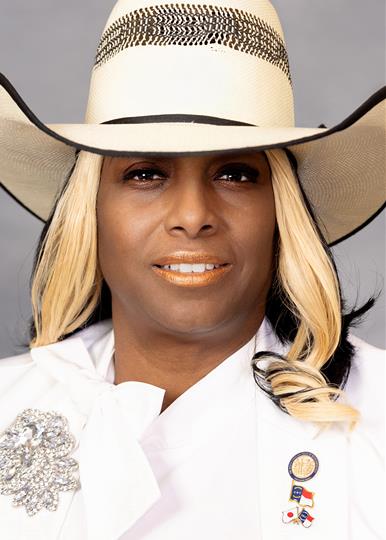
Rep. Kanika Brown
Sponsored bills
Maddy summaryHB 371 requires North Carolina's Division of Motor Vehicles to provide driver's license handbooks and written tests in Khmer and any language spoken by at least 2% of the state's population. This directly affects applicants who speak these languages by offering materials in their preferred language during the licensing process. The key provision mandates the DMV to add these language options to its standard services, moving beyond English-only requirements. The law takes effect on January 1, 2026.
Maddy summaryHB 345 recognizes legal rights for the Dan and Haw River ecosystems in North Carolina, granting them the right to exist, flourish, and maintain natural functions like clean water and biodiversity. It directly affects these specific river watersheds - including all species, tributaries, and dependent ecosystems - and requires state environmental agencies (DEQ, DNR, Wildlife Commission) to protect these rights. The bill establishes that the rivers possess inherent rights to natural water flow, restoration, and freedom from pollution, shifting legal focus from merely regulating human activity to upholding the rivers' ecological health as a legal priority.
Maddy summaryHB 353, the Fair Minimum Wage Act, raises North Carolina's state minimum wage in staged increases, starting at $10 per hour on January 1, 2026, and reaching $18 per hour by January 1, 2030. After 2030, the wage will automatically adjust annually based on inflation using the Consumer Price Index. The bill directly affects hourly workers and employers across North Carolina, requiring higher pay for all covered employees. It also adds provisions allowing workers to recover unpaid wages plus interest, attorney fees, and court costs if employers fail to pay correctly.
Maddy summaryHB 344, the Litter Reduction Act of 2025, requires a deposit on most beverage containers (like soda, water, and alcohol in glass, plastic, or metal) sold in North Carolina, with refunds available at certified redemption centers. It directly affects beverage distributors, retailers (excluding small businesses selling under 250,000 containers yearly), and consumers who purchase these products. The bill establishes a system where consumers pay a deposit at purchase and can return empty containers to redemption centers for a refund, aiming to reduce roadside litter from beverage containers. Key provisions include defining "beverage container," requiring redemption centers to accept containers, and setting recycling standards to avoid downcycling or waste-to-energy processing.
Maddy summaryHB 269, the "Workforce Freedom and Protection Act," bans non-compete agreements for most North Carolina workers earning under $75,000 annually, prohibiting employers from restricting job mobility after termination or requiring such agreements as a condition of employment. It also directs the Legislative Research Commission to study occupational licensing requirements in key industries like construction, cosmetology, and healthcare to identify unnecessary barriers that may raise costs for consumers or limit job access. The study will evaluate licensing rules based on public safety justification, economic impact, and comparison to national standards, with recommendations for potential reforms. The bill does not immediately change existing licensing but sets a process for reviewing requirements that may disproportionately affect low- and moderate-income workers. The non-compete ban takes effect July 1, 2025.
Maddy summaryHB 267 automatically expunges court records for certain eviction cases in North Carolina, directly affecting tenants (defendants) in summary ejectment proceedings. It requires clerks to automatically delete records 30 days after cases are voluntarily dismissed before a possession order is issued. For cases where defendants win on the merits or lose but wait three years, they may petition for expungement after proving housing stability (e.g., consistent rent payments and no new eviction filings). The bill takes effect October 2025, with required court forms to be developed by September 2025.
Maddy summaryHB 29 would allow tribal enrollment cards issued by State or federally recognized North Carolina tribes to be used as valid ID for purchasing alcohol and tobacco. It amends existing state laws to explicitly include these cards alongside driver's licenses, passports, and military IDs when verifying a customer's age at point-of-sale. Businesses selling alcohol or tobacco would be permitted to accept tribal cards as proof of age under the same rules as other official identification. The policy change would take effect on December 1, 2025, if the bill is enacted.
Maddy summaryHJR 157 is a procedural resolution inviting Governor Josh Stein to address a joint session of the North Carolina General Assembly on March 12, 2025. It directs a committee of five House members and five Senate members to extend the invitation and specifies that the governor's cabinet, Council of State members, and state judges may attend. This resolution does not create new policy or affect any laws; it solely schedules a ceremonial address. The invitation is effective upon ratification, as noted in the resolution's text.
Maddy summaryHB 196 appropriates $1.5 million from the General Fund to the North Carolina Museum of Life and Science, Inc., for a new biotechnology exhibit and laboratory. The funds will showcase North Carolina's biotech achievements and promote STEM career interest, directly benefiting the museum and students in the state. The bill creates a specific funding mechanism for this educational project, effective July 1, 2025. As a funding allocation, it does not alter laws or regulations.