

Maddy summaryThis bill allows North Carolina public schools to use an extra three days or 15 hours of remote instruction when they face ongoing emergencies after already using their standard emergency allowance. Schools that have exhausted their initial five-day limit for weather, power outages, or other crises can now count this additional time toward their required school calendar. To ensure accountability, school districts must report details about these extra days and the specific emergencies that caused them to the state by July 1 each year. The legislation also allocates $5,000 in state funds to help cover administrative costs and provide technical support for enforcing these new rules starting in the 2026-2027 school year.
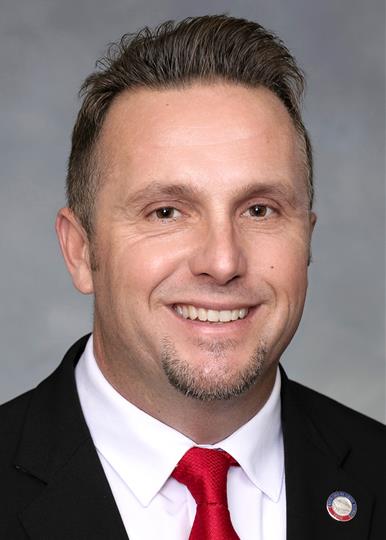
Rep. Brian Biggs
Sponsored bills
Maddy summaryThis bill proposes a constitutional amendment that would require the North Carolina legislature to establish a statewide limit on how much local property tax levies can increase each year. The measure also mandates that any local government wanting to raise property taxes beyond this limit must first obtain approval from a majority of voters in that specific area. Because this change alters the state constitution, it will not take effect immediately but will instead be placed on the November 3, 2026, ballot for voters to decide whether to adopt. If approved by the public, the amendment would legally bind the General Assembly to create the specific tax increase caps mentioned in the text.
Maddy summaryHB 443 proposes a constitutional amendment requiring the Governor to appoint a replacement for certain state officers (Secretary of State, Auditor, Treasurer, etc.) from a list of three nominees provided by the vacating official's political party, if the party submits recommendations within 30 days. This change would apply to vacancies occurring after the amendment's approval and would modify the current process where the Governor appoints without party input. The amendment must be approved by voters in the November 2026 general election to take effect. It directly affects the Governor's appointment authority and the political parties of the affected offices.
Maddy summaryThis bill establishes a two-year pilot program in North Carolina to test data-driven systems aimed at reducing chronic absenteeism, which currently affects one in four public school students. The Department of Public Instruction will select a single public school unit serving up to 15,000 diverse students to implement a vendor-provided platform that offers real-time monitoring, automated family communication, and targeted intervention strategies. Appropriated funds totaling $75,000 will cover technology costs, staff training, and program evaluation, with the pilot running from the 2026-2027 fiscal year through the 2027-2028 fiscal year. By the end of the program, the department must report findings on attendance improvements and operational efficiencies to determine if the initiative should be expanded statewide.
Maddy summaryThis bill modifies the North Carolina Principal Fellows Program to clarify how forgivable scholarship loans are administered and to set specific rules for grant funding. It designates the Authority to manage loan agreements and repayment monitoring while requiring the Commission to select up to eight grant recipients annually for principal preparation and two recipients for innovative training development. The legislation also establishes reporting requirements for grant recipients, mandating the collection of data on student achievement, job placement rates, and retention in high-need schools. Additionally, the bill allows the use of administrative funds from the Trust Fund to cover program operations, staff salaries, and evaluation costs, with limits set at the greater of two percent of appropriated funds or one hundred sixty thousand dollars per year.
Maddy summaryHB 144 is a proposed constitutional amendment that would change how North Carolina's State Board of Education is structured. It requires voters to elect all board members (except the Lieutenant Governor and Treasurer, who are Council of State members) from districts established by the General Assembly, with terms of four years. The Superintendent of Public Instruction would automatically serve as the board's chair (ex officio member) without needing separate election. This amendment must be approved by voters in the 2026 election and would take effect for terms beginning January 1, 2029. It does not change the current composition of the board but alters how members are selected and who serves as chair.
Maddy summaryThis bill, known as the Mike Clampitt 1st Responder Tax Fairness Act, aims to expand tax exemptions for volunteer fire departments and rescue squads in North Carolina. Specifically, it allows these independent groups, which have two or fewer paid employees and are already exempt from state income tax, to avoid paying a highway use tax on specific emergency vehicles like fire trucks, forest firefighting units, and other emergency service vehicles. The change applies to vehicles when a certificate of title is issued on or after July 1, 2026, ensuring these organizations can acquire necessary equipment without incurring this particular tax. By broadening the existing exemption, the legislation directly benefits volunteer responders who operate outside of local government units.
Maddy summaryThis bill creates a pilot program to train new individuals with no prior experience as lead teachers in North Carolina's licensed child care centers. Funded by state money and requiring a local match, the program offers free, intensive training courses through community colleges in selected counties, with graduates receiving a state credential and potential stipends for completing the course and working for a year. The initiative aims to expand the child care workforce by establishing academies across the state, starting in Johnston and Wayne counties, and includes requirements for local partnerships to select additional sites. Additionally, the bill directs the North Carolina Partnership for Children to study the feasibility of liability insurance for providers and update bidding rules for child care grants.
Maddy summaryThis North Carolina bill allows taxpayers to deduct up to $5,000 of unreimbursed costs for prescribed medications and pharmacy fees from their state income tax. The deduction applies to expenses not covered by tax-advantaged accounts like Flexible Spending or Health Savings Accounts and prevents double-dipping if a federal deduction is already claimed for the same year. Effective for tax years starting on or after January 1, 2026, the measure directly affects individuals paying out-of-pocket for prescription drugs who itemize their state taxes.
Maddy summaryHouse Bill 433 allows licensed registered nurses (RNs) to serve as school nurses in North Carolina public schools. The bill prohibits the State Board of Education from requiring a four-year degree for school nurse employment. It specifies that RNs with at least two years of experience in a hospital or health clinic can work as school nurses without needing additional certifications or licenses. These qualified registered nurses will be paid under the certified school nurse pay scale.