

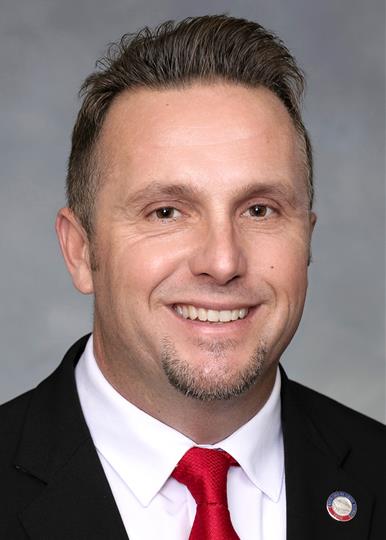
Photo of Brian Biggs
R North Carolina House · District 70 On the 2026 ballot

Rep. Brian Biggs

Compare
Total votes
542
all sessions
Attendance
99%
6 missed
Near the chamber average
With party
99%
of cast votes
Higher than 86% of chamber peers
Bipartisan score
0%
crosses aisle rarely
Lower than 89% of chamber peers
Sponsored
265
bills & resolutions
Near the chamber average
Committees
8
assignments
265 bills and resolutions

Sponsored bills

Total
265
Primary
54
Co-sponsor
211
This page
265
matching current filters
Co-sponsor HB 1163
In committee · North Carolina House · Co-sponsor
Workforce Act of 2026.

Maddy summaryThis bill, titled the Workforce Act of 2026, provides funding and policy changes to expand workforce development programs in North Carolina. It allocates $3.1 million to the Community Colleges System Office to support the ApprenticeshipNC program, which helps connect employers with learners through work-based training. The legislation also directs the Department of Commerce to maintain a list of industry-valued credentials and collect data on wages and job outcomes to better align education with labor market needs. Additionally, it increases financial aid for short-term workforce development grants to help students pursue credentials that are not eligible for federal funding.

In committee May 4, 2026 1 co-sponsor
Co-sponsor HB 1108
In committee · North Carolina House · Co-sponsor
Constitutional Amendment/Permitless Carry.

Maddy summaryThis bill proposes a constitutional amendment in North Carolina to allow law-abiding citizens to carry firearms openly or concealed without needing a permit. The change would apply to any U.S. citizen who has not been convicted of a violent crime or drug offense and has not been declared mentally incompetent, unless they are on property that is legally posted against carrying weapons. While the amendment removes the requirement for a permit, it states that a permit system will still be maintained to help with reciprocity with other states and to facilitate purchasing weapons. The bill does not take effect immediately but must be approved by voters in a referendum scheduled for the November 3, 2026, general election.

In committee Apr 30, 2026 1 co-sponsor
Co-sponsor HB 1081
In committee · North Carolina House · Co-sponsor
Veterans/Hyperbaric Oxygen Therapy/Funds.

Maddy summaryThis bill establishes a program to provide free hyperbaric oxygen therapy to North Carolina veterans diagnosed with traumatic brain injury or posttraumatic stress disorder. The legislation appropriates $3 million from the state General Fund to a nonprofit organization to deliver approximately 15,000 treatments to an estimated 350 eligible veterans over the 2026-2027 fiscal year. The program includes structured clinical care and requires the provider to submit a detailed report on outcomes and fund usage by June 2027.

In committee Apr 30, 2026 1 co-sponsor
Co-sponsor HB 1111
In committee · North Carolina House · Co-sponsor
Military Service Buyback Reduction: Teachers.

Maddy summaryThis bill reduces the cost for North Carolina public school teachers to purchase credit for their military service. Under the new provision, eligible veterans would only need to pay 25% of the usual cost, while the state would cover the remaining 75% through general appropriations. The law applies to full-time employees of the Teachers' and State Employees' Retirement System who served in the U.S. Armed Forces and allows them to buy up to four years of service credit. These changes would take effect on July 1, 2027, for any service credit purchases made on or after that date.

In committee Apr 30, 2026 1 co-sponsor
Co-sponsor HB 1075
In committee · North Carolina House · Co-sponsor
Persistent Domestic Violence Offender Registry.

Maddy summaryThis bill creates a new program in North Carolina that requires individuals convicted of domestic violence to register on a public list if they have at least one prior domestic violence conviction. The State Bureau of Investigation will maintain this registry, which will include the offender's name, date of birth, conviction details, and a photograph, while keeping addresses and social security numbers private. Registration periods last two years for one prior offense, five years for two prior offenses, and ten years for three or more prior offenses, with fees of $150 paid by the offender to cover registry costs. The law takes effect on December 1, 2026, and applies to offenses committed on or after that date, though prior convictions do not need to have occurred by then.

In committee Apr 29, 2026 1 co-sponsor
Co-sponsor HB 434
Failed · North Carolina House · Co-sponsor
Lower Healthcare Costs.

Maddy summaryHB 434, titled "Lower Healthcare Costs," is a procedural bill focused on updating definitions related to health insurance utilization review in North Carolina. It rewrites statutory definitions (e.g., "medical necessity," "clinical peer," "closely related service") within existing insurance regulations but does not introduce new cost-saving mechanisms or policy changes. The bill directly affects insurers, healthcare providers, and covered individuals by standardizing terminology used in prior authorization processes. As a definition-only update, it has no concrete policy impact on healthcare costs or patient access, and the title does not align with its actual scope.

Failed Apr 6, 2026 1 co-sponsor
Co-sponsor HB 491
Failed · North Carolina House · Co-sponsor
Medicaid Rebase Funding.

Maddy summaryHB 491 prepares North Carolina's Medicaid program to implement work requirements if authorized by the federal Centers for Medicare and Medicaid Services (CMS). It requires the state's Division of Health Benefits to negotiate with CMS, notify oversight committees within 30 days of starting talks, and submit detailed reports after CMS approves any work requirements plan. The bill does not enact work requirements itself but establishes procedures for future implementation, including timelines for reporting funding needs. This would directly affect current Medicaid recipients if CMS approves work requirements, though the bill is procedural and conditional on federal approval. The legislation is currently in committee review and has not yet become law.

Failed Oct 23, 2025 1 co-sponsor
Primary HB 775
Passed · North Carolina House · Lead sponsor
Criminal History Checks for School Positions.

Maddy summaryHB 775 requires background checks for three groups: initial members of charter school boards, new educator license applicants, and public school employees applying for positions. It mandates that applicants pay for criminal history checks through the State Bureau of Investigation before receiving approval for charter school board membership, educator licensure, or school employment. The State Board of Education and charter school Review Board review the results to determine if individuals pose safety risks or lack integrity, with decisions requiring written findings. This bill consolidates existing background check requirements into a single process for these school-related positions, applying only to new applicants and initial board members.

Passed Sep 25, 2025 0 co-sponsors
Co-sponsor HB 42
Passed · North Carolina House · Co-sponsor
Back the Blue Pay Act.

Maddy summaryThis bill revises North Carolina's burglary and breaking-and-entering laws to increase penalties when a firearm or deadly weapon is used. It raises the felony classification by one level for offenses like burglary (first/second degree), breaking out of a dwelling at night, or entering a building with intent to commit a felony or terrorize occupants, if a weapon was present during the crime. The law directly affects individuals convicted of these specific offenses when a firearm was involved, not the general public. It does not change sentencing for weapon-free offenses or address police pay, despite the title "Back the Blue Pay Act" suggesting otherwise. The changes take effect December 1, 2025.

Passed Sep 22, 2025 1 co-sponsor
Co-sponsor HB 192
Passed · North Carolina House · Co-sponsor
Defund Planned Parenthood and Cost Transparency.

Maddy summaryThe bill title "Defund Planned Parenthood and Cost Transparency" does not match the actual content of HB 192, which is focused on education funding. This bill raises teacher salaries for the 2025-2026 school year using a new salary schedule (e.g., $5,000 for 0 years experience, $6,823 for 25+ years) and reinstates education-based supplements for advanced degrees ($126-$253 monthly). It appropriates $1.597 billion for salary increases and $8 million for supplements, while directing the North Carolina Collaboratory to study a student-based funding system by February 2026. The bill directly affects public school teachers, instructional support staff, and school psychologists. The title appears to be incorrect based on the provided bill text.

Passed Sep 22, 2025 1 co-sponsor
Showing 31 to 40 of 265 bills
Previous 1 3 4 5 27 Next