

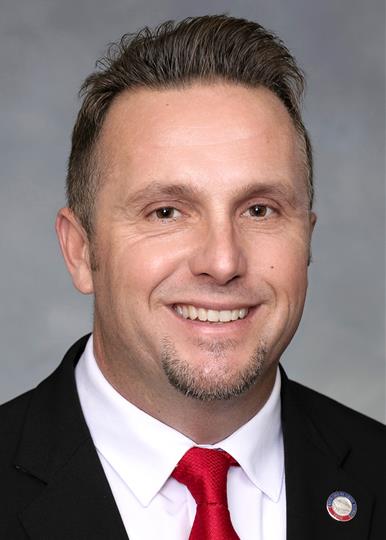
Photo of Brian Biggs
R North Carolina House · District 70 On the 2026 ballot

Rep. Brian Biggs

Compare
Total votes
542
all sessions
Attendance
99%
6 missed
Near the chamber average
With party
99%
of cast votes
Higher than 86% of chamber peers
Bipartisan score
0%
crosses aisle rarely
Lower than 89% of chamber peers
Sponsored
265
bills & resolutions
Near the chamber average
Committees
8
assignments
265 bills and resolutions

Sponsored bills

Total
265
Primary
54
Co-sponsor
211
This page
265
matching current filters
Co-sponsor HB 34
Passed · North Carolina House · Co-sponsor
Strengthen Medicaid Provider Controls.

Maddy summaryHB 34 creates a new criminal offense for stealing or misusing someone else's mail, directly affecting individuals who unlawfully take, control, or transfer mail intended for others. The bill defines "mail" broadly to include letters, packages, or valuable items sent to another person and prohibits two specific actions: stealing mail to deprive the owner, or transferring mail to benefit someone not entitled to it. Punishments range from a Class A1 misdemeanor for first-time, low-value thefts (under $200) to a Class D felony for repeat offenses or high-value thefts (over $2,000). This law, effective December 1, 2025, applies to offenses committed after that date.

Passed Jun 25, 2026 1 co-sponsor
Co-sponsor HB 301
Failed · North Carolina House · Co-sponsor
Social Media and Artificial Intelligence (AI) Safety.

Maddy summaryHB 301, titled "Social Media Protections for Minors Under 16," aims to regulate social media platforms for minors in North Carolina. The bill prohibits social media platforms from allowing children under 14 years of age to create accounts and requires them to terminate existing accounts for this age group, deleting their personal data. For minors aged 14 or 15, platforms must obtain parental or guardian consent before they can create or maintain an account. The North Carolina Department of Justice is responsible for enforcing these provisions, which allows for civil penalties and damages for violations, including potential lawsuits by affected minors.

Failed Jun 24, 2026 1 co-sponsor
Co-sponsor HB 171
Vetoed · North Carolina House · Co-sponsor
Equality in State Agencies/Prohibition on Diversity, Equity, and Inclusion (DEI).

Maddy summaryHB 171 prohibits North Carolina state agencies from implementing diversity, equity, and inclusion (DEI) programs, including in hiring, employment practices, or training. It defines DEI broadly as any initiative influencing hiring or benefits based on protected characteristics (like race or gender) beyond merit-based processes. The bill mandates state auditor compliance audits, imposes civil penalties up to $5,000 per violation, and allows employees to file lawsuits after submitting a grievance to their agency. It explicitly excludes compliance with existing anti-discrimination laws (such as Title IX and the ADA) and protects First Amendment rights.

Vetoed Jun 24, 2026 1 co-sponsor
Co-sponsor HB 258
Signed into law · North Carolina House · Co-sponsor
Worker Safety Act of 2026.

Maddy summaryHB 258, the Utility Worker Protection Act, increases penalties for assaulting utility and communications workers by designating such assaults as Class A1 misdemeanors - the highest misdemeanor level - when the worker is visibly identifiable (e.g., wearing company-logoed uniforms) and performing duties. It directly affects workers providing electricity, gas, telecommunications, or internet services, including those employed by public, private, or cooperative entities. The bill adds specific language to North Carolina’s assault statute, requiring prosecutors to apply this enhanced penalty for assaults meeting these criteria, without needing other legal provisions. The law takes effect December 1, 2025, applying to offenses committed on or after that date.

Signed into law Jun 22, 2026 1 co-sponsor
Co-sponsor HB 315
Signed into law · North Carolina House · Co-sponsor
Prohibit Litigation Investments/Amend Workers' Compensation Benefits.

Maddy summaryHB 315 creates new criminal offenses for wrongfully entering restricted business areas (like secure storage rooms) and for stealing or fraudulently obtaining gift cards. It directly affects businesses (by protecting secure areas), gift card holders (by criminalizing theft of their cards), and individuals who commit these acts. Key provisions include classifying unauthorized building entry as a misdemeanor or felony based on prior offenses, defining gift card theft as a Class 1 misdemeanor for cards under $1,000 (or felony for higher value), and expanding "organized retail theft" to include conspiracy around gift cards with penalties tied to total value stolen. The law takes effect December 1, 2025, and applies to offenses committed after that date.

Signed into law Jun 22, 2026 1 co-sponsor
Co-sponsor HB 1123
Signed into law · North Carolina House · Co-sponsor
UNC Omnibus and Capital Contracting Law Changes.

Maddy summaryThis bill authorizes the University of North Carolina system to finance specific capital improvement projects, such as dormitory renovations and new construction, using non-state funds like gifts, grants, and hospital receipts. It allows the university to issue special obligation bonds to cover these costs and includes a mechanism for the Director of the Budget to adjust project funding if necessary. Additionally, the legislation standardizes the residency determination process for admission to the North Carolina School of Science and Mathematics and revises tuition grant rules for graduates of that school and the UNC School of the Arts. These changes aim to support university infrastructure development and ensure equitable access to specialized science and arts programs for North Carolina residents.

Signed into law Jun 19, 2026 1 co-sponsor
Co-sponsor HB 1029
Passed · North Carolina House · Co-sponsor
NC Digital Asset and Stablecoin Act.

Maddy summaryThis bill establishes a regulatory framework for North Carolina banks and credit unions to offer digital asset services, such as custody, staking, and transaction processing. It requires these financial institutions to notify state regulators before starting custody services and obtain specific approval if they intend to manage customer assets in a fiduciary capacity. The legislation also mandates clear written agreements between institutions and customers, explicitly stating that digital assets held by the bank are not insured deposits or liabilities of the institution. By defining key terms like digital assets and staking, the act aims to provide legal clarity and safety standards for the growing digital asset market within the state.

Passed Jun 11, 2026 1 co-sponsor
Co-sponsor HB 1214
died · North Carolina House · Co-sponsor
Make E-Verify Great Again.

Maddy summaryThis North Carolina bill requires all private employers with 25 or more employees to use the federal E-Verify system to check the work authorization of every new hire. It mandates that state and local government agencies also comply with these verification rules and allows employers to avoid penalties if they can prove they acted in good faith and did not knowingly accept fraudulent documents. The legislation establishes a 30-day grace period for employers to fix minor compliance errors and increases fines for repeat offenders while protecting workers who report suspected violations from retaliation. Additionally, it grants the state labor commissioner the authority to conduct random or risk-based audits of employers and provides funding to support enforcement efforts.

died Jun 10, 2026 1 co-sponsor
Primary HB 87
Signed into law · North Carolina House · Lead sponsor
Educational Choice for Children Act (ECCA).

Maddy summaryHB 87 (Educational Choice for Children Act) allows North Carolina to participate in a federal tax credit program that encourages donations to private scholarship organizations. The bill requires the State Education Assistance Authority to maintain and publish an annual list of qualifying scholarship groups operating in North Carolina, enabling donors to claim federal tax credits for contributions. These scholarships can cover elementary and secondary school costs, including homeschooling expenses, as permitted under federal law. The law becomes effective after 2026, with the Authority needing to establish necessary rules by July 2026 to comply with federal requirements.

Signed into law Jun 3, 2026 0 co-sponsors
Primary HJR 1030
In committee · North Carolina House · Lead sponsor
US Department of Education.

Maddy summaryThis North Carolina joint resolution urges the U.S. Congress to eliminate the United States Department of Education by returning control of education to the states. The bill argues that federal involvement has led to excessive regulations and mandates without improving student reading scores, asserting that states are better equipped to handle education based on local needs. It also states that removing the department would not stop federal funding programs from reaching states but would instead allow taxpayer dollars to be used more efficiently. As a non-binding resolution, it does not directly change laws or allocate funds but serves as a formal statement of support for federal efforts to abolish the department.

In committee Jun 2, 2026 0 co-sponsors
Showing 11 to 20 of 265 bills