

Maddy summaryHB 546 modernizes North Carolina's Medicaid program by requiring the state to develop team-based care coordination for individuals with alcohol and opioid use disorders, including screening, medication, and recovery support. The bill also allows telehealth-only providers to enroll in Medicaid without needing a physical office in the state and mandates a statewide specialty plan for children in foster care or receiving adoption assistance, to be implemented by December 2025. These changes directly affect Medicaid beneficiaries with substance use disorders, telehealth providers, and eligible children and families. The Department of Health and Human Services must report on the implementation of the substance use care and telehealth provisions by October 1, 2025.
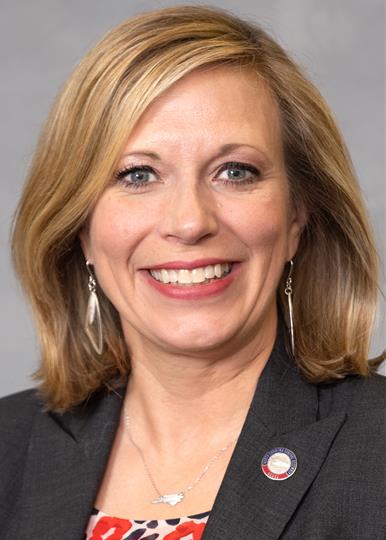
Rep. Sarah Crawford
Sponsored bills
Maddy summaryHB 612, the "Fostering Care in NC Act," updates North Carolina's laws governing child abuse, neglect, and dependency cases. It expands the definition of "abused juveniles" to include specific offenses like sexual crimes, human trafficking, and certain violent acts, affecting how cases are classified. The bill requires county social services directors to use either a family-centered assessment or a formal investigation when reviewing reports, and to collect military affiliation details of the juvenile's caregiver. It also clarifies that court jurisdiction over juveniles continues until age 18, emancipation, or death. These changes standardize responses to child welfare reports and improve information gathering for safety decisions.
Maddy summaryHB 480 creates a new pathway for doctors, physician assistants, and anesthesiologist assistants to obtain North Carolina medical licenses by transferring licenses from other states ("licensure by endorsement"). To qualify, applicants must have held an active license in another U.S. jurisdiction for at least five years (with two years of practice post-residency for doctors), have a verified full-time job offer in North Carolina, maintain good standing with no recent disciplinary actions, and meet practice hour requirements. The bill increases application fees for endorsement (e.g., $825 for physicians vs. $400 for standard licensure) and requires additional documentation within 180 days to keep the license active. This directly affects out-of-state medical professionals seeking to practice in North Carolina without retaking exams.
Maddy summaryHB 578, the Jason Flatt Act, requires all North Carolina public K-12 schools to implement suicide prevention education and training for school staff. It mandates that licensed educators complete at least one hour of annual suicide prevention training, while staff working with grades 6-12 must receive guidelines for identifying at-risk students and procedures for referrals. Schools must adopt a mental health plan including these elements, with initial staff training of six hours (within six months of hire) and two hours annually thereafter. The law applies to all public schools, charter schools, regional schools, and lab schools starting the 2025-2026 school year.
Maddy summaryHB 231 establishes North Carolina's participation in the Social Work Interstate Licensure Compact, allowing licensed social workers from participating states to practice across state lines without obtaining separate licenses in each state. The bill directly affects licensed social workers seeking to provide services in multiple states, particularly those serving military families or addressing workforce shortages. Key provisions include mutual recognition of licenses among member states, accountability for social workers practicing where clients are located, and streamlined processes for disciplinary information sharing. This reduces duplicate licensing requirements while maintaining state authority to protect public health and safety through existing licensure systems.
Maddy summaryHB 569 requires PFAS manufacturers (those who produce PFAS compounds like GenX) to pay public water systems for cleaning up PFAS contamination in drinking water when levels exceed EPA safety limits. It allows the Environmental Quality Secretary to order polluters to cover actual cleanup costs, including technology to reduce PFAS levels, and applies retroactively to expenses since 2017. The bill appropriates $300,000 for implementation and mandates annual reports on fund use, with water systems refunding ratepayers when manufacturers cover costs. This directly affects water systems burdened by PFAS cleanup, PFAS manufacturers deemed responsible, and ratepayers who may see reduced future water rates.
Maddy summaryHB 485 requires North Carolina's Medicaid agency to request federal approval to extend Medicaid coverage for personal care services to adults living in licensed adult care homes who earn more than the current State-County Special Assistance income limit but stay below 180-200% of the federal poverty level. The bill specifically targets individuals who would qualify for lower-income Medicaid assistance if not for their higher earnings. Before implementing this coverage, the agency must submit a CMS request meeting three conditions: covering the specified income group, ensuring cost savings offset new expenses, and complying with legal requirements. This bill does not immediately change coverage - it only authorizes a federal request, pending CMS approval.
Maddy summaryHouse Bill 754 aims to protect disabled and older adults from financial exploitation. It empowers financial institutions to take action when they reasonably suspect such exploitation by updating relevant laws. Financial institutions are required to report suspected cases to law enforcement and social services, and they can contact designated "trusted contacts." The bill also allows these institutions to temporarily delay or refuse suspicious transactions for up to 30 days and grants them immunity from liability for these good-faith actions.
Maddy summaryHB 886 requires all public schools in North Carolina to install Automatic External Defibrillators (AEDs) and train school personnel on their use and on CPR. The State Board of Education must develop rules for AED placement, maintenance, and coordination with emergency services, with at least one AED per school, ideally in an athletic area. Local school boards, charter schools, and regional schools are then required to create policies aligning with these state rules. The bill appropriates $4.1 million for the 2025-2026 fiscal year to help public school units purchase AEDs and train staff.
Maddy summaryThis bill, titled Reagan's Law, aims to improve access to prosthetic and orthotic devices for North Carolinians with limb loss or limb difference by requiring most health benefit plans to cover these devices and related care. Key provisions mandate that plans cover all materials, instruction, and repairs for prosthetics and orthotics, allow for multiple devices based on medical needs, and prohibit denying claims for these devices that would otherwise be covered for non-disabled individuals seeking similar medical treatment. The legislation also requires insurers to provide coverage for device replacements when medically necessary due to changes in the insured's condition or device damage, without limiting coverage based on the device's age or useful lifetime. Additionally, the bill repeals state requirements for health plans to cover emergency care that duplicates federal law, aligning state regulations with federal standards.