

Maddy summaryHB 552 establishes the Agricultural Manufacturing Investment Grant Account within North Carolina's One North Carolina Fund, allocating up to $5 million for new economic development incentives. This account provides competitive grants to eligible agricultural manufacturers in the state. The Department of Commerce will administer these grants, prioritizing projects in less developed areas, those using advanced agricultural technologies, or those with significant research and development. To qualify, recipients must commit to investing at least $5 million of private funds, employ a minimum of 25 full-time employees, and meet specific wage requirements. Grants are capped at $100,000 annually per recipient for up to five years.
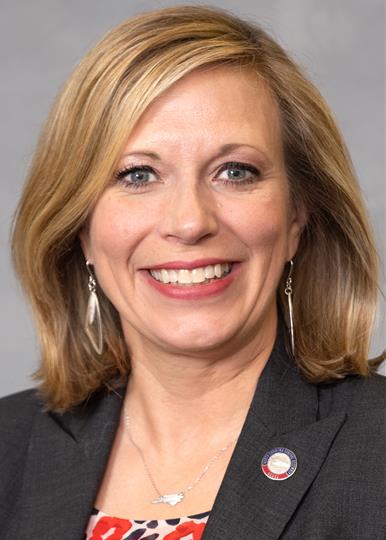
Rep. Sarah Crawford
Sponsored bills
Maddy summaryJesse's Law (HB 896) mandates specific training for professional personnel involved in child custody proceedings in North Carolina. It requires judges, magistrates, judicial officers, and court personnel, including guardian ad litems and mediators, to complete trauma-informed and culturally appropriate training. This training focuses on the dynamics, signs, and impact of domestic violence and child abuse, including child sexual abuse. Professionals must complete an initial 20 hours of training and 15 hours every five years, based on evidence-based research. The bill aims to improve the ability of these individuals to recognize and respond to abuse and trauma when making child custody decisions.
Maddy summaryHouse Bill 283 establishes the Small Business Investment Grant (SBIG) Program within the One North Carolina Fund, designed to provide financial assistance to eligible small businesses looking to establish or expand facilities in the state. The bill allocates up to $10 million from the Fund to this new account. Through the SBIG Program, competitive grants are offered to businesses meeting specific criteria, such as having 250 or fewer employees or less than $5 million in annual revenue, investing $10-$30 million, and creating new jobs with competitive wages. Grants are capped at $500,000 annually per recipient, up to $2.5 million total, over a maximum of five years. Additionally, the bill renames the "One North Carolina Small Business Account" to the "Small Business Research and Technology Account," which continues to support federal SBIR/STTR grant incentive and matching programs.
Maddy summaryHB 297, titled "Breast Cancer Prevention Imaging Parity," aims to ensure equal health insurance coverage for different types of breast cancer imaging. The bill mandates that health benefit plans apply the same cost-sharing requirements (like deductibles and copayments) for diagnostic and supplemental breast examinations, such as MRIs and ultrasounds, as they do for routine screening mammograms. This ensures individuals needing these additional medically necessary tests do not face higher out-of-pocket costs compared to standard screenings. It also maintains existing coverage for cervical cancer screenings and includes provisions for high-deductible health plans.
Maddy summaryHB 681 directs the Commission for Mental Health, Developmental Disabilities, and Substance Use Services to update state rules for outpatient opioid treatment programs (OTPs). The bill aims to align these rules more closely with federal regulations governing medications for opioid use disorder, affecting patients receiving treatment and the OTPs providing care. Key changes include removing home environment stability as a criterion for take-home medication and prohibiting administrative discharge due to continued substance use or missed doses. It also reduces the frequency of required drug tests, removes observed testing, and allows OTPs to administer methadone to non-enrolled patients. The Commission must engage with clients and providers for input and publish the proposed amended rules by July 1, 2025.
Maddy summaryHB 627 requires local governments to allow the construction of at least one accessory dwelling unit (ADU) for each single-family home in residential zones, aiming to increase affordable housing options. The bill prohibits local governments from imposing certain restrictions, such as minimum parking requirements, banning long-term rentals of both units, or setting maximum ADU sizes under 800 square feet. However, local governments may still regulate aspects like setbacks or require ADUs to be smaller than the primary dwelling. Local governments must adopt regulations by January 1, 2027, or ADUs will be permitted without any local limitations.
Maddy summaryHouse Bill 146 amends North Carolina's driver's license renewal process. It allows active duty members of the U.S. Armed Forces, or reserve components serving on active duty and stationed outside North Carolina, to renew their driver's licenses remotely multiple times in a row. Currently, a remote renewal requires the previous renewal to have been done in person, but this bill removes that restriction for eligible military personnel. This change aims to make it easier for these individuals to maintain their licenses while serving away from the state. The act becomes effective October 1, 2025, applying to licenses renewed on or after that date.
Maddy summaryHB 570, the "Responsible Firefighting Foam Management Act," restricts the use of firefighting foams containing PFAS chemicals for training and testing. It prohibits any person, local government, or state agency from discharging Class B firefighting foam with intentionally added PFAS for training or practice purposes. For testing, these foams are also prohibited unless required by law or an authority, and the testing facility has implemented measures to prevent environmental releases. The bill mandates the use of non-fluorinated alternatives for training and is set to become effective on December 1, 2025.
Maddy summaryHouse Bill 743 (HB 743) allows direct support professionals to permanently reside in specific licensed group homes where they provide services to clients. The bill directs the Department of Health and Human Services (DHSR) to adopt rules necessary to implement this change for facilities licensed under 10A NCAC 27G .5601(c)(3). DHSR is also required to report its progress on these changes to the Joint Legislative Oversight Committee on Health and Human Services by September 30, 2025. This legislation aims to establish a framework for live-in support within these residential settings.
Maddy summaryHB 555, "Medicaid Telehealth Services," aims to ensure that certain telehealth providers can enroll as Medicaid providers in North Carolina. The bill specifies that individual health care providers licensed by the state who offer services exclusively through telemedicine are not required to maintain a physical presence in the state to be eligible for Medicaid enrollment. Similarly, medical provider groups that exclusively offer telemedicine services will not need an in-state service address to be eligible for the state's Medicaid program. This bill directly affects telehealth providers and medical groups by removing location-based requirements for participating in Medicaid.