

Maddy summaryHB 614, titled "The Michael Mitchke F.I.N.E. Law," mandates that an autopsy be performed in any case where human remains are discovered following a fire incident. This bill modifies current law by adding a new requirement for the Chief Medical Examiner or designated pathologists to conduct an autopsy in these specific circumstances. The change aims to ensure a thorough examination of remains found in fire-related incidents. This law directly affects the duties of medical examiners and applies to cases arising on or after October 1, 2025.
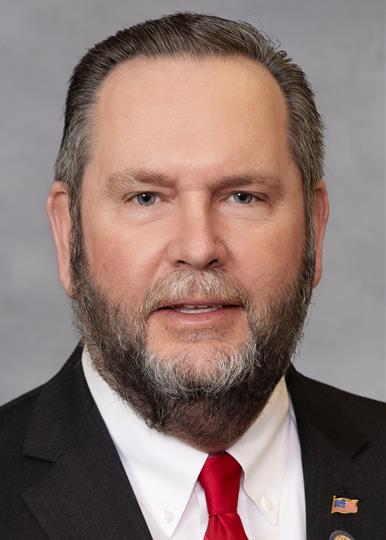
Rep. Alan Branson
Sponsored bills
Maddy summaryHouse Bill 146 amends North Carolina's driver's license renewal process. It allows active duty members of the U.S. Armed Forces, or reserve components serving on active duty and stationed outside North Carolina, to renew their driver's licenses remotely multiple times in a row. Currently, a remote renewal requires the previous renewal to have been done in person, but this bill removes that restriction for eligible military personnel. This change aims to make it easier for these individuals to maintain their licenses while serving away from the state. The act becomes effective October 1, 2025, applying to licenses renewed on or after that date.
Maddy summaryHB 254 designates the fourth Thursday of March each year as Tuskegee Airmen Commemoration Day in North Carolina. This officially recognizes and honors the legacy of the African-American pilots, navigators, bombardiers, instructors, and support staff who trained at Tuskegee Institute from 1941 to 1949.
Maddy summaryHouse Bill 38, known as the Second Amendment Financial Privacy Act, prohibits payment card networks from using a specific "firearms code" to identify or track purchases made at firearms merchants in North Carolina. It also forbids these networks from knowingly maintaining records of individuals in the state who own firearms. The bill aims to prevent the separate tracking of lawful firearm and ammunition purchases and protect the financial privacy of individuals exercising their right to bear arms. Payment card networks are also prohibited from discriminating against firearms merchants based on code assignment. Violations can lead to civil penalties assessed by the Attorney General or civil lawsuits from affected merchants or individuals.
Maddy summaryHB 163 regulates Pharmacy Benefits Managers (PBMs) to ensure fair practices for pharmacies and insured individuals. The bill prohibits PBMs from charging insurers more for a prescription drug than they pay the pharmacy (spread pricing) and requires patient out-of-pocket costs to be based on the net price after any PBM concessions. It establishes minimum reimbursement standards for pharmacies, preventing PBMs from paying less than the national average drug acquisition cost plus a dispensing fee. Additionally, it clarifies that PBMs cannot restrict accredited pharmacies from dispensing specialty drugs and strengthens audit protections for pharmacies.
Maddy summaryHB 570, the "Responsible Firefighting Foam Management Act," restricts the use of firefighting foams containing PFAS chemicals for training and testing. It prohibits any person, local government, or state agency from discharging Class B firefighting foam with intentionally added PFAS for training or practice purposes. For testing, these foams are also prohibited unless required by law or an authority, and the testing facility has implemented measures to prevent environmental releases. The bill mandates the use of non-fluorinated alternatives for training and is set to become effective on December 1, 2025.
Maddy summaryHB 729, titled the "Farmland Protection Act," makes several changes related to solar energy development. It reduces the property tax exclusion for solar energy electric systems from 80% to 40% of their appraised value, which will increase the taxable value of these systems. The bill also prohibits the construction of new utility-scale solar projects that are not qualifying facilities under federal law, unless they are sited on specific types of land such as brownfields, non-agricultural land, or clear-cut timberland. Additionally, it updates the effective dates for requirements regarding financial assurance and decommissioning plans for utility-scale solar projects, affecting both existing and new facilities.
Maddy summaryHB 613, titled "The Vehicle Registration Convenience Act," allows vehicle owners in North Carolina to choose their preferred month for annual registration renewal. When initially registering a vehicle, owners can select any month within a 12-month period for their registration to expire. The initial registration fee will be prorated based on the chosen renewal month to cover the period until the elected expiration date. The bill also authorizes the Division of Motor Vehicles to send electronic renewal notices if the owner provides consent. These changes apply to vehicle registrations issued or renewed on or after January 1, 2026.
Maddy summaryHB 329 encourages nonpublic schools in North Carolina, including private church schools and other qualified nonpublic schools, to adopt policies that prohibit the use of tobacco and hemp products on their school grounds. The bill amends existing state statutes to add this encouragement. It suggests that these schools use the current requirements for public schools as guidance when developing their own policies. This legislation aims to promote smoke-free and hemp-free environments within nonpublic educational settings.
Maddy summaryHouse Bill 244, titled "Depoliticize Government Property Act," restricts the types of flags that can be flown or displayed on property owned or leased by the State of North Carolina or its local government entities. The bill specifies a limited list of permissible flags, including the U.S. flag, the North Carolina flag, flags of local government agencies, military branch flags, the POW/MIA flag, the Honor and Remember flag, and flags of recognized nations during official visits. It also clarifies that local governments cannot prohibit the display of official governmental flags on private or public property with consent. Any violation of the display restrictions on government property would be classified as a Class 3 misdemeanor.