

Maddy summaryHB 577 creates a Towing and Recovery Commission within the North Carolina State Highway Patrol to resolve disputes over fees charged by towing services to law enforcement. It requires towing businesses to submit hourly rates to the commission for approval and establishes new permit requirements, including background checks (no felony convictions in the past 5-10 years), insurance, training, and proof of a compliant storage facility. The bill directly affects towing companies, truckers using the State Highway Patrol rotation system, and law enforcement agencies that contract for towing services. Key provisions include the commission’s authority to set reasonable fees, disqualify noncompliant tow services, and oversee permit applications with specific eligibility criteria.
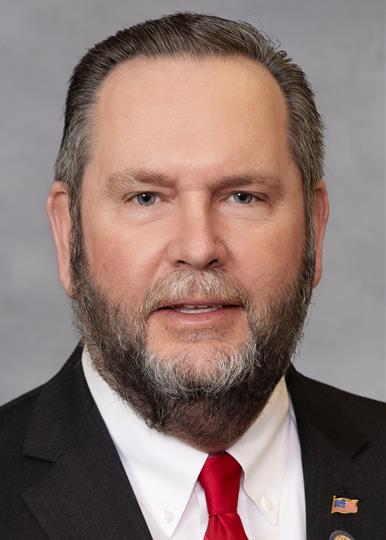
Rep. Alan Branson
Sponsored bills
Maddy summaryHB 478 changes how North Carolina fills vacancies in district attorney (DA) offices. It requires the Governor to appoint a replacement from a list of up to three candidates recommended by the political party of the outgoing DA (or by the General Assembly if the DA was unaffiliated), within 30 days of the vacancy. If recommendations aren't provided in time, the Governor can appoint directly. This affects all unexpired DA terms in the state, ensuring appointments align with the political party of the vacating official.
Maddy summaryHB 74 is a technical corrections bill that extends deadlines for unspent state grants. It prevents certain nonrecurring grants (originally set to revert to the state on December 31, 2024) from reverting, keeping them available for expenditure until used or until the end of the 2025-2026 fiscal year. This directly affects non-state entities (like local governments or nonprofits) that received these grants but hadn’t spent them by the original deadline. The bill makes no new policy changes - only adjusts existing budget rules to avoid unintended loss of funds. It is purely procedural, with no substantive policy shifts.
Maddy summaryHouse Bill 560, known as the "Parents Protection Act," makes several changes to laws governing juvenile care and child adoption. The bill specifies that parents, guardians, or caretakers who raise a juvenile consistent with their biological sex, including related mental health or medical decisions, shall not be subject to abuse or neglect petitions or child abuse charges solely based on those actions. Additionally, it prohibits adoption and foster care agencies from denying opportunities or placements to prospective parents based on their refusal to support a child's gender transition. These provisions apply to petitions filed and offenses committed on or after December 1, 2025.
Maddy summaryHouse Bill 214, known as the "Faithful Article V Commissioner Act," creates rules for North Carolina's participation in a convention for proposing amendments to the U.S. Constitution. It outlines how commissioners and alternates are to be selected by the General Assembly, their qualifications, and their ethical obligations. The bill strictly defines the scope of authority for these commissioners, limiting them to the specific issues outlined in their commission and the convention's call. Commissioners must take an oath to abide by these limits, and exceeding their defined authority is deemed a Class I felony.
Maddy summaryThis bill, HB 519, revises laws regarding when minors can consent to medical treatment and parental access to their children's medical records. It restricts the medical services a minor can consent to on their own to primarily pregnancy-related care, removing their ability to consent for venereal diseases, substance abuse, or emotional disturbance treatment. The bill also requires written parental consent for minors to receive vaccines authorized for emergency use but not yet fully FDA approved. Additionally, it grants parents the right to access all their minor child's medical records, including those for care the minor could consent to, with exceptions for suspected abuse or neglect, court orders, or active law enforcement investigations.
Maddy summaryHB 121 provides local boards of education with additional flexibility in adopting their school calendars. It removes the current state-mandated earliest opening date for students (the Monday closest to August 26) and the latest closing date (the Friday closest to June 11). This change allows local boards to determine the specific opening and closing dates for public schools under their authority. The bill directly affects public schools and students in North Carolina and would apply starting with the 2025-2026 school year.
Maddy summaryHB 772, titled the North Carolina Student Lifeline Act, requires public schools and community colleges in North Carolina to provide students with the Suicide and Crisis Lifeline phone number. It mandates that institutions display the phrase "To reach the Suicide and Crisis Lifeline, call 988 or text HOME to 741741." in several locations. These locations include new student identification cards issued to students in grades six through 12, the school website, and the home screen of any electronic device issued to students. The information must also appear on school agendas or calendars, documents used during suicide awareness activities, and registration documents. Additionally, schools are required to annually verify the accuracy of the Lifeline contact information.
Maddy summaryThis bill authorizes local governments to borrow money through "grant anticipation notes" to accelerate local transportation projects already identified for funding under the State Transportation Improvement Program (STIP). To utilize this, a local government must enter into an expedited project agreement with the Department of Transportation (DOT), outlining project details, costs, funding, and a repayment plan. These notes are special obligations, meaning they are repaid solely from the anticipated STIP funding, and the local government's general taxing power is not pledged. The DOT must ensure that any STIP changes do not delay the repayment of these notes, and both the DOT and the Department of the Treasurer are directed to establish rules for their implementation.
Maddy summaryHB 552 establishes the Agricultural Manufacturing Investment Grant Account within North Carolina's One North Carolina Fund, allocating up to $5 million for new economic development incentives. This account provides competitive grants to eligible agricultural manufacturers in the state. The Department of Commerce will administer these grants, prioritizing projects in less developed areas, those using advanced agricultural technologies, or those with significant research and development. To qualify, recipients must commit to investing at least $5 million of private funds, employ a minimum of 25 full-time employees, and meet specific wage requirements. Grants are capped at $100,000 annually per recipient for up to five years.