

Maddy summaryHB 860, the Social Media Control in Information Technology Act, requires social media platforms with over 1 million U.S. monthly active users to stop using North Carolina minors' (under 18) personal data for advertising or algorithm-driven content recommendations. It mandates platforms to provide clear, easy-to-use privacy tools allowing users to control data sharing, with special opt-in consent required for minors' data. The bill prohibits "dark patterns" in consent processes and defines strict terms like "personal information" to cover data ranging from location to health details. Violations would be treated as unfair business practices under North Carolina law, with funds appropriated for enforcement. The law directly affects major social media platforms operating in North Carolina, focusing on protecting minors' data privacy rather than addressing broader social media use.
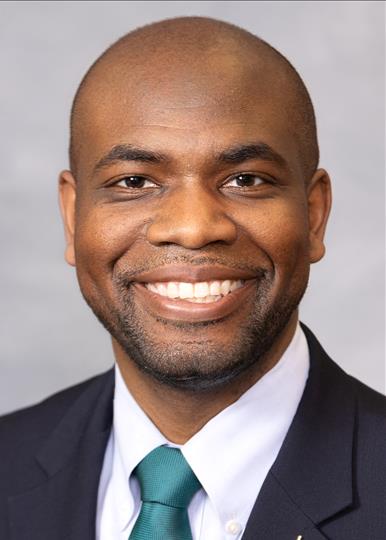
Rep. Allen Buansi
Sponsored bills
Maddy summaryHB 569 requires PFAS manufacturers (those who produce PFAS compounds like GenX) to pay public water systems for cleaning up PFAS contamination in drinking water when levels exceed EPA safety limits. It allows the Environmental Quality Secretary to order polluters to cover actual cleanup costs, including technology to reduce PFAS levels, and applies retroactively to expenses since 2017. The bill appropriates $300,000 for implementation and mandates annual reports on fund use, with water systems refunding ratepayers when manufacturers cover costs. This directly affects water systems burdened by PFAS cleanup, PFAS manufacturers deemed responsible, and ratepayers who may see reduced future water rates.
Maddy summaryHB 121 provides local boards of education with additional flexibility in adopting their school calendars. It removes the current state-mandated earliest opening date for students (the Monday closest to August 26) and the latest closing date (the Friday closest to June 11). This change allows local boards to determine the specific opening and closing dates for public schools under their authority. The bill directly affects public schools and students in North Carolina and would apply starting with the 2025-2026 school year.
Maddy summaryHouse Bill 283 establishes the Small Business Investment Grant (SBIG) Program within the One North Carolina Fund, designed to provide financial assistance to eligible small businesses looking to establish or expand facilities in the state. The bill allocates up to $10 million from the Fund to this new account. Through the SBIG Program, competitive grants are offered to businesses meeting specific criteria, such as having 250 or fewer employees or less than $5 million in annual revenue, investing $10-$30 million, and creating new jobs with competitive wages. Grants are capped at $500,000 annually per recipient, up to $2.5 million total, over a maximum of five years. Additionally, the bill renames the "One North Carolina Small Business Account" to the "Small Business Research and Technology Account," which continues to support federal SBIR/STTR grant incentive and matching programs.
Maddy summaryHB 94 allows disabled veterans and their unremarried surviving spouses to prequalify for the disabled veteran property tax homestead exclusion. This means individuals can apply to determine their eligibility for the tax benefit before they purchase a permanent residence. Applicants submit a prequalification form with their disability certification, and the county assessor must notify them of their eligibility within 30 days. The bill aims to help taxpayers and lenders account for this tax relief when making home purchase decisions. After prequalification, a separate application for the exclusion is still required once a permanent residence is acquired.
Maddy summaryHB 297, titled "Breast Cancer Prevention Imaging Parity," aims to ensure equal health insurance coverage for different types of breast cancer imaging. The bill mandates that health benefit plans apply the same cost-sharing requirements (like deductibles and copayments) for diagnostic and supplemental breast examinations, such as MRIs and ultrasounds, as they do for routine screening mammograms. This ensures individuals needing these additional medically necessary tests do not face higher out-of-pocket costs compared to standard screenings. It also maintains existing coverage for cervical cancer screenings and includes provisions for high-deductible health plans.
Maddy summaryHB 24, titled "Restore Down-Zoning Authority," aims to reinstate the power of local governments to initiate "down-zoning." This means local governments would regain the ability to change zoning classifications for properties to allow for less intensive development or use. The bill achieves this by repealing Section 3K.1 of S.L. 2024-57, which had previously restricted this authority. If enacted, it would apply retroactively to December 11, 2024, ensuring that any local ordinances impacted by the repealed section are restored to their status prior to that date.
Maddy summaryHB 97 adds stomach cancer (gastric cancer) to the list of occupationally related cancers that qualify firefighters for "killed in the line of duty" benefits under North Carolina's Public Safety Employees' Death Benefits Act. This means firefighters who die from stomach cancer directly linked to their firefighting duties will automatically be eligible for death benefits, easing the process for families seeking compensation. The bill appropriates $500,000 annually from 2025-2027 to cover these benefits. It takes effect July 1, 2025, applying to qualifying deaths occurring on or after that date.
Maddy summaryHouse Bill 146 amends North Carolina's driver's license renewal process. It allows active duty members of the U.S. Armed Forces, or reserve components serving on active duty and stationed outside North Carolina, to renew their driver's licenses remotely multiple times in a row. Currently, a remote renewal requires the previous renewal to have been done in person, but this bill removes that restriction for eligible military personnel. This change aims to make it easier for these individuals to maintain their licenses while serving away from the state. The act becomes effective October 1, 2025, applying to licenses renewed on or after that date.
Maddy summaryHB 254 designates the fourth Thursday of March each year as Tuskegee Airmen Commemoration Day in North Carolina. This officially recognizes and honors the legacy of the African-American pilots, navigators, bombardiers, instructors, and support staff who trained at Tuskegee Institute from 1941 to 1949.