

Maddy summaryHB 360, the Homeowner Protection Act, targets fraud involving residential property documents. It increases penalties for forging deeds, leases, or wills related to homes (making it a Class D felony instead of Class H) and creates an expedited court process for victims. Homeowners affected by fraudulent property records can file a "memorandum of possible fraud" to trigger a court hearing, where judges can void the false documents and clear title clouds. The law also requires recording offices to flag fraudulent instruments and prohibits fees for these protective filings. The bill is currently pending in the House Judiciary Committee.
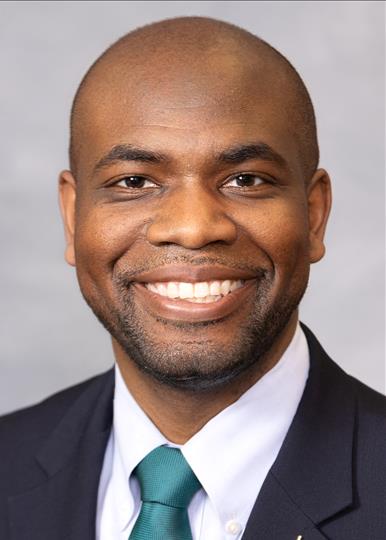
Rep. Allen Buansi
Sponsored bills
Maddy summaryHB 371 requires North Carolina's Division of Motor Vehicles to provide driver's license handbooks and written tests in Khmer and any language spoken by at least 2% of the state's population. This directly affects applicants who speak these languages by offering materials in their preferred language during the licensing process. The key provision mandates the DMV to add these language options to its standard services, moving beyond English-only requirements. The law takes effect on January 1, 2026.
Maddy summaryHB 353, the Fair Minimum Wage Act, raises North Carolina's state minimum wage in staged increases, starting at $10 per hour on January 1, 2026, and reaching $18 per hour by January 1, 2030. After 2030, the wage will automatically adjust annually based on inflation using the Consumer Price Index. The bill directly affects hourly workers and employers across North Carolina, requiring higher pay for all covered employees. It also adds provisions allowing workers to recover unpaid wages plus interest, attorney fees, and court costs if employers fail to pay correctly.
Maddy summaryHB 350 requires North Carolina firearm owners to report lost or stolen firearms to local law enforcement or the State Bureau of Investigation within 24 hours of discovery. Owners must provide specific details like the firearm’s make, model, serial number, and circumstances of the loss or theft. Law enforcement must then enter key details into the National Crime Information Center database. Violations are punishable as a Class 3 misdemeanor for a first offense, escalating to a Class I felony for repeat violations. The law takes effect December 1, 2025.
Maddy summaryHB 343 appropriates $380,000 for 2025-26 and $397,000 for 2026-27 to create four full-time ombudsman positions within North Carolina’s Long-Term Care Ombudsman Program. This directly affects residents of nursing homes, adult care homes, and family care homes by enhancing advocacy for their rights and care quality. The bill’s key provision funds staff to move the state’s program toward national standards for resolving facility issues without formal complaints. It becomes effective July 1, 2025, with no advocacy language - only a concrete funding mechanism for expanded protections.
Maddy summaryHB 324 appropriates $800,000 from the Highway Fund to the Greensboro Transit Agency for the 2025-2026 fiscal year. The funds are specifically allocated to $500,000 for the North/South Crossmax Orange Bus Route and $300,000 to launch a pilot program transporting high school juniors and seniors to Guilford Technical Community College campuses. This bill directly affects Greensboro Transit Agency operations and Guilford County high school students participating in the college transportation pilot. It becomes effective July 1, 2025, if enacted.
Maddy summaryHB 316 reenacts North Carolina's Child Tax Credit to help families cover child care costs, with reimbursement percentages based on income and child age (e.g., 7-13% for dependents aged 6-12). It allocates $200 million annually to expand the NC Pre-K program, adding 32,000 slots for 4-year-olds, and $35 million to increase subsidized child care funding. The bill also requires public schools to provide free lunches at no cost to students through state funding tied to school nutrition evaluations. Additionally, it mandates a report on creating a high school child care apprenticeship program. The bill directly affects families with children, public schools, and child care providers across North Carolina.
Maddy summaryHB 280 allocates $30,000 in one-time state funds to support the North Carolina Senior Tar Heel Legislature, a program for older residents to engage with state policy. The funding, from the General Fund for the 2025-2026 fiscal year, covers operational costs for this existing program established under state law. It directly affects the Senior Tar Heel Legislature by providing financial resources for its activities. The bill becomes effective July 1, 2025, and does not create new policy but enables the program's continued operation.
Maddy summaryHB 282 amends North Carolina law to clarify that Strategic Transportation Investments (STI) funds can be used for independent bicycle and pedestrian infrastructure projects, such as bike lanes and sidewalks. It removes previous restrictions that prevented the Department of Transportation from funding such projects, except for specific cases like municipal matching funds for federal projects or projects already scheduled for construction by 2015. The bill directly affects local governments and municipalities seeking to use STI funds for non-vehicle transportation improvements. Key provisions rewrite two statutes to explicitly allow these projects, streamlining funding access for community-led bike and pedestrian initiatives. This change makes it easier for local entities to secure state transportation funds for walking and cycling infrastructure.
Maddy summaryHB 256 repeals North Carolina's current ban on public employee collective bargaining, allowing state and local government workers (like teachers, police, and administrative staff) to negotiate wages and working conditions with their employers. The bill removes existing legal restrictions (Article 12 of Chapter 95) and explicitly states that public employees' bargaining rights apply to all state and local government employers. It does not create new benefits or funding but aligns public sector bargaining rights with those already available to private sector employees. The bill’s key provision is the repeal of the prohibition, enabling public employees to collectively bargain under existing state law.