

Maddy summaryHB 209 authorizes Durham Public Schools and Durham County to create affordable rental housing for teachers, police officers, first responders, and other Durham County employees. The bill allows these entities to partner using their existing land to build housing, with at least 75% of units reserved specifically for Durham Public Schools teachers. Rent will be set at reasonable, below-market rates, and all housing must comply with standard building and safety codes. The bill is currently pending in committee and does not change existing zoning or safety regulations for the housing units.
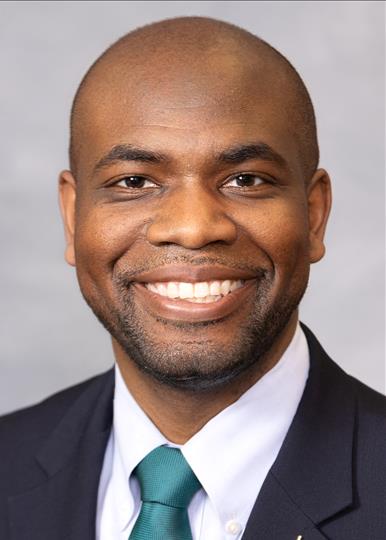
Rep. Allen Buansi
Sponsored bills
Maddy summaryHJR 157 is a procedural resolution inviting Governor Josh Stein to address a joint session of the North Carolina General Assembly on March 12, 2025. It directs a committee of five House members and five Senate members to extend the invitation and specifies that the governor's cabinet, Council of State members, and state judges may attend. This resolution does not create new policy or affect any laws; it solely schedules a ceremonial address. The invitation is effective upon ratification, as noted in the resolution's text.
Maddy summaryHB 179 would allow North Carolina taxpayers to deduct labor union membership dues from their state income tax starting in 2026. The bill creates a new tax deduction for dues, fees, assessments, or other payments required to maintain membership in a labor organization, as defined by state law. This applies specifically to individuals who pay such costs as a condition of union participation. The policy change takes effect for tax years beginning January 1, 2026.
Maddy summaryHB 175 proposes amending North Carolina's constitution to remove the current provision stating "marriage between one man and one woman is the only domestic legal union." If approved by voters in the 2026 general election, this change would allow the state to recognize all marriages equally, directly affecting all North Carolinians seeking marriage licenses or legal recognition. The bill requires voter approval via a yes/no ballot question in November 2026, with the amendment taking effect January 1, 2027, if passed. This is a constitutional referendum, not an immediate law, and would replace the existing constitutional language without altering current marriage laws.
Maddy summaryHB 181 reinstates North Carolina's Earned Income Tax Credit (EITC) for working families with children, providing a state tax credit equal to 5% of the federal EITC amount. The credit is refundable, meaning eligible families receive cash payments even if they owe no state tax, directly benefiting low-to-moderate income households struggling with housing, childcare, and basic living costs. It applies to taxable years beginning January 1, 2025, and aligns with federal EITC eligibility criteria. The bill reenacts the credit after its prior expiration, creating a concrete policy change to supplement family income.
Maddy summaryHB 51 grants Caswell County Schools, Chapel Hill-Carrboro City Schools, and Orange County Schools flexibility to set their own school calendars, including aligning with local community college schedules. It modifies state requirements that typically mandate school openings no earlier than August 26 and closings no later than June 11, allowing these districts to adjust dates based on community college calendars. The bill also permits these schools to administer student assessments earlier in the semester if their fall semester ends before December 31, rather than waiting for the usual final instructional days. This policy change applies only to the specified districts starting in the 2025-2026 school year.
Maddy summaryHB 168, the North Carolina CROWN Act, prohibits employment discrimination based on hair texture or protective hairstyles like braids, locks, or twists. It explicitly adds these characteristics to the definition of "race" under North Carolina's anti-discrimination law, covering all employers and job applicants. The bill also strengthens protections by banning retaliation against employees who report such discrimination. It applies to all public and private employers statewide upon becoming law.
Maddy summaryHB 167 (North Carolina) prohibits leaving a firearm in an unattended vehicle unless the vehicle is locked and the firearm is secured with a trigger lock or stored in a locked container. This law directly affects vehicle owners who store firearms in their cars, making it illegal to leave them unsecured in an unattended vehicle. Violations carry a Class 2 misdemeanor penalty. The bill becomes effective December 1, 2025, applying to offenses committed on or after that date.
Maddy summaryHB 166 creates a legal process for courts to issue Extreme Risk Protection Orders (ERPOs) that temporarily restrict a person's access to firearms when they pose a danger of harming themselves or others. The bill allows family members, law enforcement, or healthcare providers to petition a court for an ERPO, requiring the court to order the seizure of firearms if the respondent fails to surrender them. It specifically defines "firearm" and outlines procedures for filing petitions, service, and court hearings, with no court costs for petitioners. The law aims to prevent gun-related harm through court-supervised temporary firearm removal, while including safeguards like mandatory mental health evaluations and annual reporting requirements.
Maddy summaryHB 104 allows Buncombe County Schools to adopt an earlier school start date (no earlier than August 19, instead of the standard August 26) if the district meets "good cause" criteria - specifically, if they've had eight or more school closure days annually due to weather or emergencies during four of the last ten years. The bill amends a state law to grant this specific waiver for Buncombe County only, without changing statewide calendar requirements. It applies only to Buncombe County Schools beginning with the 2025-2026 school year and does not alter closing dates or instructional day minimums. This is a targeted local flexibility measure, not a statewide policy change.