

Maddy summaryHB 667 would allow certain children of H-1B or L-1 visa holders to pay in-state tuition at North Carolina public universities. Specifically, it applies to students whose parents are lawfully present in the U.S. (not citizens) with valid H-1B/L-1 visas, and who either hold an H-4 visa or were previously classified as in-state residents for tuition while continuously enrolled in college. The bill amends tuition law to permit this status for students meeting these criteria, effective for the 2025-2026 academic year. This policy directly affects immigrant students who would otherwise pay higher out-of-state rates, aiming to support North Carolina's goal of increasing postsecondary degree attainment.
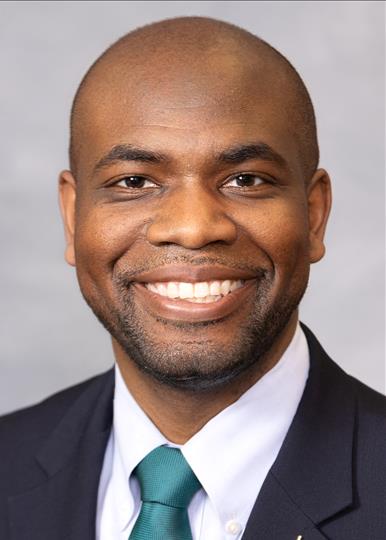
Rep. Allen Buansi
Sponsored bills
Maddy summaryHB 691, the "Voter Protection and Reliance Act," ensures voters' ballots are counted based on election-day rules by prohibiting the exclusion of valid ballots cast under procedures in place on election day. It requires courts and election officials to apply election rules as they existed on election day, not later changes, and mandates that technical registration errors (like incomplete forms) cannot invalidate a ballot if the voter relied on the process. The bill also creates expedited court procedures for election challenges filed within 90 days before an election or after an election concludes, directing such cases to Wake County Superior Court for faster resolution. This directly affects voters, election officials, and courts by prioritizing ballot integrity based on election-day procedures over post-election interpretations.
Maddy summaryHB 685, the Rural NC Reinvestment Act, allocates $605 million in nonrecurring state funds for rural North Carolina communities during the 2025-2026 fiscal year. It provides grants for water/sewer infrastructure ($200M), law enforcement/fire equipment ($10M), economic development land ($20M), rural school construction ($200M), broadband expansion ($50M), early childhood education ($100M), and physician placement ($5M). Local governments, schools, emergency services, and healthcare providers in rural areas directly receive these funds, with allocations prioritized based on need, efficiency, and community impact. The bill becomes effective July 1, 2025, focusing on tangible infrastructure and service improvements without creating new regulations.
Maddy summaryHB 724 establishes the NC-Federal Alignment for Critical Technologies Task Force (NC-FACT) within North Carolina's Department of Commerce. The task force, composed of state agency staff and potentially partners from UNC institutions or the private sector, must study ways to improve collaboration between state, federal, and private entities in science and technology. It is required to develop economic strategies focused on attracting out-of-state investment and streamline resources for tech industries, then submit annual reports with actionable recommendations to the legislature by April 1 each year. The bill creates a study group with specific research duties and reporting requirements but does not enact direct funding or regulatory changes.
Maddy summaryHB 704 establishes the Asian American and Pacific Islander (AAPI) Heritage Commission within North Carolina’s Department of Natural and Cultural Resources. The commission, composed of nine members appointed by the Governor and General Assembly, advises on preserving, promoting, and interpreting AAPI history, arts, and culture through programs, school education, and statewide collaboration. It receives $250,000 annually from 2025-2027 to fund operations, including a director and associate director. The bill directly affects the department and AAPI communities by creating a formal structure to advance cultural preservation and awareness. It becomes effective July 1, 2025.
Maddy summaryHB 684 establishes North Carolina's first formal environmental justice framework to address disproportionate health and environmental risks faced by BIPOC, low-income, and marginalized communities. The bill defines key terms like "communities of color" (40%+ nonwhite residents or 10% higher than county/state) and "disproportionate impact" to guide state agencies. It requires all state agencies to identify and reduce environmental health disparities by considering environmental justice in decision-making, ensuring equitable distribution of benefits like clean air, green spaces, and renewable energy. The law aims to create consistent standards for addressing pollution burdens and health inequities across North Carolina.
Maddy summaryHB 710 establishes a three-year pilot program to fund mental health crisis units in North Carolina public schools. It allocates $2 million total (up to $250,000 annually per district) to select up to eight school districts starting in 2025-2026, prioritizing those with high student mental health needs or trauma history. Each participating district must staff units with at least a school nurse, social worker, and licensed counselor to provide crisis intervention during school hours and rotate across schools. The program requires annual reports on participating districts and student mental health impacts, ending June 30, 2028.
Maddy summaryHB 722 requires North Carolina courts to first assess a defendant's ability to pay before imposing criminal court costs and fees. It modifies rules for collecting specific costs like failure-to-appear fees ($200), crime lab services ($600 max), and digital forensics fees, requiring judges to determine affordability before assessment. The bill also mandates that courts provide 15 days' notice to government entities (like crime labs or prosecutors) before waiving or reducing fees, ensuring affected parties can object. This directly affects defendants convicted in criminal cases and government entities that collect or rely on these fees.
Maddy summaryHB 141, the Joe John Remembrance Act, removes an additional fee for special license plates designated for fire department and rescue squad members in North Carolina. The bill amends state law to formally eliminate the "additional fee" listed for these plates (which was already set to $0 in the current fee schedule), meaning eligible firefighters and rescue personnel will pay only the standard registration fee when obtaining or renewing these special plates. This change applies to plates issued or renewed on or after July 1, 2025. The bill does not create new benefits but codifies an existing fee structure for these specific special plates.
Maddy summaryHB 643 clarifies North Carolina's firearm storage law (G.S. 14-315.1) to explicitly include both loaded and unloaded firearms stored near ammunition. It directly affects households with minors by requiring owners to store firearms - whether loaded or unloaded - in a way that prevents unsupervised minor access, addressing a court case where an unloaded gun next to ammo led to a teen's accidental death. The bill amends the statute to specify that storage "in a condition that the firearm can be discharged" covers scenarios where firearms are accessible with ammunition, aligning with the law's intent to prevent harm. The change takes effect December 1, 2025, for offenses committed on or after that date.