

Maddy summaryHB 723 establishes the North Carolina Technology Coalitions Strategic Support Fund, allocating $10.5 million to support regional technology coalitions focused on sectors like AI, semiconductors, and cybersecurity. The fund provides grants to eligible organizations (including nonprofits, local governments, and academic institutions) operating within North Carolina to strengthen regional economic growth through coalition collaboration. Key provisions include funding for workforce training, market analysis, and matching funds to leverage private or federal investment, while requiring grantees to maintain operations in-state and avoid duplicate funding. The fund becomes effective July 1, 2025, with administration managed by the Department of Commerce’s Office of Science, Technology, and Innovation.
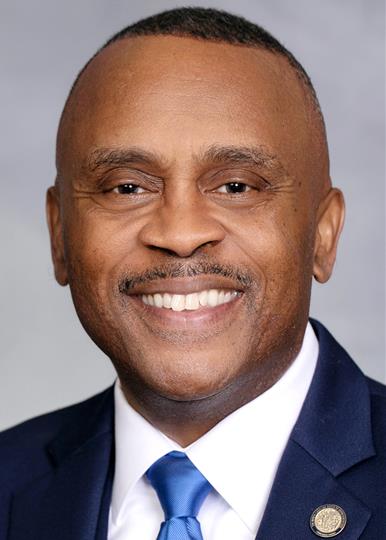
Rep. Robert Reives
Sponsored bills
Maddy summaryHB 141, the Joe John Remembrance Act, removes an additional fee for special license plates designated for fire department and rescue squad members in North Carolina. The bill amends state law to formally eliminate the "additional fee" listed for these plates (which was already set to $0 in the current fee schedule), meaning eligible firefighters and rescue personnel will pay only the standard registration fee when obtaining or renewing these special plates. This change applies to plates issued or renewed on or after July 1, 2025. The bill does not create new benefits but codifies an existing fee structure for these specific special plates.
Maddy summaryHB 752 establishes two new funds to support transportation infrastructure: a $50 million Rail Fund for railroad upgrades, connections, and equipment, and an Airport Fund for airport capital improvements and flight incentives. The Rail Fund prioritizes projects that boost economic growth, with 60% of annual allocations reserved for matching federal grants and 30% for planning. The Airport Fund limits 80% of funds to capital projects (like runway upgrades), 17% to attract strategic flights, and up to 20% to safety improvements. Both funds require competitive allocation based on projected job creation and economic impact, with annual reports to lawmakers. This bill directly affects rail operators, airports, and industries relying on transportation networks across North Carolina.
Maddy summaryHB 628 reenacts North Carolina's state-level child tax credit, which expired, to provide financial support to families with children. It directly affects low- and middle-income North Carolina residents who qualify under federal child tax credit rules, offering up to $250 per child annually based on household income. Key provisions include income-based credit amounts (e.g., $250 for married couples filing jointly with under $40,000 income) that phase out at higher earnings, and the credit is refundable - meaning families may receive cash payments even if they owe no state tax. The bill takes effect for 2025 tax years and mirrors the federal credit structure without creating new policy.
Maddy summaryHB 645 (Friendly NC Act) strengthens hate crime laws in North Carolina by expanding definitions to include offenses motivated by race, religion, nationality, or other protected characteristics. It increases penalties for hate-motivated misdemeanors (elevating them to Class 1 misdemeanors or felonies) and creates new felony charges for hate-motivated serious bodily injury. Victims gain civil remedies (including emotional distress damages and attorney fees) and can request restorative justice sessions with trained facilitators, paid for by the offender. The bill directly affects individuals who commit hate crimes and victims of such offenses, aiming to promote inclusivity through enhanced legal protections.
Maddy summaryHB 603 creates a $40 million revolving loan fund within North Carolina's Housing Finance Agency to cover preconstruction costs (like land surveys, permits, and site work) for workforce housing projects. It directly affects developers building housing affordable to households earning 60%-120% of local median income, requiring them to contribute 20%-35% in project equity. The fund reserves 80% of loans for high-priority counties (tier 1-2) and 20% for other counties, with each loan capped at $1 million. The program requires annual reporting on loan details and becomes effective July 1, 2025.
Maddy summaryHB 604 creates two grant programs to support economic development: the Rural Community Development Grant Program and the Downtown Revitalization Grant Program. Both programs allocate $40 million each from the state budget for 2025-2026, providing grants to local governments (counties and municipalities) to fund projects that improve community amenities like grocery stores, childcare, parks, or downtown infrastructure. Grants require a 1:1 local match, max $2 million per award, and must align with comprehensive plans for revitalization or community growth. The programs aim to reverse rural depopulation, attract business investment, and enhance downtown livability through targeted, competitive funding.
Maddy summaryHB 521 would require most North Carolina employers to provide earned paid sick leave to workers. It mandates that employees accrue one hour of paid sick time for every 30 hours worked, with limits of 32 hours per year for small businesses (10 or fewer employees) and 56 hours for larger employers. The leave covers the employee's own health needs, care for immediate family members, or situations related to domestic violence, sexual assault, or stalking. Exemptions include volunteers, certain exempt employees under wage laws, and domestic workers employed in a private residence. The bill directly affects over 1.6 million private-sector workers in North Carolina, particularly low-wage and high-contact industry workers who currently lack access to paid sick days.
Maddy summaryHB 532 creates special districts in North Carolina called "Research and Production Service Districts" (for research parks) and "Urban Research Service Districts" (URSDs). It allows counties to establish these districts to provide services like utilities, parks, or transportation - beyond standard county offerings - financed through local taxes. Key provisions require counties to form advisory committees (with at least 10 members, including a developer representative), clarify multi-county district rules, and let developers act as agents to contract for services within the district. This directly affects counties, developers of research parks, and property owners in these designated zones.
Maddy summaryHB 522 prohibits crisis pregnancy centers (CPCs) in North Carolina from falsely advertising that they provide abortion or emergency contraceptive services when they do not. It defines this as a deceptive practice, requiring CPCs to clearly disclose staff qualifications and service offerings (like abortion care) on-site or via corrective advertising. The bill establishes a complaint process for the Attorney General to enforce violations, with civil penalties up to $5,000 per violation, and mandates a state health department evaluation of CPCs’ impact on reproductive healthcare access by 2026. This directly affects CPCs operating in the state, particularly those receiving public funds and targeting marginalized communities.