

Maddy summaryHB 193 would allow certain employees and volunteers at nonpublic schools (including private/religious schools) to carry firearms or stun guns on school property if authorized by the school board, trained in gun safety, and following written school policies. It also permits concealed handgun carry on school grounds only when attending religious services or ceremonies at affiliated places of worship (e.g., churches), outside school hours or during designated events. The bill increases penalties for assaulting elected officials or law enforcement officers and requires judges - not prosecutors - to set pretrial release conditions for such offenses. Currently withdrawn from committee after a first reading, this bill has not become law.
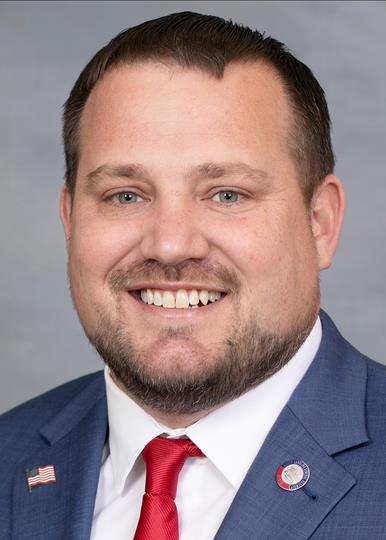
Rep. Ben Moss
Sponsored bills
Maddy summaryHB 318 requires North Carolina county jails and detention facilities to check the immigration status of individuals charged with specific offenses (including certain felonies, misdemeanors, and impaired driving) and to notify U.S. Immigration and Customs Enforcement (ICE) if a detainer is issued. If ICE issues a detainer, facilities must hold the person for up to 48 hours (or until ICE takes custody) and notify ICE 2 hours before the person would otherwise be released. For pretrial defendants facing similar charges, the bill mandates a two-hour hold to allow ICE to issue a detainer; if none is received, the defendant must be released. The law also shields state officials from liability when following these procedures.
Maddy summaryHB 805 requires North Carolina state agencies and local governments to use biological sex definitions (based on reproductive anatomy at birth) in all policies, replacing gender identity as a legal equivalent. It directly affects state programs, including healthcare, education, and civil rights enforcement, by mandating that "female," "male," and related terms refer solely to biological sex as defined in the bill. The bill also creates a new "Prevent Sexual Exploitation of Women and Minors Act" with definitions for consent and intimate visual depictions, while including provisions on birth certificates, school accommodations for religious objections, and parental access to library materials. These changes take effect January 1, 2026, and are intended to align state law with federal directives referenced in the bill's preamble.
Maddy summaryHB 694 directs UNC's Environmental Finance Center to study water and wastewater regionalization to help financially struggling local governments (e.g., small or underfunded systems). It also eliminates specific subbasin designations (Haw River, Deep River, Contentnea Creek) to simplify water transfers within the Neuse and Cape Fear river basins, removing the need for transfer certificates between those areas. The study must identify financial/regulatory changes to improve system stability and report by April 2026. This primarily affects municipalities and utilities managing water infrastructure in regions facing population shifts or aging systems.
Maddy summaryHB 23 transfers 11 acres of state-owned land in Pender County to the Town of Burgaw for $1, with a reversion clause if the land is no longer used for public purposes. It designates the South Fork Passage Trail (a 60-mile hiking and paddling route across Catawba, Lincoln, and Gaston Counties) as part of North Carolina's State Parks System, authorizing the Department of Natural and Cultural Resources to manage it without requiring new appropriations for land acquisition. The bill also codifies the Lake Norman Marine Commission into state law and authorizes the state to support the Gullah Geechee Heritage Trail in Brunswick County. These provisions directly affect local governments (Burgaw, trail jurisdictions), state land management, and recreational planning.
Maddy summaryHB 210 establishes minimum standards for the care and maintenance of licensed cemeteries in North Carolina, directly affecting cemetery operators and license holders. The bill requires the Cemetery Commission to set these standards - covering tasks like grass cutting, grave upkeep, and facility repairs - and allows the Commission to impose $50 civil penalties for violations, with a 10-day notice period before penalties apply. It also mandates annual reports from cemetery companies detailing all care and maintenance work performed, using forms provided by the Commission. These provisions aim to ensure consistent upkeep of cemetery properties while holding operators accountable for compliance.
Maddy summaryHB 763, the Neighbor State License Recognition Act, allows professionals licensed in Georgia, South Carolina, Tennessee, Virginia, or West Virginia to obtain a North Carolina license more easily if they move to the state. It applies to most licensed occupations (excluding healthcare, law, architecture, engineering, and others listed in the bill) and requires applicants to have held a current license in one of those states for at least one year, be in good standing, and meet competency standards through their home state's requirements. The bill streamlines the process by eliminating redundant exams or paperwork for qualifying applicants, while requiring licensing boards to publish clear eligibility criteria online. The bill is currently pending in committee and has not yet become law.
Maddy summaryHB 357 establishes licensing and regulatory requirements for continuing care retirement communities (CCRCs) in North Carolina. All providers (both for-profit and nonprofit) must obtain a license from the North Carolina Department of Insurance and undergo annual actuarial reviews to verify financial stability. The law directly affects CCRCs operating in the state and their residents, who often pay large upfront fees for long-term care. Key provisions include mandatory actuarial studies to ensure providers can sustain services, protecting residents from financial harm if a provider becomes insolvent.
Maddy summaryHB 762 modernizes North Carolina's mortgage licensing rules under the S.A.F.E. Act and adjusts fee limits for second or junior lien loans. It directly affects mortgage lenders offering these second mortgages by requiring their fees to align with federal qualified mortgage standards. The bill modifies maximum permissible fees to better match federal requirements, aiming to reduce consumer costs and improve compliance. This change applies specifically to loans secured by a second or junior lien on residential properties. The bill focuses on policy adjustments without altering licensing processes or consumer protections beyond fee structures.
Maddy summaryHB 612, the "Fostering Care in NC Act," updates North Carolina's laws governing child abuse, neglect, and dependency cases. It expands the definition of "abused juveniles" to include specific offenses like sexual crimes, human trafficking, and certain violent acts, affecting how cases are classified. The bill requires county social services directors to use either a family-centered assessment or a formal investigation when reviewing reports, and to collect military affiliation details of the juvenile's caregiver. It also clarifies that court jurisdiction over juveniles continues until age 18, emancipation, or death. These changes standardize responses to child welfare reports and improve information gathering for safety decisions.