

Maddy summaryHB 59 would increase the income eligibility limit for North Carolina's elderly or disabled property tax homestead exclusion from $25,000 to $48,000 for taxable years beginning July 1, 2026. This change would directly affect homeowners aged 65 or older, or those who are totally and permanently disabled, who meet other criteria (like being a North Carolina resident and owning their home as a permanent residence). The bill modifies the existing rule that currently limits eligibility to those with incomes under $25,000, raising the threshold to $48,000 while maintaining the exclusion amount as the greater of $25,000 or 50% of the home's appraised value. The change aims to expand access to this property tax relief for qualifying low-to-moderate income homeowners. (Note: The bill was withdrawn in June 2025 and has not become law.)
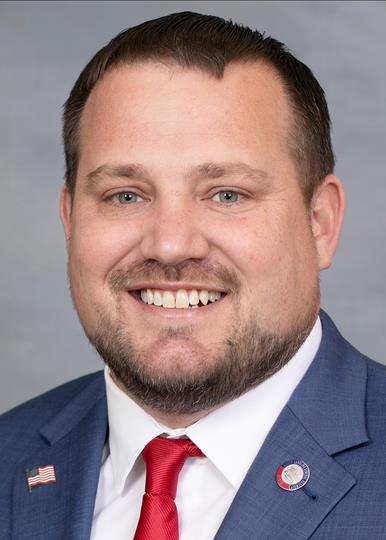
Rep. Ben Moss
Sponsored bills
Maddy summaryHB 348 extends the period for carrying forward deferred property taxes on agricultural, horticultural, and forest land from three to six years. It creates local grant programs for counties and cities, using the excess tax funds generated by this change, to provide financial support to qualifying farmers for farm sustainability. The bill also requires cities to obtain county commission approval before annexing land classified under present-use value taxation. These provisions directly affect farmers who qualify for present-use value property taxation and local governments managing tax funds and annexation decisions.
Maddy summaryHB 480 creates a new pathway for doctors, physician assistants, and anesthesiologist assistants to obtain North Carolina medical licenses by transferring licenses from other states ("licensure by endorsement"). To qualify, applicants must have held an active license in another U.S. jurisdiction for at least five years (with two years of practice post-residency for doctors), have a verified full-time job offer in North Carolina, maintain good standing with no recent disciplinary actions, and meet practice hour requirements. The bill increases application fees for endorsement (e.g., $825 for physicians vs. $400 for standard licensure) and requires additional documentation within 180 days to keep the license active. This directly affects out-of-state medical professionals seeking to practice in North Carolina without retaking exams.
Maddy summaryHB 578, the Jason Flatt Act, requires all North Carolina public K-12 schools to implement suicide prevention education and training for school staff. It mandates that licensed educators complete at least one hour of annual suicide prevention training, while staff working with grades 6-12 must receive guidelines for identifying at-risk students and procedures for referrals. Schools must adopt a mental health plan including these elements, with initial staff training of six hours (within six months of hire) and two hours annually thereafter. The law applies to all public schools, charter schools, regional schools, and lab schools starting the 2025-2026 school year.
Maddy summaryHB 615 helps military families enroll children in North Carolina public schools before establishing local residency. It allows students to register remotely (e.g., online) if a parent is on active duty and either transferring to a North Carolina military base or separating within 12 months, requiring only a copy of the military order or separation document. Families have one year from the parent's duty start or separation date (or until the end of the school year) to provide proof of residency, with high school juniors/seniors getting until graduation. The law takes effect for the 2025-2026 school year.
Maddy summaryHB 811 requires North Carolina property assessors to send written notices to property owners within 30 days of a property revaluation. These notices must include the current and prior appraised values, the percentage change, appeal instructions, and tax rates from the previous year. The bill also mandates that budget officers publish an estimate of the revenue-neutral tax rate on government websites by May 15 each year a revaluation occurs, updating it by July 15 after the budget is adopted. This transparency measure applies to all counties conducting revaluations effective on or after January 1, 2025, directly affecting property owners and local government budget processes.
Maddy summaryHB 50 creates two new options for retired state and local law enforcement officers with at least 30 years of service or 55 years old with 5+ years of service. It allows officers retiring before age 62 to choose between two calculation methods for an annual separation allowance: either 0.85% of their most recent base pay for each year of service, or a fixed amount based on pay at 30 years of service. The allowance stops when officers turn 62 or pass away. This directly affects qualifying law enforcement officers who retire under North Carolina's state retirement system.
Maddy summaryHB 577 creates a Towing and Recovery Commission within the North Carolina State Highway Patrol to resolve disputes over fees charged by towing services to law enforcement. It requires towing businesses to submit hourly rates to the commission for approval and establishes new permit requirements, including background checks (no felony convictions in the past 5-10 years), insurance, training, and proof of a compliant storage facility. The bill directly affects towing companies, truckers using the State Highway Patrol rotation system, and law enforcement agencies that contract for towing services. Key provisions include the commission’s authority to set reasonable fees, disqualify noncompliant tow services, and oversee permit applications with specific eligibility criteria.
Maddy summaryHB 478 changes how North Carolina fills vacancies in district attorney (DA) offices. It requires the Governor to appoint a replacement from a list of up to three candidates recommended by the political party of the outgoing DA (or by the General Assembly if the DA was unaffiliated), within 30 days of the vacancy. If recommendations aren't provided in time, the Governor can appoint directly. This affects all unexpired DA terms in the state, ensuring appointments align with the political party of the vacating official.
Maddy summaryHB 150 allows certain educational organizations to quickly obtain unused federal equipment and property for educational use. It specifically exempts qualifying nonprofits (including 501(c)(3) groups focused on education) from standard state transfer rules when acquiring such items directly from federal agencies. The bill removes barriers in existing law that previously required these organizations to follow lengthy processes for federal surplus materials. This change applies only to property used for educational purposes, not for resale or other commercial activities. The bill does not alter federal acquisition rules but streamlines the state-level process for eligible schools and nonprofits.