

Maddy summaryHB 159 establishes a $75 million grant program within North Carolina's Department of Transportation to improve subdivision streets that don't meet state highway standards and aren't maintained by local governments. It directly affects counties and municipalities with these "orphan roads," providing funds for repairs up to $250,000 per subdivision, requiring a 25% local match (25 cents for every dollar awarded). Once roads meet standards, ownership transfers to the state or local government for ongoing maintenance. The program runs from July 2025 through June 2030, with unspent funds rolling over to the Highway Fund.
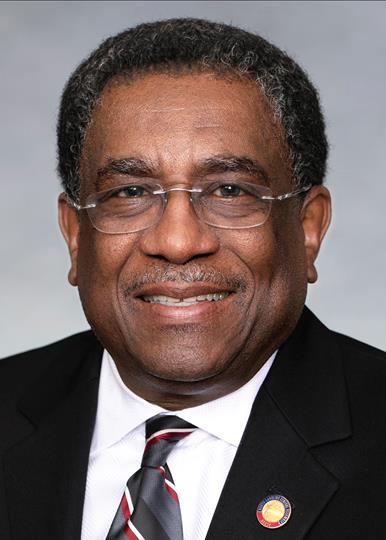
Rep. Garland Pierce
Sponsored bills
Maddy summaryHB 167 (North Carolina) prohibits leaving a firearm in an unattended vehicle unless the vehicle is locked and the firearm is secured with a trigger lock or stored in a locked container. This law directly affects vehicle owners who store firearms in their cars, making it illegal to leave them unsecured in an unattended vehicle. Violations carry a Class 2 misdemeanor penalty. The bill becomes effective December 1, 2025, applying to offenses committed on or after that date.
Maddy summaryHB 31 would amend North Carolina's State Human Resources Act to make every statewide general election day a paid holiday for state employees. This change would add election days to the current list of paid holidays (which includes Martin Luther King Jr.'s Birthday and Veterans Day), while maintaining the limit of 13 paid holidays per year. The bill directly affects state workers, ensuring they receive paid time off on election days without reducing the total number of paid holidays. It does not change election dates or voting procedures, only the employment benefits for state employees on those days. The legislation is currently pending in committee review.
Maddy summaryHB 129, the "Judge Joe John Nonpartisan Judicial Elections Act," reestablishes nonpartisan elections for all North Carolina judicial offices, including Supreme Court justices, Court of Appeals judges, and superior and district court judges. The bill requires candidates to run without party labels, with primaries held only when more than two candidates file for an office, and winners elected based on highest vote totals (using a random draw only in tie situations). It also restores public financing for judicial campaigns, aiming to reduce partisan influence in judicial races. This bill directly affects judicial candidates, voters, and the election process for all statewide and local judicial positions in North Carolina.
Maddy summaryHB 128 appropriates $2 million annually for fiscal years 2025-2026 and 2026-2027 to create a statewide prostate cancer screening program administered by North Carolina's Department of Health and Human Services. The program provides free or low-cost screenings and follow-up care to uninsured or underinsured men aged 50-70 (40-70 with family history of prostate cancer) who meet income requirements (below 250% of federal poverty level). Eligibility requires no Medicare Part B or Medicaid coverage and specific age/family history criteria as defined in the bill. The program begins July 1, 2025.
Maddy summaryThis bill proposes repealing a literacy test requirement from the North Carolina Constitution, which would affect all voters by removing a historical barrier to voting. The amendment must be approved by voters in the November 2026 election, with the ballot explicitly stating: "Constitutional amendment to remove the literacy test requirement... The federal Voting Rights Act of 1965 prohibits implementation of this requirement." If approved, the change takes effect upon certification by the State Board of Elections. The bill does not alter current voting procedures, as the literacy test has been prohibited by federal law since 1965.
Maddy summaryHB 77 requires North Carolina state agencies to evaluate the cumulative environmental impact of proposed permits on minority and low-income communities before approving them. It directly affects developers seeking permits for mining, solid waste facilities, hazardous waste sites, and other projects, as well as the communities near these sites. Key provisions mandate that agencies deny permits if proposed actions would disproportionately harm these communities when considering existing pollution sources in the area, and require detailed impact analyses in all relevant reports and plans. The law takes effect July 1, 2025, applying to pending permit applications on that date.
Maddy summaryHB 90 provides a 3% cost-of-living adjustment (COLA) to retirement allowances for retirees in North Carolina's Teachers', State Employees', Judicial, Legislative, and Local Governmental Retirement Systems. The increase applies to retirees who retired on or before specific dates (ranging from July 1, 2024, to January 1, 2025), with those who retired later receiving a proportional increase based on months served during 2024-2025. The bill appropriates $250 million from the General Fund to fund this adjustment, effective July 1, 2025. It directly affects current retirees in these five systems by increasing their monthly payments.
Maddy summaryHB 61 increases penalties for assaulting certain emergency personnel with a firearm in North Carolina. It reclassifies assaults against law enforcement officers, probation/parole officers, National Guard members, detention facility staff, emergency medical technicians, medical responders, firefighters, and law enforcement telecommunicators as a Class B1 felony (instead of Class D) when committed during their duties. The bill specifically targets firearm assaults, making them punishable by more severe prison sentences. This law takes effect December 1, 2025, for offenses occurring on or after that date.
Maddy summaryHB 60 increases Medicaid dental reimbursement rates from 35% to 46% of average dentist charges (2023 rates) to align with neighboring states. The bill allocates $52 million annually from North Carolina's General Fund, matched by $95 million in federal funds, to cover this rate increase starting July 1, 2025. It directly affects dentists who accept Medicaid patients and Medicaid beneficiaries seeking dental care, aiming to boost provider participation and prevent costly emergency treatments. The change addresses years of stagnant rates that reduced dental provider enrollment in Medicaid.