

Maddy summaryHB 103 exempts members of North Carolina-recognized tribes from needing hunting, trapping, or fishing licenses when hunting or fishing on tribal land (requiring ID verification) or off tribal land (requiring ID plus compliance with reporting, hunter education, and federal stamp rules). It directly affects tribal members recognized under Chapter 71A of North Carolina law, both on tribal property and in state waters/lands outside tribal areas. The bill amends licensing rules to remove fee requirements while maintaining other regulatory obligations like wildlife reporting and federal stamp purchases. It becomes effective October 1, 2025.
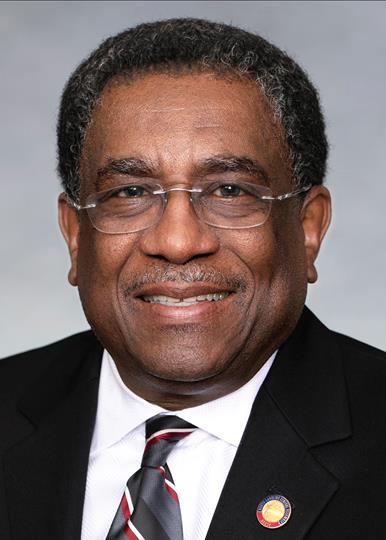
Rep. Garland Pierce
Sponsored bills
Maddy summaryHB 245 modifies North Carolina's low-income housing tax credit program to prioritize affordable housing development in rural communities and counties with higher poverty rates. It requires the state housing committee to adopt allocation rules that favor projects within 10 miles of amenities (like grocery stores) in towns under 10,000 people, measure distances by straight-line radius (not driving routes), and use poverty levels as a tiebreaker when projects score equally. The bill directs the committee to publish proposed rules for public comment and hold hearings before finalizing annual allocation plans. This policy change redirects existing housing tax credits toward qualifying rural and high-poverty areas without creating new funding. The bill takes effect October 1, 2025, for future allocation plans.
Maddy summaryHB 256 repeals North Carolina's current ban on public employee collective bargaining, allowing state and local government workers (like teachers, police, and administrative staff) to negotiate wages and working conditions with their employers. The bill removes existing legal restrictions (Article 12 of Chapter 95) and explicitly states that public employees' bargaining rights apply to all state and local government employers. It does not create new benefits or funding but aligns public sector bargaining rights with those already available to private sector employees. The bill’s key provision is the repeal of the prohibition, enabling public employees to collectively bargain under existing state law.
Maddy summaryThis bill expands privacy protections for minors participating in certain local government or Partnership for Children-funded programs by restricting public access to their personal details. It prevents disclosure of identifying information like names, addresses, birth dates, parent/guardian details, and email addresses in public records, though county/town of residence remains public (with other details redacted). The law applies specifically to programs in Chatham County, Durham County, and several towns including Apex, Cary, Raleigh, and others. Scholarship names are explicitly excluded from these protections, and the bill clarifies the information is not confidential but simply not subject to public disclosure under this rule.
Maddy summaryHB 130 establishes a $475 million program to provide financial assistance to North Carolina farmers who suffered crop losses from natural disasters in 2024. It directly affects farmers in counties designated by the USDA as disaster areas, requiring verified losses of eligible agricultural commodities (like crops, livestock, or specialty plants) planted but not harvested by January 1, 2024. The program uses county and state yield/price averages to calculate payments, mandates submission of USDA Form 578 or equivalent documentation within 30 days, and allocates funds from state reserves (Stabilization, IT, and Economic Development) to cover verified losses. Farmers must provide documentation for verification, and the Department of Agriculture may audit claims to ensure proper use of funds, with refunds required for inaccurate information.
Maddy summaryHB 202, the "Defense Against Porch Pirates Act," creates a new criminal offense for stealing delivered packages or mail. It defines "mail" broadly to include packages and valuable items left for delivery, making it illegal to unlawfully take or control such items with intent to deprive the owner or benefit unauthorized people. The law sets tiered penalties: Class A1 misdemeanors for first-time, low-value thefts ($200 or less), and escalating to Class E or D felonies for higher-value items ($200+), repeat offenses, or thefts exceeding $2,000. This directly affects individuals who steal deliveries and provides law enforcement with a specific legal tool to address package theft.
Maddy summaryHB 196 appropriates $1.5 million from the General Fund to the North Carolina Museum of Life and Science, Inc., for a new biotechnology exhibit and laboratory. The funds will showcase North Carolina's biotech achievements and promote STEM career interest, directly benefiting the museum and students in the state. The bill creates a specific funding mechanism for this educational project, effective July 1, 2025. As a funding allocation, it does not alter laws or regulations.
Maddy summaryHB 179 would allow North Carolina taxpayers to deduct labor union membership dues from their state income tax starting in 2026. The bill creates a new tax deduction for dues, fees, assessments, or other payments required to maintain membership in a labor organization, as defined by state law. This applies specifically to individuals who pay such costs as a condition of union participation. The policy change takes effect for tax years beginning January 1, 2026.
Maddy summaryHB 181 reinstates North Carolina's Earned Income Tax Credit (EITC) for working families with children, providing a state tax credit equal to 5% of the federal EITC amount. The credit is refundable, meaning eligible families receive cash payments even if they owe no state tax, directly benefiting low-to-moderate income households struggling with housing, childcare, and basic living costs. It applies to taxable years beginning January 1, 2025, and aligns with federal EITC eligibility criteria. The bill reenacts the credit after its prior expiration, creating a concrete policy change to supplement family income.
Maddy summaryHB 168, the North Carolina CROWN Act, prohibits employment discrimination based on hair texture or protective hairstyles like braids, locks, or twists. It explicitly adds these characteristics to the definition of "race" under North Carolina's anti-discrimination law, covering all employers and job applicants. The bill also strengthens protections by banning retaliation against employees who report such discrimination. It applies to all public and private employers statewide upon becoming law.