

Maddy summaryThis bill creates a matching savings program and a tax deduction to encourage parents to save for their children's education in North Carolina. Under the new Parental Savings Trust Fund matching program, eligible parents with household incomes at or below 250% of the federal poverty guidelines can receive a $100 match for every $50 they contribute to an account for a student aged 14 or younger, with a maximum annual match of $500 and a lifetime limit of $1,500 per student. The state will fund this matching program with $180,000 in recurring money starting in the 2026-2027 fiscal year. Additionally, the bill allows taxpayers to deduct up to $2,000 from their state income taxes for contributions to these education savings accounts, with a $4,000 limit for married couples filing jointly. These provisions are designed to help low-to-moderate-income families build education funds while providing an immediate tax benefit for their contributions.
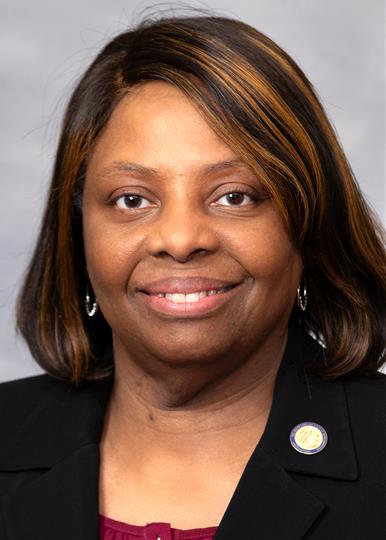
Rep. Frances Jackson
Sponsored bills
Maddy summaryHB 693 establishes the "Interstate Massage Compact" to create a multistate licensing pathway for massage therapists across participating states. It directly affects licensed massage therapists seeking to practice in multiple states and the public receiving those services. Key mechanisms include creating an Interstate Commission to administer the compact, enabling therapists to hold a single "multistate license" valid in all member states, requiring background checks and continuing competence, and allowing states to share disciplinary information and hold licensees accountable. The compact aims to improve public access to safe massage therapy while reducing regulatory burdens for therapists, particularly aiding military members and their spouses relocating between states.
Maddy summaryHB 13 prohibits North Carolina merchants from charging customers more for credit or debit card payments than what the merchant pays to process those transactions. It directly affects retailers and service providers in the state, requiring them to disclose any card fees clearly in advertisements if they impose them. The law mandates that merchants cannot add a markup to processing costs charged by payment networks (like Visa or Mastercard), and violations could result in civil penalties up to $5,000 per offense. The bill takes effect October 1, 2025, aiming to prevent unfair surcharges on card payments.
Maddy summaryHB 118 modifies North Carolina's property tax exemption for disabled veterans, replacing a flat $45,000 exclusion with a percentage-based system tied to the veteran's VA disability rating. It directly affects veterans with a 50% or higher service-connected disability rating (or surviving spouses under specific conditions), allowing them to exclude a portion of their home's appraised value from property taxes - equal to their disability percentage. For example, a veteran with a 70% disability rating would exclude 70% of their home's value from taxes. The bill takes effect for taxes due in 2025 and prohibits combining this relief with other property tax exemptions.
Maddy summaryThe bill title "Defund Planned Parenthood and Cost Transparency" does not match the actual content of HB 192, which is focused on education funding. This bill raises teacher salaries for the 2025-2026 school year using a new salary schedule (e.g., $5,000 for 0 years experience, $6,823 for 25+ years) and reinstates education-based supplements for advanced degrees ($126-$253 monthly). It appropriates $1.597 billion for salary increases and $8 million for supplements, while directing the North Carolina Collaboratory to study a student-based funding system by February 2026. The bill directly affects public school teachers, instructional support staff, and school psychologists. The title appears to be incorrect based on the provided bill text.
Maddy summaryHB 8 requires all North Carolina state departments, community colleges, and local school systems to prioritize purchasing compostable or recyclable materials for food service and supplies, where economically feasible. It mandates annual reporting on purchases of these materials and recycling collections to the Department of Environmental Quality. The bill also directs UNC's Policy Collaboratory to study food service ware impacts and requires legislative and state park pilot programs to reduce single-use food service ware. These provisions directly affect state agencies and schools responsible for procurement and waste management, aiming to reduce single-use waste through policy changes rather than bans.
Maddy summaryHB 907 creates a new Disaster Readiness and Response Fund within the Office of the State Treasurer in North Carolina. This fund is designed to be separate from the state's General Fund and other existing reserves, providing a dedicated financial resource for disaster-related activities. The bill does not specify how the money will be used or who will administer it, leaving those details for future legislation. It applies to the state government and establishes a new financial mechanism for potential future disaster preparedness and response efforts.
Maddy summaryHB 546 modernizes North Carolina's Medicaid program by requiring the state to develop team-based care coordination for individuals with alcohol and opioid use disorders, including screening, medication, and recovery support. The bill also allows telehealth-only providers to enroll in Medicaid without needing a physical office in the state and mandates a statewide specialty plan for children in foster care or receiving adoption assistance, to be implemented by December 2025. These changes directly affect Medicaid beneficiaries with substance use disorders, telehealth providers, and eligible children and families. The Department of Health and Human Services must report on the implementation of the substance use care and telehealth provisions by October 1, 2025.
Maddy summaryHB 210 establishes minimum standards for the care and maintenance of licensed cemeteries in North Carolina, directly affecting cemetery operators and license holders. The bill requires the Cemetery Commission to set these standards - covering tasks like grass cutting, grave upkeep, and facility repairs - and allows the Commission to impose $50 civil penalties for violations, with a 10-day notice period before penalties apply. It also mandates annual reports from cemetery companies detailing all care and maintenance work performed, using forms provided by the Commission. These provisions aim to ensure consistent upkeep of cemetery properties while holding operators accountable for compliance.
Maddy summaryHB 837 is a study bill requiring North Carolina to examine alternative highway funding methods, primarily to address potential revenue gaps as electric/hybrid vehicle adoption grows. It directs the Legislative Services Officer and Transportation Oversight Committee to hire a consultant to study mileage-based fees (VMT) for electric/hybrid vehicles and a new "Access User Fee" for all non-diesel vehicles (replacing gas taxes). The study must be completed by May 2026, with findings reported to key legislative committees. This bill does not implement new fees but assesses options affecting all vehicle owners, particularly electric/hybrid drivers and non-diesel vehicle registrants. It allocates $125,000 from the Highway Fund for the study, effective July 1, 2025.