

Maddy summaryHB 1056 aims to increase housing supply in North Carolina by allowing residential construction in commercial zones and banning minimum parking requirements for new developments. The bill also creates a state program to reimburse local governments for costs associated with speeding up housing permit reviews and provides additional funding to the state housing finance agency. These measures are designed to reduce regulatory barriers that currently limit the number of homes being built and help address rising housing costs.
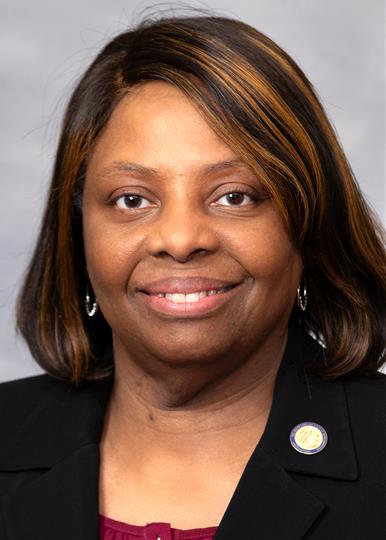
Rep. Frances Jackson
Sponsored bills
Maddy summaryHB 1053 directs the North Carolina General Assembly to allocate additional state funds to the Department of Public Instruction for classroom supplies and equipment. Starting in the 2026-2027 school year, the bill provides $28.6 million, with further increases of $15.1 million and $22.6 million planned for the 2027-2028 and 2028-2029 fiscal years respectively. These recurring funds are intended to increase the specific allotment given to schools for instructional materials and equipment. The legislation becomes effective on July 1, 2026.
Maddy summaryThis bill requires the North Carolina Department of Commerce to create a biennial report assessing economic opportunity, affordability, and family economic security across the state. The report must use existing public data to track specific metrics such as poverty rates, job wages, household spending on essentials like housing and childcare, and access to education and workforce training. It will be submitted to legislative committees and the public by January 31 of each odd-numbered year, with funding of $200,000 allocated starting in the 2026-2027 fiscal year to support its implementation.
Maddy summaryHB 1045, known as the Fair Wages in Health Care Act, establishes minimum hourly wages for five specific direct care occupations in North Carolina: home care aides, direct support professionals, certified nursing assistants, psychiatric aides, and licensed practical nurses. The bill sets wage floors ranging from $18 to $24 per hour depending on the role, with protections against employers using different job titles to avoid paying the required rates. To help healthcare providers meet these new costs, the Department of Health and Human Services must adjust reimbursement rates for publicly funded programs and update contracts with managed care organizations. The law takes effect on October 1, 2027, and applies to all employers in the state, regardless of whether they are public or private entities.
Maddy summaryHB 1047, the North Carolina Microplastics Study Act, directs the North Carolina Collaboratory at the University of North Carolina at Chapel Hill to study the presence and impacts of microplastics in the state's waterways. Funded with $150,000 for the 2026-2027 fiscal year, the bill requires the Collaboratory to identify plastic particles, assess their environmental and health risks, and develop strategies to prevent future pollution and reverse existing harm. The Collaboratory must work with state agencies and stakeholders to create a prioritized research plan and standardized detection methods, ultimately submitting a comprehensive report with findings and policy recommendations by July 1, 2027.
Maddy summaryHB 1057, known as the Affordable Food Act, aims to improve food security in North Carolina by expanding access to nutritious food and supporting local agriculture. The bill authorizes the state to request a federal waiver to create a program that matches SNAP benefits for purchases of fruits, vegetables, and other healthy foods at retailers and farmers markets. It also allocates state funding to administer these incentive programs and covers potential administrative losses due to recent federal changes to SNAP. Additionally, the legislation seeks to protect agricultural land from development and prohibits dynamic pricing in grocery stores to stabilize food costs.
Maddy summaryThis bill establishes new salary schedules for public school teachers and principals in North Carolina effective for the 2026-2027 fiscal year. It sets specific monthly pay rates for teachers based on years of experience and adds bonuses for those with advanced certifications or degrees, while also adjusting compensation for school support staff like nurses and counselors. Principals will receive annual salaries determined by their school's student enrollment and performance growth scores over the previous three years. Additionally, the legislation enhances sick leave benefits for state employees and provides a cost-of-living adjustment for certain retirees.
Maddy summaryThis bill allocates $10 million in recurring funds to the North Carolina Department of Military and Veterans Affairs to support Disabled American Veterans (DAV) chapters. The money will be distributed as grants to eligible nonprofit DAV chapters across the state for renovating and expanding their facilities or providing additional resources to disabled veterans. Each chapter can receive up to $1 million per fiscal year, and the department will aim to select applicants from all regions of the state. The legislation also requires annual reports detailing the number of grants awarded, the specific chapters involved, and the amounts given, with the program becoming effective on July 1, 2026.
Maddy summaryHB 1017 aims to improve teacher quality and availability in North Carolina by creating new roles, funding recruitment programs, and launching studies to address workforce challenges. The bill directs the state to develop a comprehensive plan for reforming teacher licensing and compensation to attract more educators, while also studying how to better prepare and graduate 5,000 in-state teachers annually. Significant funding is allocated to support existing and new teacher recruitment initiatives, such as "Grow-Your-Own" programs and the Teaching Fellows loan program, specifically targeting high-need schools and subjects like special education and STEM. Additionally, the legislation mandates a study to coordinate recruitment efforts between universities and local school districts to ensure a more efficient statewide system.
Maddy summaryHB 1031 mandates that all public schools in North Carolina, including charter and laboratory schools, provide free breakfast and lunch to every student starting in the 2026-2027 school year. The bill requires the State Board of Education to allocate state funds based on factors like school size, student eligibility for free meals, and the quality of food served, while ensuring these funds supplement rather than replace existing resources. An initial appropriation of $116 million is designated to support this program, with the legislation taking effect on July 1, 2026.