

Maddy summaryThis bill establishes an Interstate Medical Licensure Compact in North Carolina, allowing physicians who meet specific qualifications to obtain medical licenses in multiple participating states through a streamlined process. The law creates an Interstate Commission to oversee the compact and sets clear standards for physician eligibility, including requirements for medical school graduation, passing licensing exams, specialty certification, and a clean disciplinary record. While the compact simplifies licensing for qualified doctors, it maintains that each state retains authority to regulate medical practice within its borders and can take disciplinary action against physicians licensed through the compact. The bill does not alter existing state medical practice laws but adds an additional pathway for physicians to practice across state lines.
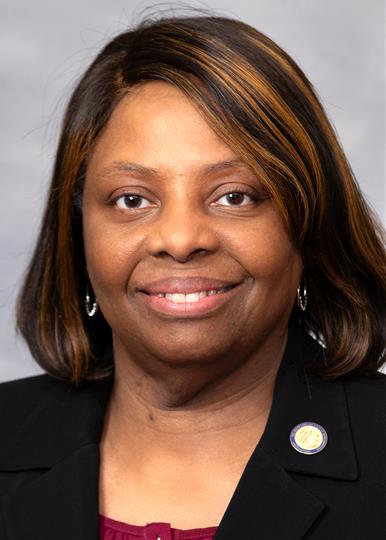
Rep. Frances Jackson
Sponsored bills
Maddy summaryHB 378 requires North Carolina public schools to evaluate long-term technology costs - including repair expenses and resale value - when purchasing devices like computers and tablets. Schools must report annually on the "break/fix rate" (the percentage of devices malfunctioning or needing repair before their expected lifespan), total device counts, and repair costs to the State Board of Education. The State Board will compile these reports and provide an annual summary with recommendations to the legislature for reducing device repair rates. This bill directly affects all public school units, including charter schools, by adding these reporting requirements to existing education laws.
Maddy summaryHB 421 clarifies North Carolina's motor vehicle dealer licensing rules. It extends the license renewal grace period from 30 to 60 days after expiration, requiring the Division to issue temporary licenses during this time. The bill also aligns dealer license plate renewals with dealer license cycles (now two years) and mandates that dealer plates be replaced every three to four years. These changes directly affect all licensed motor vehicle dealers in North Carolina who must renew licenses or plates. The bill takes effect October 1, 2025.
Maddy summaryHB 79, "North Carolina Work and Save," creates a voluntary retirement savings program for North Carolina workers without access to employer-sponsored plans. It allows covered employers (small businesses not already offering tax-qualified retirement plans) to set up payroll deduction IRAs (traditional or Roth) for employees, enabling automatic retirement savings. The program is administered by a 12-member Board under the Department of Commerce, with funds held in a trust managed by private entities. It directly affects approximately 1.7 million North Carolina workers in small businesses, focusing on moderate- and lower-income households to improve retirement security. Participation is voluntary for both employers and employees, with no state funding required for employer participation.
Maddy summaryHB 59 would increase the income eligibility limit for North Carolina's elderly or disabled property tax homestead exclusion from $25,000 to $48,000 for taxable years beginning July 1, 2026. This change would directly affect homeowners aged 65 or older, or those who are totally and permanently disabled, who meet other criteria (like being a North Carolina resident and owning their home as a permanent residence). The bill modifies the existing rule that currently limits eligibility to those with incomes under $25,000, raising the threshold to $48,000 while maintaining the exclusion amount as the greater of $25,000 or 50% of the home's appraised value. The change aims to expand access to this property tax relief for qualifying low-to-moderate income homeowners. (Note: The bill was withdrawn in June 2025 and has not become law.)
Maddy summaryHB 578, the Jason Flatt Act, requires all North Carolina public K-12 schools to implement suicide prevention education and training for school staff. It mandates that licensed educators complete at least one hour of annual suicide prevention training, while staff working with grades 6-12 must receive guidelines for identifying at-risk students and procedures for referrals. Schools must adopt a mental health plan including these elements, with initial staff training of six hours (within six months of hire) and two hours annually thereafter. The law applies to all public schools, charter schools, regional schools, and lab schools starting the 2025-2026 school year.
Maddy summaryHB 661, the Building Industry Efficiency Act of 2025, modifies North Carolina's construction and street regulations to streamline development. It prohibits inspection departments from charging fees for canceling inspections more than one business day early (Section 1.1), and limits municipalities from imposing stricter street design standards than the North Carolina Department of Transportation (NCDOT) for both public and private streets (Sections 1.2-1.3). For private streets, developers must disclose if engineered designs fall below NCDOT standards and provide disclosures to buyers before sales. Municipalities and counties must accept pedestrian facilities or street improvements into public road systems after project completion, but counties need agreements with NCDOT or municipalities first (Sections 1.4-1.5). The bill takes effect July 1, 2025, directly affecting developers, municipalities, engineers, and property buyers.
Maddy summaryHR 778 is a non-binding resolution passed by the North Carolina House of Representatives expressing support for the state's historical and economic ties with the United Kingdom. It highlights North Carolina's cultural connections (e.g., city names like Raleigh and Charlotte), economic partnerships (including $1 billion in UK investment and 218 UK-owned companies employing 43,200 workers), and trade relationships (over $2.5 billion in annual trade). The resolution urges the U.S. Congress to strengthen trade and investment cooperation with the UK and directs transmission to the UK Embassy, consulates, and North Carolina's congressional delegation. As a symbolic gesture, it does not create new laws or policy changes but reinforces existing diplomatic and economic bonds.
Maddy summaryThis resolution (HR 777) expresses the North Carolina House of Representatives' support for the longstanding friendship and economic ties between North Carolina and France. It highlights historical connections (like French Huguenot settlements and General Lafayette's role), notes France as a major investor in NC ($429M since 2013) and employer (15,500 jobs), and urges closer U.S.-France trade cooperation. The resolution is purely symbolic, with no new policies or funding, and serves to affirm existing bilateral relations through ceremonial recognition.
Maddy summaryHB 231 establishes North Carolina's participation in the Social Work Interstate Licensure Compact, allowing licensed social workers from participating states to practice across state lines without obtaining separate licenses in each state. The bill directly affects licensed social workers seeking to provide services in multiple states, particularly those serving military families or addressing workforce shortages. Key provisions include mutual recognition of licenses among member states, accountability for social workers practicing where clients are located, and streamlined processes for disciplinary information sharing. This reduces duplicate licensing requirements while maintaining state authority to protect public health and safety through existing licensure systems.