

Maddy summaryHB 486 appropriates $1 million from North Carolina's General Fund to Blue Star Families, Inc., a nonprofit organization, for specific military family support programs. The funds will directly support military spouses through career development (via a Fayetteville chapter), strengthen military families, and provide caregiver services for veterans and military personnel. The allocation is structured as $400,000 for career programs, $300,000 for family strengthening, and $300,000 for caregiver services, all for the 2025-2026 fiscal year. The bill becomes effective July 1, 2025, and focuses solely on funding existing nonprofit services without altering laws or creating new requirements.
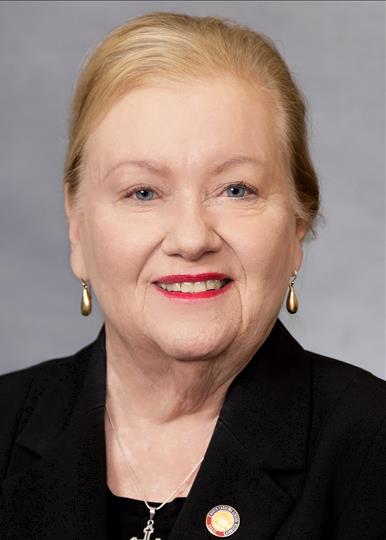
Rep. Diane Wheatley
Sponsored bills
Maddy summaryHB 47, the Disaster Recovery Act of 2025 - Part I, allocates $524 million from the Helene Fund to support recovery efforts in North Carolina counties impacted by Hurricane Helene. The bill directs funds to specific programs including home reconstruction ($120 million), agricultural crop loss assistance ($200 million), road and bridge repairs ($100 million), small business infrastructure grants ($55 million), debris removal ($20 million), fire department equipment ($10 million), and tourism promotion ($4 million). These resources directly assist residents, farmers, local governments, and businesses in designated hurricane-affected counties by addressing immediate rebuilding needs and supporting economic recovery. The bill requires programs to align with federal disaster recovery guidelines to maximize potential federal reimbursement, with reporting requirements for certain initiatives.
Maddy summaryHB 184 allows small North Carolina sawmills (those milling under 1 million board feet annually) to sell ungraded lumber directly to homeowners for residential construction. The bill amends building codes to permit this ungraded "dimension lumber" in one- and two-family homes and certain small structures, provided mills meet specific requirements. These include operators holding state-approved lumber grading training certifications, marking lumber with detailed specifications (species, mill ID, PS20 compliance), and providing purchaser certificates. Code officials must review construction for safety compliance (excluding grade-stamp requirements) and are protected from liability for structural issues related to ungraded lumber use. The law aims to support local sawmills while maintaining safety standards through defined labeling, training, and oversight.
Maddy summaryHB 186, the "Stars and Stripes Commitment Act," requires all North Carolina public schools (including charter, regional, and laboratory schools) to schedule the daily recitation of the Pledge of Allegiance within one hour of the start of the instructional day. It also mandates that schools display U.S. and North Carolina flags in classrooms when available and provide age-appropriate instruction about the flag and pledge’s meaning. The bill applies to all school governing bodies and state education board meetings, requiring the pledge to open each meeting. Crucially, it explicitly states the policy does not compel anyone to stand, salute, or recite the pledge. The law takes effect for the 2025-2026 school year.
Maddy summaryHB 453 increases Medicaid reimbursement rates for two specific services in North Carolina. It raises the rate for personal care services (e.g., help with daily tasks) to $7.50 per 15-minute increment for beneficiaries in programs like State Plan Personal Care Services and Community Alternatives programs. It also increases private duty nursing rates to $16.25 per 15 minutes for both children under 21 and adults, using state funds to match federal support. The changes, effective July 1, 2025, will directly affect Medicaid beneficiaries receiving these services through approved programs.
Maddy summaryHB 95 increases penalties for threats against certain elected and public officials in North Carolina, making such threats a Class I felony. It directly affects individuals who make threats against legislative, executive, court, local elected, or election officials, requiring a $50,000 secured appearance bond for anyone charged with these offenses. The bill amends existing statutes to clarify that threats need not be received or believed by the targeted official, and it specifically covers threats made in retaliation for an official's duties. The law applies to offenses committed on or after December 1, 2025.
Maddy summaryHB 21 creates a voluntary designation on North Carolina driver's licenses for individuals with autism spectrum disorder (ASD), as defined by state law. People with a medical diagnosis of ASD can request this designation by providing acceptable documentation, such as a healthcare professional's certification, to the Division of Motor Vehicles. The designation appears only in the license record and is accessible solely to law enforcement during interactions to promote safety - no other use is permitted. Individuals may add or remove the designation at any time without affecting their license eligibility or rights.
Maddy summaryHB 37 standardizes monthly pension benefits for North Carolina firefighters and rescue squad workers under the state pension fund. It sets a uniform $175 monthly pension for members with 20+ years of service who reach age 55, replaces the previous $180 amount, and maintains $175 for disability benefits and line-of-duty death benefits. The bill also allows members affected by city annexations or department closures to continue contributing $15 monthly until they reach 20 years of service for pension eligibility. These changes apply to current and future members of the pension fund who meet the service requirements. The bill does not alter contribution rates or eligibility for most members but adjusts benefit amounts and extends certain provisions.
Maddy summaryHB 5, the NC Constitutional Carry Act, allows any U.S. citizen aged 18 or older to carry a concealed handgun without a permit, effective upon enactment. This directly affects most adult residents who are not prohibited from firearm ownership under existing state or federal law. The bill removes the permit requirement for concealed carry (per new Section 14-415.35(a)), while maintaining all existing prohibitions - such as for felons, domestic violence offenders, or those under indictment. It also preserves the ability to obtain permits for reciprocity or other purposes, and continues allowing officials with permits to carry while on duty. The law does not change restrictions for prohibited individuals, who remain barred from concealed carry.
Maddy summaryHB 425 raises North Carolina's legal sales age for all tobacco products, including vaping devices and e-liquids, from 18 to 21. It directly affects retailers (who must obtain a tobacco sales permit) and youth (who are prohibited from purchasing these products). The bill requires retailers to verify purchasers' ages using accepted ID and mandates inspections of retail locations to enforce compliance, with penalties including fines up to $1,000 for violations.