

Maddy summaryHB 426 establishes the Workforce Diploma Program to help North Carolina adults aged 21+ without high school diplomas earn diplomas while gaining job skills. The program requires approved providers to offer courses combining diploma requirements with career training, including employability certifications and industry credentials. Participants receive milestone-based funding up to $7,500 per person, with payments tied to completing half-credits, certifications, or diplomas. The program mandates annual reports tracking participant outcomes like diplomas earned, credits, and workforce credentials. It appropriates $5 million for implementation starting July 2025.
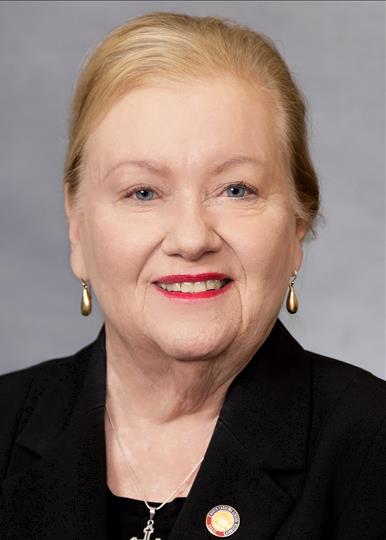
Rep. Diane Wheatley
Sponsored bills
Maddy summaryHB 594 allocates $5 million from the state general fund to the City of Fayetteville for constructing a second entrance into the Kings Grant neighborhood. This one-time grant would provide an additional access point for residents of the Kings Grant neighborhood, improving connectivity to the area. The funding is designated for the 2025-2026 fiscal year and becomes effective July 1, 2025.
Maddy summaryHB 591, the G.U.A.R.D. Act, allows residents of nursing homes and adult care facilities in North Carolina to install and use their own electronic monitoring devices (like cameras or audio recorders) in their rooms at their own expense. The bill requires facilities to provide power, mounting space, and not deny admission or discharge based on a resident's request for monitoring. Recordings from these devices can be used as evidence in court, and facilities face fines or jail time for violating the law. The act directly affects residents and their families by giving them greater control over monitoring their living environment while protecting facility obligations.
Maddy summaryHB 571 appropriates $500,000 from the state General Fund to the Department of Public Safety for a grant program treating police officers diagnosed with PTSD. It directly affects North Carolina police officers who have received a clinical PTSD diagnosis. The key provision establishes a state-funded grant program to cover treatment costs, with funds allocated for the 2025-2026 fiscal year. The program becomes effective July 1, 2025, and focuses solely on providing financial support for treatment, not on expanding eligibility or altering diagnosis standards.
Maddy summaryHB 564 provides a 2% cost-of-living adjustment for retirees in North Carolina's Teachers' and State Employees' Retirement System, Consolidated Judicial Retirement System, and Legislative Retirement System. It increases retirement payments for retirees who retired on or before specific dates (July 1, 2024, for most systems, or January 1, 2025, for the Legislative system) and offers a prorated increase for those retiring between July 1, 2024, and June 30, 2025. The bill appropriates $106.2 million from the General Fund to fund this adjustment, effective July 1, 2025. This policy change directly affects current retirees in these systems by increasing their monthly benefits.
Maddy summaryHB 540 allocates $2 million in recurring state funds from the General Fund to the UNC Board of Governors for the 2025-2026 fiscal year. This funding will be directed to the Patriot Foundation to support its existing North Carolina Patriot Star Family Scholarship Program. The bill specifically provides financial resources for the program's operation, without creating new eligibility rules or altering the scholarship's structure. It becomes effective July 1, 2025, and directly affects the scholarship program's budget for that fiscal year.
Maddy summaryHB 16 requires the North Carolina General Assembly to display the national motto "In God We Trust" directly above and behind the dais for the Speaker of the House and President of the Senate, aligning with the U.S. House of Representatives' display. The bill mandates the Legislative Services Officer to implement this, first using private gifts or donations for costs, and if none are provided within 90 days, using state funds. It becomes effective July 1, 2025. This is a procedural bill affecting legislative chamber decor, not a substantive policy change.
Maddy summaryHB 505, "Kayla's Act: Protecting Domestic Violence Victims," allows domestic violence victim witnesses in North Carolina criminal cases to testify remotely (via video or similar technology) instead of in person during trials. This directly affects victims, prosecutors, defense attorneys, and courts in domestic violence cases involving crimes like assault or stalking under Chapter 14 of state law. The bill requires prosecutors to notify defendants 15 business days in advance of remote testimony, with defendants having 5 days to object in writing; if no objection is filed, remote testimony is permitted. If a defendant objects, a judge may still allow remote testimony only if the victim would suffer serious emotional distress from testifying in the defendant's presence or if their ability to communicate with the court would be impaired, with strict court oversight to ensure fair cross-examination.
Maddy summaryHB 514 defines the scope of practice for Advanced Practice Registered Nurses (APRNs) in North Carolina, including nurse practitioners (NPs), certified nurse midwives (CNMs), certified registered nurse anesthetists (CRNAs), and clinical nurse specialists (CNSs). The bill explicitly outlines the specific responsibilities for each role - such as CNMs managing reproductive health care, NPs diagnosing and treating illnesses, and CRNAs administering anesthesia - removing ambiguity in current law. It directly affects over 20,000 APRNs in North Carolina who currently face restrictions due to undefined practice parameters. The legislation aims to align North Carolina with 36 other states that have clarified APRN authority without compromising patient safety, as supported by research cited in the bill. This statutory definition is intended to improve healthcare access and reduce costs by enabling APRNs to practice to the full extent of their training.
Maddy summaryHB 498 creates a retirement credit for North Carolina teachers who served in the military. It allows veterans to count up to four years of active duty service toward their state retirement system, provided they weren’t dishonorably discharged, served before becoming a teacher, and meet licensure requirements. The bill modifies the retirement system to include this credit, requiring employers to pay a lump sum covering the retirement system’s increased liability for the credited service. This directly affects military veterans transitioning to teaching careers in North Carolina, making their prior service count toward retirement benefits.