

Maddy summaryHB 132 allows Cumberland County Schools to set an earlier school start date (as early as August 19, instead of the standard August 26) if they demonstrate "good cause" based on historical emergency closures. Specifically, it requires the county to show schools were closed eight days per year during any four of the last ten years due to weather, power failures, or other emergencies. The bill modifies existing calendar rules to accommodate this flexibility while ensuring schools still meet minimum instructional day requirements. This change applies only to Cumberland County Schools and takes effect for the 2025-2026 school year.
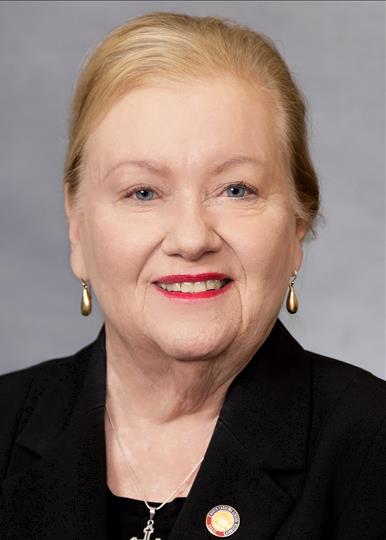
Rep. Diane Wheatley
Sponsored bills
Maddy summaryHB 112 raises the maximum allowable speed limit on North Carolina's interstate highways and controlled-access roads from 70 mph to 75 mph, as determined by the Department of Transportation after engineering studies. This directly affects drivers traveling on these roads, as the new 75 mph limit replaces the previous 70 mph cap where the DOT deems it safe. The bill also updates related penalties: speeding over 85 mph on roads with a 75 mph limit becomes a Class 3 misdemeanor, and license suspension rules for excessive speeding (e.g., over 85 mph on 75 mph zones) are adjusted accordingly. The changes apply only to offenses occurring on or after December 1, 2025, and do not affect cases before that date.
Maddy summaryHB 90 provides a 3% cost-of-living adjustment (COLA) to retirement allowances for retirees in North Carolina's Teachers', State Employees', Judicial, Legislative, and Local Governmental Retirement Systems. The increase applies to retirees who retired on or before specific dates (ranging from July 1, 2024, to January 1, 2025), with those who retired later receiving a proportional increase based on months served during 2024-2025. The bill appropriates $250 million from the General Fund to fund this adjustment, effective July 1, 2025. It directly affects current retirees in these five systems by increasing their monthly payments.
Maddy summaryHB 39 excludes motor vehicles owned by veterans with a 100% disability rating certified by the U.S. Department of Veterans Affairs from North Carolina property tax. It amends state tax law to add these vehicles as a designated exempt class under G.S. 105-275. The exclusion applies to vehicles registered on or after January 1, 2026. This policy directly affects eligible disabled veterans who own motor vehicles, reducing their property tax burden. The bill does not change eligibility criteria or tax rates for other vehicle classes.
Maddy summaryHB 36 requires North Carolina's Department of Veterans and Military Affairs to improve maintenance at all four state veterans cemeteries, directly affecting veterans' families and cemetery operations. The bill mandates addressing specific issues like headstone installation delays, equipment damage to graves, drainage problems, debris, and poor grounds appearance, while allowing military groups to volunteer for upkeep. It also directs the department to review and adjust funeral service policies, including chapel-only options, service duration, attendee limits, and grave visitation rules during services. The department must submit a report on these changes to legislative committees by October 1, 2025.
Maddy summaryHB 12 would require North Carolina and all its local governments to observe Eastern Standard Time year-round, eliminating the biannual clock changes for daylight saving time. This bill directly affects state agencies, local municipalities, and residents by keeping the state on standard time permanently, as permitted under federal law (the Uniform Time Act of 1966). The key provision amends state law to mandate year-round standard time, aligning with a federal provision that allows states to forgo daylight saving time. The bill would take effect on March 8, 2026, if enacted. This is a procedural change to time observance, not a new policy affecting services or regulations.
Maddy summaryThis procedural bill updates the House's committee structure by adding "Appropriations, Agriculture and Natural and Economic Resources" to the list of standing committees. It directly affects House members who serve on these committees and the administrative organization of legislative work. The change is purely organizational, with no policy or funding implications. The bill was adopted on January 29, 2025, and modifies Rule 27 of the House's Temporary Rules.
Maddy summaryThis is a commemorative resolution (not a policy bill) honoring former North Carolina House Representative Joseph "Joe" Robert John, Sr., who served District 40 from 2017-2025 and died January 20, 2025. The resolution expresses the House's appreciation for his public service, extends sympathy to his family, and formally recognizes his contributions to North Carolina's judiciary, criminal justice, and community. It has no policy impact or new legal provisions - its purpose is solely to memorialize his career and legacy. The resolution was adopted unanimously by the House on January 29, 2025.
Maddy summaryThis House resolution urges the U.S. Congress to reform federal permitting and environmental review processes to speed up the construction of new energy infrastructure. The bill directly affects federal agencies responsible for approving projects and the broader energy sector by calling for measures like stricter timelines, limits on excessive litigation, and streamlined regulations for technologies such as nuclear power and critical mineral mining. It argues that current delays under laws like the National Environmental Policy Act hinder domestic energy production, increase costs for consumers, and reduce national security. Ultimately, the resolution requests that Congress act to balance environmental protection with the urgent need for a reliable and affordable modern energy grid.
Maddy summaryThis bill formally honors the life and public service of Kelly Miller Alexander, Jr., a former North Carolina state representative who served from 2009 to 2024. The resolution recognizes his extensive community work, including his leadership roles in the NAACP and various local commissions, as well as his legislative focus on issues like criminal justice reform and healthcare access. It expresses the General Assembly's appreciation for his contributions to the state and offers condolences to his family following his death in September 2024. The measure directs the Secretary of State to send a copy of the resolution to his family and takes effect upon ratification.