

Maddy summaryThis resolution directs North Carolina's Secretary of State to formally request Congress to call a constitutional convention aimed at imposing term limits on members of the U.S. House of Representatives and the U.S. Senate. The bill specifies that this application will be combined with similar requests from other states to reach the two-thirds threshold required to trigger the convention, while remaining separate from applications for other constitutional changes. It establishes this request as a continuing application that remains active until enough states have submitted identical petitions. Ultimately, the measure does not change any current laws but serves as an official step in the process of potentially amending the U.S. Constitution.
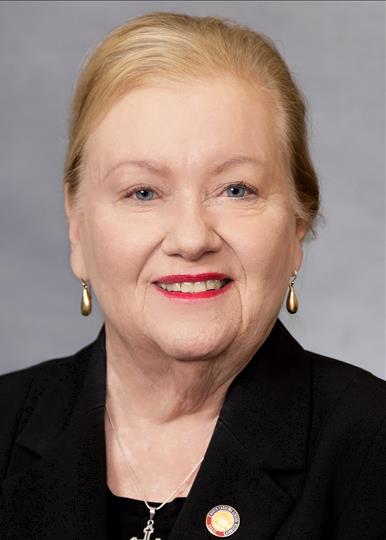
Rep. Diane Wheatley
Sponsored bills
Maddy summaryThis amendment to House Bill 10 allocates $278,994 annually from the state's General Fund to hire two full-time jail inspectors for the 2023-2025 fiscal period. The funds are directed to the Department of Health and Human Services to support the Division of Health Services Regulation in its construction section. These positions become effective on July 1, 2023, and the amendment also updates the bill's title to reflect the addition of these inspector roles.
Maddy summaryThis bill codifies North Carolina's laws regarding tenancy in common, which allows multiple people to own a property separately without the right of survivorship. It clarifies how such ownership is created, defines specific terms like "actual ouster," and sets rules for how married couples holding property as tenants in common are treated. The legislation also includes changes to notary public laws, prohibits local governments from banning landlords from refusing tenants based on federal housing assistance income, and adjusts procedures for small claims court and eviction cases.
Maddy summaryThis bill allows patients with life-threatening or severely debilitating conditions in North Carolina to access custom-made investigational drugs, biological products, or devices that are not yet approved by the federal government. To qualify, a patient must have a doctor confirm that standard FDA-approved treatments are unlikely to help and must provide written informed consent acknowledging the risks and potential costs. The law requires that the patient or their guardian understands they are personally responsible for any expenses related to the treatment unless a separate contract states otherwise. Additionally, the bill clarifies that using these individualized treatments may temporarily remove a patient's eligibility for hospice care, though that eligibility can be restored if the treatment stops.
Maddy summaryHB 984 creates a new legal process in North Carolina that allows property owners to request law enforcement agencies to quickly remove people who are occupying their private residential homes without permission. To use this process, an owner must file a sworn complaint stating that the occupants are not tenants, have no legal right to the property, and have been told to leave, while also confirming there is no ongoing lawsuit between the parties. If a police department or sheriff's office verifies the complaint, they are required to remove the unauthorized individuals within 48 hours and may arrest them for trespassing or other offenses. The bill also establishes that property owners must pay for police time if they request officers to stay on site to help change locks or secure the property, and it provides a way for removed individuals to sue for damages if the removal was done incorrectly.
Maddy summaryThis bill amends the state constitution to eliminate the literacy test requirement for voting. By removing this specific provision, the legislation ensures that all eligible citizens can vote regardless of their reading or writing abilities. The change directly affects voters who previously might have been disenfranchised by this barrier. It does not alter other voting qualifications or the overall structure of the election process.
Maddy summaryThis bill, titled the Health Care Omnibus, introduces several changes to North Carolina's healthcare regulations. It requires doctors and pharmacists to inform patients receiving opioid prescriptions about the risks of overdose, prevention methods, and the availability of reversal drugs. Additionally, the legislation clarifies that Medicaid benefits will continue for a limited time after individuals are released from prison or other incarceration facilities. The bill also expands access to mental health services by allowing reciprocal licensing for marriage and family therapists, reducing regulatory hurdles for master's level psychologists, and encouraging the use of tribal health facilities.
Maddy summaryThis bill creates a new legal process allowing property owners to request the immediate removal of unauthorized individuals from residential homes by contacting their local sheriff. To use this process, the owner must file a sworn complaint stating that the person is not a tenant or resident, has been asked to leave, and that no valid lease exists, after which the sheriff must act within 24 hours. The legislation also increases penalties for willful damage to residential property and prohibits fraudulent rental advertisements while requiring all leases to be in writing. Property owners who incorrectly use this removal process could face civil lawsuits, including triple damages based on the rent and legal fees.
Maddy summaryHB 935 reorganizes the Advisory Council on Rare Diseases in North Carolina by moving it from the University of North Carolina at Chapel Hill to the Department of Health and Human Services. The bill establishes a 19-member council composed of physicians, researchers, patient advocates, industry representatives, and other stakeholders to advise state leaders on rare disease research, diagnosis, treatment, and education. Key provisions include setting specific term lengths for members, providing administrative support and funding for the council's operations, and requiring annual reports on council activities and recommendations.
Maddy summaryThis bill creates a new grant program called "Increasing Engagement in STEM" to provide funding to North Carolina public schools for experiential science, technology, engineering, and math education. The program specifically targets sixth, seventh, and eighth-grade students and allows schools to use the money for teacher stipends, hiring third-party vendors, and hosting competitions. A total of $1 million is allocated to fund up to 20 school districts, with selection criteria designed to ensure geographic and population diversity across different school sizes. Schools must submit detailed plans outlining how they will use the funds and how they intend to sustain the programs after the grant period ends. The bill also requires the state superintendent to submit initial and final reports to a legislative committee detailing application results, student participation data, and performance outcomes.