

Maddy summaryHB 991 establishes North Carolina's Disaster Mortuary Operational Response Team (DMORT) within the Division of Emergency Management. The team, composed of licensed funeral directors, medical examiners, forensic specialists, and other trained professionals, will respond to disasters by identifying victims, managing remains, coordinating with families, and supporting local mortuaries during mass fatality incidents. It requires the Division to develop a response plan integrated into the state’s Emergency Operations Plan, fund training and equipment, and coordinate with agencies like the Board of Funeral Service. The bill takes effect October 1, 2025, creating a standardized state-level system for handling mortuary needs after disasters.
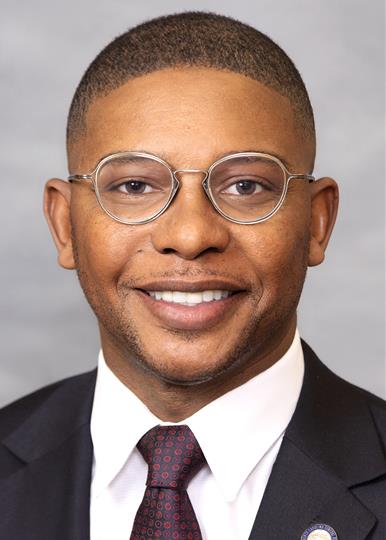
Rep. Mike Colvin
Sponsored bills
Maddy summaryHB 1004 proposes to allocate $16 million (one-time) and $8 million annually to establish up to eight Artificial Intelligence Hubs at UNC campuses, including at least one HBCU or UNC Pembroke, requiring institutions to match 10% with non-state funds. It also appropriates $70 million for Technology Hubs at all UNC campuses to drive innovation, workforce development, and entrepreneurship, plus $30 million for research grants focused on AI applications in education, healthcare, ethics, and infrastructure. The bill directly affects UNC system campuses, researchers, and students through funding for hubs, infrastructure, and project grants. It requires reporting on hub activities and becomes effective July 1, 2025, pending legislative approval.
Maddy summaryHB 994 allocates $20.3 million in nonrecurring funds and $1 million in recurring funds to support Western North Carolina recovery from Hurricane Helene and expand economic development services. The bill directs $10 million specifically for long-term housing recovery for residents in Western NC whose homes were damaged by Hurricane Helene, $5 million to Community Development Corporations (CDCs) statewide to enhance economic development services, and $300,000 to fund three women’s business centers in Western NC, the Triad, and the Piedmont. An additional $5 million supports the Institute Capital (I-CAP) for statewide economic activities, while the recurring $1 million aids ongoing housing recovery efforts and matches federal disaster funds. The bill directly affects Western NC residents impacted by Hurricane Helene, local CDCs, and small business support organizations through targeted financial assistance.
Maddy summaryHB 1001 requires nursing programs approved by the North Carolina Board of Nursing to annually report specific data about graduates of their sexual assault nurse examiner (SANE) training programs. These programs must submit on October 1 each year the total number of graduates, each graduate's county of employment, and their planned or current workplace location. The bill directly affects approved nursing education programs, not patients or healthcare providers. This data collection begins on August 1, 2025, to help the Board track SANE workforce distribution. The North Carolina Board of Nursing may create rules to implement these reporting requirements.
Maddy summaryHB 842 clarifies that North Carolina public schools may conduct vision, hearing, dental, and developmental screenings for students without requiring parental consent, but must notify parents at the start of each school year about all screenings offered and provide results for their child. This bill directly affects parents of students in public schools across North Carolina, particularly for kindergarten through third grade as noted in the bill text. Key provisions require schools to provide written notice of screenings and results to parents (instead of seeking consent for each screening), while maintaining existing requirements for other health services that do require consent. The law updates school health screening procedures under North Carolina General Statutes § 115C-76.46.
Maddy summaryHB 881 bans the manufacture, use, and distribution of PFAS (per- and poly-fluoroalkyl substances) in North Carolina, directly affecting businesses that currently use these chemicals in products like firefighting foam, non-stick coatings, or food packaging. The law requires companies discharging wastewater to disclose PFAS and 1,4-dioxane levels and remove them if feasible, while public water systems must notify customers about PFAS detected in drinking water by June 2025. It establishes civil penalties of up to $25,000 for violations, with stricter fines for repeat offenses. The bill focuses on preventing contamination and protecting public health through these concrete regulatory changes.
Maddy summaryHB 835 requires North Carolina public schools to include age-appropriate lessons about Asian American and Pacific Islander contributions in all K-12 courses starting in the 2026-2027 school year. The bill mandates curriculum covering specific topics, including early immigrant labor (e.g., railroad construction), historical challenges faced by Asian communities, roles in the 1960s Civil Rights Movement, and contributions to government, arts, sciences, and North Carolina's development. It directly affects all students and educators in North Carolina's public school system by integrating these topics into standard coursework. The law specifies that lessons must be tailored to students' age levels and cover the listed historical and cultural elements.
Maddy summaryHB 880 appropriates $1 million in recurring state funds from the General Fund to support the NC A&T Aggie Academy, a laboratory school at North Carolina A&T State University. This funding, effective July 1, 2025, provides additional resources for the school's operations as a University of North Carolina laboratory school. The bill directly affects the Aggie Academy's students, staff, and programs by securing ongoing financial support. It does not create new policies but allocates existing state funds for a specific educational institution.
Maddy summaryHB 857 creates North Carolina's Missing with Disability Alert System, requiring law enforcement to issue rapid statewide alerts for missing persons or children with disabilities (as defined by state law) who face potential harm, neglect, or exploitation. The system mandates that alerts include only essential recovery information while protecting sensitive health details, and requires coordination with broadcasters and highway message signs for public dissemination. All law enforcement agencies and the state missing persons center must develop new guidelines and training procedures to implement the alert system. This policy change directly affects law enforcement, broadcasters, and individuals with disabilities who go missing.
Maddy summaryHB 266 designates June 12th of each year as Women Veterans Day in North Carolina. The bill directly affects North Carolinians by establishing an annual state observance to recognize women veterans' service. It adds this date to North Carolina's official calendar through a simple statutory change in Chapter 103 of the General Statutes, requiring no new funding or administrative implementation. The bill creates a ceremonial recognition without altering existing veteran benefits or programs.