

Maddy summaryHB 809 amends North Carolina law to include students enrolled in the state's NC Pre-K program within the average daily membership count for local school districts. Specifically, it requires school boards participating in NC Pre-K to count Pre-K students receiving instruction in school-owned buildings toward their district's daily membership calculation. This change directly affects school districts that operate or host NC Pre-K programs in their facilities, as it will increase their reported student count for state funding purposes. The bill takes effect on July 1, 2025, altering how school funding is calculated for participating districts.
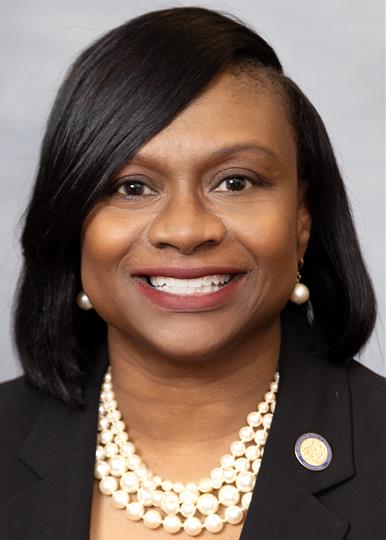
Rep. Monika Johnson-Hostler
Sponsored bills
Maddy summaryHB 787 establishes a matching program for North Carolina residents contributing to the Parental Savings Trust Fund (a 529 program) and creates a tax deduction for such contributions. It provides a 2:1 state match (up to $1,500 per student annually) for eligible contributors - North Carolina residents with household income under 250% of the federal poverty level who open accounts for children aged 14 or younger. The bill also allows a state tax deduction of up to $2,000 per individual ($4,000 for joint filers) for contributions to the fund, with rules to adjust income if funds are withdrawn for non-education purposes. These changes aim to boost college savings for lower-income families, with the matching program starting July 1, 2025, and the tax deduction effective January 1, 2026.
Maddy summaryHB 764 creates new criminal offenses for causing death or serious injury through reckless boating in North Carolina. It defines "Death by Reckless Boating" and "Serious Injury by Reckless Boating" as unintentionally harming others while operating a vessel recklessly (but not impaired), with "Aggravated" versions applying to those with prior reckless boating convictions within seven years. Penalties range from a Class A1 misdemeanor for basic death cases to a Class F felony for aggravated death incidents. The bill also prevents double prosecution for the same incident under both this law and manslaughter statutes. This directly affects boat operators whose reckless actions cause harm, establishing specific legal consequences for those offenses.
Maddy summaryHB 783 appropriates $100,000 from North Carolina's General Fund for Sidekicks Academy, Inc. to support its Durham Public Schools program. The funds will cover $90,000 for student training gear, safety equipment, tournaments, and staff salaries, plus $10,000 for field trips to Taekwondo tournaments, museums, and college events. The program directly serves marginalized students by combining martial arts training, character development, and community support to create a safe learning environment. This is a funding measure with no policy changes, solely providing financial support to an existing community program.
Maddy summaryHB 786, the "Working Families Act," reduces child care costs for low-income families by lowering parent copayments from 10% to 7% of income (effective 2025), reinstates a refundable state child tax credit with income-based payments (effective 2025), and phases up North Carolina’s minimum wage to $15/hour by 2030 with annual inflation adjustments. It also increases income limits for property tax relief, creates a homebuyers’ assistance program for public servants (like firefighters and EMTs) as first-time buyers, and establishes a paid family leave insurance program funded through an employer grant program. The bill directly affects working families, hourly workers, public-sector employees, and households using subsidized child care or property tax relief. Key mechanisms include phased wage increases, income-tiered tax credits, and targeted housing support, all designed to reduce financial strain on low-to-moderate-income households.
Maddy summaryHB 774 ("School Breakfast for All") mandates that all North Carolina public schools (pre-K through 12) provide free breakfast to every student, eliminating costs for families. It establishes a Farm-to-Table Initiative requiring schools to partner with local farmers for fresh, locally sourced ingredients in breakfast meals. The bill allocates $39 million in recurring state funds for the 2025-2026 fiscal year to cover program costs, while requiring annual reports on participation rates, costs, and impacts on student health and academic performance. This directly affects all public school students, school districts, and North Carolina agricultural producers.
Maddy summaryHB 766 appropriates $1.87 million to fund expanded Teen Mental Health First Aid (tMHFA) training for North Carolina high school students in grades 9-12 (ages 14-18). The bill directly affects students by providing evidence-based training to help them recognize, understand, and respond to peers' mental health and substance use challenges. Key provisions include funding for the Department of Health and Human Services to scale up tMHFA programs statewide, building on a pilot that trained 1,519 teens and showed a 50% increase in teens' willingness to seek adult support. The training focuses on connecting peers to trusted adults during crises, addressing high rates of unmet mental health needs among teens (64% don’t seek help, per the bill’s rationale).
Maddy summaryHB 755 provides a sales tax exemption for qualifying North Carolina nonprofits, including hospitals, federally tax-exempt community organizations, volunteer fire departments, and university-affiliated groups. To qualify, nonprofits must obtain a state sales tax exemption number, with annual limits of $31.7 million for state tax and $13.3 million for local tax. The exemption covers most goods and services purchased for nonprofit activities but excludes electricity, telecommunications, alcohol, and certain other items. Real property contractors must provide documentation to retailers when buying materials for nonprofit projects to ensure proper tax treatment.
Maddy summaryHB 689 allows North Carolina high school graduates who attended NC public or nonpublic schools for four consecutive years before graduation to pay in-state tuition at state colleges and universities, provided they hold a NC driver's license, have a Social Security number, and enroll immediately after high school. It directly affects qualifying NC high school graduates who would otherwise pay out-of-state tuition rates. Key provisions include requiring proof of NC residency through driver's license and school attendance records each semester, with all application information kept confidential. The bill takes effect for the 2025-2026 academic year and does not change residency status for other purposes.
Maddy summaryHB 688 creates a dedicated annual appropriation of $100,000 from the state General Fund to the Parks and Recreation Trust Fund specifically for inclusive playground projects. It directly affects local governments, public schools, and public authorities (as defined in state law) seeking to build or adapt playgrounds to meet the needs of people with disabilities. The bill provides grants of up to $5,000 per project, requiring recipients to match each $5 in state funds with $1 in local funds. This funding operates separately from other Trust Fund allocations, ensuring dedicated resources for accessibility improvements without reducing existing funding for state parks or coastal access. The bill becomes effective July 1, 2025.