

Maddy summaryHB 911 requires North Carolina local school boards to create and publicly share experience-based salary schedules for full-time occupational and physical therapists employed in public schools, ensuring these pay scales align with existing noncertified education salary ranges. For the 2025-2026 school year, therapists must receive at least the higher of their current salary or the new schedule amount, plus a monthly supplement equal to 10% of a teacher's salary for five additional years plus $350. School boards must also submit annual workforce reports detailing therapist staffing levels, contractor use, and vacancies to the state education department. The bill directly affects school-employed therapists and local school boards, with supplements contingent on legislative funding.
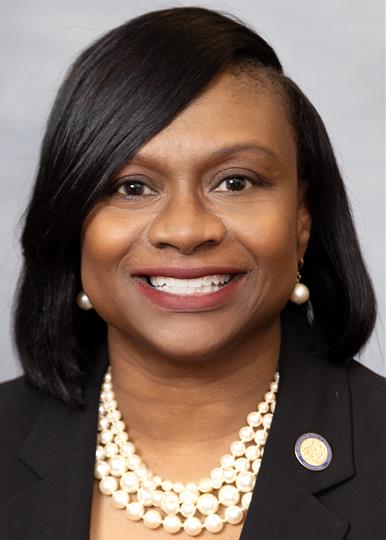
Rep. Monika Johnson-Hostler
Sponsored bills
Maddy summaryHB 990 requires North Carolina landlords to provide written notice to tenants before charging certain late fees. Landlords must deliver this notice (via hand, mail, or agreed electronic means) detailing the fee amount, the specific past-due payment, and the date the fee was assessed - before collecting it. The bill applies to late fees for rent payments that are five or more days overdue, capping fees at $15 or 5% of monthly rent (or $4 or 5% weekly). This law takes effect October 1, 2025, directly affecting residential landlords and tenants in the state.
Maddy summaryHB 1001 requires nursing programs approved by the North Carolina Board of Nursing to annually report specific data about graduates of their sexual assault nurse examiner (SANE) training programs. These programs must submit on October 1 each year the total number of graduates, each graduate's county of employment, and their planned or current workplace location. The bill directly affects approved nursing education programs, not patients or healthcare providers. This data collection begins on August 1, 2025, to help the Board track SANE workforce distribution. The North Carolina Board of Nursing may create rules to implement these reporting requirements.
Maddy summaryHB 842 clarifies that North Carolina public schools may conduct vision, hearing, dental, and developmental screenings for students without requiring parental consent, but must notify parents at the start of each school year about all screenings offered and provide results for their child. This bill directly affects parents of students in public schools across North Carolina, particularly for kindergarten through third grade as noted in the bill text. Key provisions require schools to provide written notice of screenings and results to parents (instead of seeking consent for each screening), while maintaining existing requirements for other health services that do require consent. The law updates school health screening procedures under North Carolina General Statutes § 115C-76.46.
Maddy summaryHB 807 raises teacher salaries for the 2025-2026 school year with new pay scales based on experience and adds supplements for certified teachers, school nurses, counselors, and specialists. It allocates $89.4 million annually and $109.2 million as a one-time fund to provide weighted, per-child funding for children with disabilities based on the cost of services provided. The bill also mandates free breakfast and lunch for all public school students, funded through state appropriations tied to school food authority evaluations, and includes funding for a one-to-one device refresh in public schools.
Maddy summaryHB 802 requires all North Carolina public schools to adopt written policies banning the use of nicotine, hemp, and vaping products (including e-cigarettes and delta-8) in school buildings, on campuses, and at school events. Students under 21 found in possession of these products will have them confiscated, with parents notified within 24 hours; first offenses require schools to provide evidence-based cessation resources and education, while repeat offenses trigger disciplinary action. Schools must also distribute age-appropriate, Department of Health and Human Services-approved prevention materials to students at the start of each school year. The bill mandates schools to enforce these policies through clear signage, staff training, and collaboration with health officials.
Maddy summaryHB 790 prohibits the sale of tobacco, vape, and alternative nicotine products within 1,000 feet of any public or nonpublic school building. It directly affects vape and tobacco shops located near schools, banning sales in those zones while excluding home schools and colleges. The law includes an exception for incidental sales tied to a business's primary operations but classifies violations as Class 2 misdemeanors. The bill takes effect December 1, 2025, and applies to offenses occurring on or after that date.
Maddy summaryHB 815 revises North Carolina's Opportunity Scholarship Program, which provides state-funded vouchers for private school tuition. It expands eligibility to include students in foster care, military families, and those previously enrolled in public school, while prioritizing low-income students (households at or below 200% of the federal free/reduced lunch income threshold) for full tuition coverage (90% for full-time, 45% for part-time). Nonpublic schools receiving funds must meet reporting standards, and the program now requires schools to document student enrollment and academic progress. This bill directly affects low-income families, military-connected students, and participating private schools seeking state-funded tuition assistance.
Maddy summaryHB 788 ("Fix Our Democracy") proposes amending the North Carolina Constitution to establish a nonpartisan redistricting process for state legislative and U.S. House districts. It would require a constitutional amendment (voting required in 2026) to remove the General Assembly's role in drawing districts, mandating that districts be contiguous, avoid dividing counties where possible, and remain unchanged until the next census. The bill also includes related provisions like online voter registration, automatic registration, banning voter roll purging, and campaign finance transparency changes. This constitutional change would directly affect how electoral districts are created for state legislators and U.S. representatives in North Carolina.
Maddy summaryHB 816, the Voucher School Transparency Act, requires nonpublic schools receiving Opportunity Scholarship funds in North Carolina to meet new reporting and accountability standards. These schools must annually provide parents with student test scores, maintain criminal background checks for staff with decision-making authority, administer standardized tests for grades 3+, and submit financial audits to the state if enrolling 70+ scholarship students or receiving $100,000+ in funds. The bill also mandates detailed annual data submissions to the state Division, including enrollment, teacher licensing, facility safety, and disability support compliance. The State Auditor must annually review audits of at least three such schools to ensure accountability. This directly affects voucher-funded nonpublic schools and their reporting practices, not public schools or general education policies.