

Maddy summaryHB 713 mandates that all North Carolina public schools provide free breakfast and lunch to every student, eliminating meal fees for all. This affects every student enrolled in public schools, including those in charter schools and regional school units, starting with the 2025-2026 school year. The bill appropriates $144 million from the state General Fund to cover costs, with funds allocated based on school size, student eligibility for free/reduced meals, and nutritional quality standards. Schools must comply with federal nutrition guidelines while using state funds to supplement, not replace, existing meal program funding.
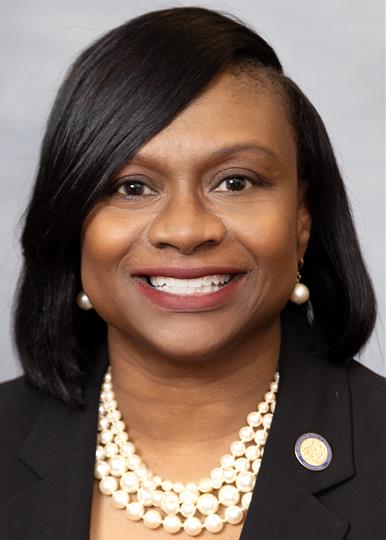
Rep. Monika Johnson-Hostler
Sponsored bills
Maddy summaryHB 725, the "MOMnibus 3.0," establishes a state grant program to address preventable maternal health disparities affecting Black birthing people in North Carolina. The bill directs the Department of Health and Human Services to award competitive grants ($10,000-$50,000 per recipient) to community-based organizations focused on improving maternal health outcomes for Black women. Key provisions require grantees to address social barriers (like housing, transportation, and nutrition), provide culturally respectful care training for health workers, and offer services including mental health support, doula care, and evidence-based education. The program specifically prioritizes Black-led organizations serving communities with high maternal health disparities, aiming to reduce preventable deaths and complications through targeted community support.
Maddy summaryHB 715 appropriates $13.3 million annually from the General Fund to expand access to North Carolina's Prekindergarten (NC Pre-K) program for eligible children. The funding, allocated to the state's child development agency, will create additional program slots for children seeking enrollment starting July 1, 2025. This bill directly affects low-income 4-year-olds who qualify for the NC Pre-K program by increasing available spots through dedicated state funding. The legislation focuses solely on providing financial resources for program expansion, with no changes to eligibility criteria or program structure.
Maddy summaryHB 682 allows North Carolina to override federal restrictions that block food and cash assistance (TANF) for people convicted of certain drug-related felonies. It directly affects individuals with Class H or I controlled substance felony convictions who complete substance abuse treatment (while incarcerated or in the community) and avoid new drug offenses for six months. The bill requires counties to offer food and cash benefits to eligible individuals who meet these conditions, making treatment participation a requirement for accessing aid. This change aims to support successful reintegration by removing a barrier to basic needs assistance for this group.
Maddy summaryHB 668 establishes a program to expand free tax preparation assistance in North Carolina through two key components. It allocates $1.38 million (including $790,000 nonrecurring and $610,000 recurring annually) to fund community colleges to create tax preparation courses and paid work-study opportunities for students, enabling them to become IRS-certified VITA (Volunteer Income Tax Assistance) preparers. Additionally, it appropriates $840,000 to the United Way of North Carolina to increase VITA locations, hire staff, provide multilingual resources, and offer financial education. The bill directly helps low-income North Carolinians (earning under $67,000 annually, with disabilities, or limited English proficiency) who qualify for the federal Earned Income Tax Credit but often miss claiming it, by expanding access to free tax filing services starting July 1, 2025.
Maddy summaryHB 685, the Rural NC Reinvestment Act, allocates $605 million in nonrecurring state funds for rural North Carolina communities during the 2025-2026 fiscal year. It provides grants for water/sewer infrastructure ($200M), law enforcement/fire equipment ($10M), economic development land ($20M), rural school construction ($200M), broadband expansion ($50M), early childhood education ($100M), and physician placement ($5M). Local governments, schools, emergency services, and healthcare providers in rural areas directly receive these funds, with allocations prioritized based on need, efficiency, and community impact. The bill becomes effective July 1, 2025, focusing on tangible infrastructure and service improvements without creating new regulations.
Maddy summaryHB 709 establishes a pilot program to fund additional teacher assistants in North Carolina public schools for kindergarten through third grade. It provides $14.8 million annually (2025-2027) to cover the cost of teacher assistants based on specific ratios: one assistant per K-2 class and one per three third-grade classes. The program will select 16 schools (eight districts, one district school and one charter school per district) to participate, with funds distributed based on average class size and salary costs. The bill aims to directly support early-grade classrooms by increasing adult-to-student ratios, effective July 1, 2025.
Maddy summaryHB 706 changes how North Carolina allocates public school capital funds by eliminating the use of the Department of Commerce's economic development tier designations. Instead, it requires funding to be based on either a county's adjusted property value (with specific matching percentages) or HUD-designated poverty areas. The bill affects all public K-12 schools, community colleges, and UNC institutions receiving state education funds, prohibiting agencies from using Commerce's economic tiers for allocation starting in the 2025-2026 school year. It also repeals prior sections allowing tier-based funding and mandates equal per-school allocations for certain cooperative high schools. The law takes effect July 1, 2025, for new grant applications.
Maddy summaryHB 684 establishes North Carolina's first formal environmental justice framework to address disproportionate health and environmental risks faced by BIPOC, low-income, and marginalized communities. The bill defines key terms like "communities of color" (40%+ nonwhite residents or 10% higher than county/state) and "disproportionate impact" to guide state agencies. It requires all state agencies to identify and reduce environmental health disparities by considering environmental justice in decision-making, ensuring equitable distribution of benefits like clean air, green spaces, and renewable energy. The law aims to create consistent standards for addressing pollution burdens and health inequities across North Carolina.
Maddy summaryHB 750 appropriates $2.5 million annually (2025-2027) to fund grants for nonprofit community health centers in North Carolina. These grants enable centers to purchase and distribute long-acting reversible contraceptives (LARCs), such as IUDs or implants, specifically for underserved, uninsured, or low-income patients. LARCs are defined as FDA-approved, temporary contraceptive methods requiring no daily user action (e.g., pills) and a prescription. The bill establishes a competitive grant process administered by the Department of Health and Human Services, targeting expanded access to these contraceptives without altering existing patient eligibility rules.