

Maddy summaryHB 114 (Employment Preference for Military Personnel) updates North Carolina's state employment policy to expand eligibility for hiring preference. It removes the requirement that military service must have occurred during a "period of war" and now includes active-duty service members, National Guard and Reserve members, and their spouses/dependents in the preference program. The bill ensures state departments, agencies, and institutions must grant hiring preference to qualifying individuals (including active-duty personnel during service) for all employment events like initial hires, promotions, and transfers. This change directly affects military service members, their families, and North Carolina state employers by broadening who qualifies for employment preference without wartime service restrictions.
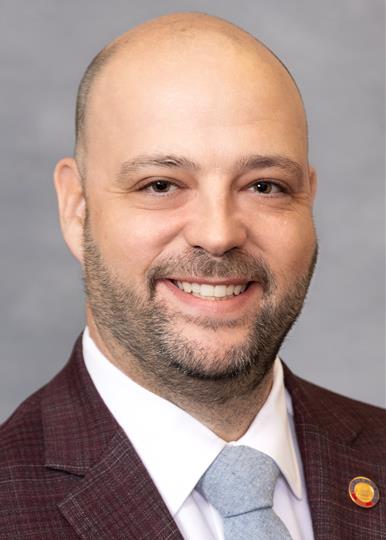
Rep. Bryan Cohn
Sponsored bills
Maddy summaryHB 399 increases fees for nursing licensure applications, renewals, and reinstatements with most fees doubling (e.g., registered nurse application fees rise from $75 to $150, renewal fees from $100 to $200). It directly affects nurses seeking initial licensure, renewing licenses, or reinstating lapsed licenses in North Carolina. The bill establishes a 20% annual cap on future fee increases and specifies no refunds will be issued. These changes apply to all applications, renewals, or reinstatements processed on or after October 1, 2025. The bill does not alter nursing practice standards or create new regulatory requirements.
Maddy summaryHB 943 appropriates $100,000 annually from 2025-2027 to expand North Carolina's Teacher Cadet Program (NCTCP), which targets high-achieving high school students - particularly those from underrepresented groups like people of color (42% of cadets vs. 21% of current teachers) and males (25% of cadets) - to enter teaching careers. The funds will support statewide teacher training workshops (in-person and online), prioritize expansion in counties with high teacher turnover (especially rural and low-performing schools), and develop training for underrepresented cadets using current teachers and students. This directly affects high school students in NCTCP participating in the program and their future schools, aiming to strengthen the teacher pipeline in underserved communities. The bill focuses on concrete funding for program growth, not policy changes to teaching standards or school operations.
Maddy summaryHB 965 proposes adding a constitutional amendment to guarantee all North Carolinians the right to clean water, clean air, and a preserved environment, including protection of natural resources like air, water, wildlife, and soils. If approved by voters in the 2026 general election, it would automatically become part of the state constitution, requiring the state to act as a trustee of natural resources for present and future generations. The amendment would not change current environmental laws but would establish a new constitutional standard that future legislation must align with. This bill must still pass through the legislature and gain voter approval to take effect.
Maddy summaryHB 973, the Uniform Restrictive Employment Agreement Act, establishes new rules for noncompete, nonsolicitation, and other restrictive employment agreements in North Carolina. It requires employers to provide workers with a written copy of any proposed agreement at least 14 days before signing, clearly state prohibited activities, and give a separate notice as defined by the Department of Labor. The bill directly affects workers and employers by making agreements unenforceable without these specific disclosures and clear terms, covering common restrictions like noncompetes but excluding patent agreements or existing ownership interests. It aims to increase transparency in employment contracts where workers face post-employment work limitations.
Maddy summaryHB 397 allows schools in North Carolina to use epinephrine nasal spray as an emergency treatment option alongside traditional auto-injectors for students experiencing anaphylaxis. The bill amends school health policies to include nasal spray devices in the definition of "epinephrine auto-injector delivery systems," requiring all schools to maintain at least two emergency epinephrine supplies (now including nasal spray) in secure but accessible locations. Schools must train staff to recognize anaphylaxis symptoms, store devices properly, and follow emergency action plans developed with school nurses. This applies to public schools, charter schools, and regional schools starting in the 2025-2026 school year. The policy directly affects school staff, students with severe allergies, and school health protocols.
Maddy summaryHB 879 requires landlords in North Carolina to provide and maintain operable air conditioning in residential rental units that supply AC. It directly affects landlords (who must ensure systems work at the start of each tenancy) and tenants (who gain a right to functional cooling during warm weather). The bill amends landlord obligations to explicitly mandate that air conditioning must cool premises to a reasonable indoor temperature, with repairs required upon written tenant notice (except emergencies). This applies to all new rental agreements and renewals entered into after the law takes effect. The legislation focuses on ensuring basic comfort and safety by making AC a standard maintenance requirement, not a discretionary amenity.
Maddy summaryHB 881 bans the manufacture, use, and distribution of PFAS (per- and poly-fluoroalkyl substances) in North Carolina, directly affecting businesses that currently use these chemicals in products like firefighting foam, non-stick coatings, or food packaging. The law requires companies discharging wastewater to disclose PFAS and 1,4-dioxane levels and remove them if feasible, while public water systems must notify customers about PFAS detected in drinking water by June 2025. It establishes civil penalties of up to $25,000 for violations, with stricter fines for repeat offenses. The bill focuses on preventing contamination and protecting public health through these concrete regulatory changes.
Maddy summaryHB 883 establishes a grant program for North Carolina school districts to cover extraordinary costs for students with disabilities, particularly for placements outside regular schools (like private special education programs or homebound settings). School districts can apply for 75% reimbursement of eligible costs - such as specialized staff salaries, materials, or private school tuition - provided these costs exceed four times the state average per-pupil expenditure for disabilities. The bill requires annual IEP reviews, mandates that districts maintain legal responsibility for students in private placements, and directs the Department of Public Instruction to report on placements and costs by March 2026. It appropriates $1 million for the 2025-2026 fiscal year to fund this program.
Maddy summaryHB 863 appropriates $582 million in state funds to address unmet recovery needs in Western North Carolina following Hurricane Helene. It directly affects residents and businesses in the impacted area by funding affordable housing repairs, disaster-related home improvements, business grants, park restoration, flood protection, and emergency services. Key provisions include $105 million for local housing grants (covering repairs, homelessness assistance, and mortgage help), $75 million for stream restoration and food banks, and a $75,000 business grant program for eligible companies with sales tax declines. The funds are distributed across state agencies like Housing Finance, Agriculture, and Public Safety to support physical recovery and economic stabilization.