

Maddy summaryHB 880 appropriates $1 million in recurring state funds from the General Fund to support the NC A&T Aggie Academy, a laboratory school at North Carolina A&T State University. This funding, effective July 1, 2025, provides additional resources for the school's operations as a University of North Carolina laboratory school. The bill directly affects the Aggie Academy's students, staff, and programs by securing ongoing financial support. It does not create new policies but allocates existing state funds for a specific educational institution.
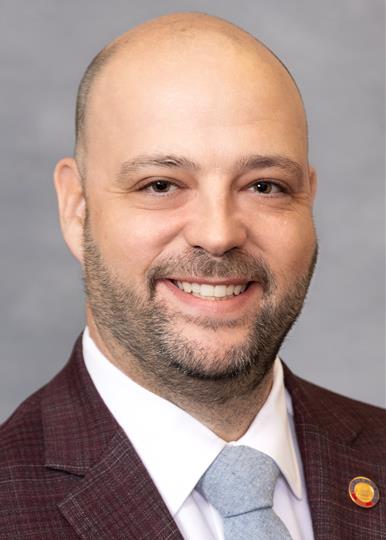
Rep. Bryan Cohn
Sponsored bills
Maddy summaryThis bill requires North Carolina state agencies and local governments to only purchase U.S. and North Carolina flags made entirely in the United States using domestically grown or produced materials. It prohibits using public funds for any U.S. or state flags not 100% manufactured in America from domestic materials. The rule applies to all new flag purchases starting October 1, 2025. It directly affects all government offices responsible for buying flags with public money.
Maddy summaryHB 807 raises teacher salaries for the 2025-2026 school year with new pay scales based on experience and adds supplements for certified teachers, school nurses, counselors, and specialists. It allocates $89.4 million annually and $109.2 million as a one-time fund to provide weighted, per-child funding for children with disabilities based on the cost of services provided. The bill also mandates free breakfast and lunch for all public school students, funded through state appropriations tied to school food authority evaluations, and includes funding for a one-to-one device refresh in public schools.
Maddy summaryHB 815 revises North Carolina's Opportunity Scholarship Program, which provides state-funded vouchers for private school tuition. It expands eligibility to include students in foster care, military families, and those previously enrolled in public school, while prioritizing low-income students (households at or below 200% of the federal free/reduced lunch income threshold) for full tuition coverage (90% for full-time, 45% for part-time). Nonpublic schools receiving funds must meet reporting standards, and the program now requires schools to document student enrollment and academic progress. This bill directly affects low-income families, military-connected students, and participating private schools seeking state-funded tuition assistance.
Maddy summaryHB 788 ("Fix Our Democracy") proposes amending the North Carolina Constitution to establish a nonpartisan redistricting process for state legislative and U.S. House districts. It would require a constitutional amendment (voting required in 2026) to remove the General Assembly's role in drawing districts, mandating that districts be contiguous, avoid dividing counties where possible, and remain unchanged until the next census. The bill also includes related provisions like online voter registration, automatic registration, banning voter roll purging, and campaign finance transparency changes. This constitutional change would directly affect how electoral districts are created for state legislators and U.S. representatives in North Carolina.
Maddy summaryHB 816, the Voucher School Transparency Act, requires nonpublic schools receiving Opportunity Scholarship funds in North Carolina to meet new reporting and accountability standards. These schools must annually provide parents with student test scores, maintain criminal background checks for staff with decision-making authority, administer standardized tests for grades 3+, and submit financial audits to the state if enrolling 70+ scholarship students or receiving $100,000+ in funds. The bill also mandates detailed annual data submissions to the state Division, including enrollment, teacher licensing, facility safety, and disability support compliance. The State Auditor must annually review audits of at least three such schools to ensure accountability. This directly affects voucher-funded nonpublic schools and their reporting practices, not public schools or general education policies.
Maddy summaryHB 810, effective July 1, 2025, provides North Carolina state employees with paid bereavement leave: up to 40 hours for the death of an immediate family member (spouse, parent, child, sibling, or dependent living with them) and up to 8 hours for the death of a colleague. It applies to all state employees, public school staff, and community college workers, requiring documentation like a death certificate but allowing leave without exhausting sick or vacation time. Employees must use family leave within 180 days of the death and provide funeral attendance proof for colleague leave, with no annual limit on usage. The bill appropriates $2 million annually from the General Fund to cover these leave costs through the 2025-2027 fiscal biennium.
Maddy summaryHB 798 appropriates $1.72 million annually from the General Fund to create a Cold Weather Shelters Grant Program, administered by the Department of Health and Human Services, Division of Aging. The program provides grants to municipalities and nonprofits to establish or expand temporary emergency shelters for people experiencing homelessness during severe weather events. Grants are limited to $215,000 per recipient annually, with selection considering poverty rates in the service area and existing funding availability. Recipients must report annually on shelter usage, funds spent, and the number of people served, starting in 2027.
Maddy summaryHB 786, the "Working Families Act," reduces child care costs for low-income families by lowering parent copayments from 10% to 7% of income (effective 2025), reinstates a refundable state child tax credit with income-based payments (effective 2025), and phases up North Carolina’s minimum wage to $15/hour by 2030 with annual inflation adjustments. It also increases income limits for property tax relief, creates a homebuyers’ assistance program for public servants (like firefighters and EMTs) as first-time buyers, and establishes a paid family leave insurance program funded through an employer grant program. The bill directly affects working families, hourly workers, public-sector employees, and households using subsidized child care or property tax relief. Key mechanisms include phased wage increases, income-tiered tax credits, and targeted housing support, all designed to reduce financial strain on low-to-moderate-income households.
Maddy summaryHB 685, the Rural NC Reinvestment Act, allocates $605 million in nonrecurring state funds for rural North Carolina communities during the 2025-2026 fiscal year. It provides grants for water/sewer infrastructure ($200M), law enforcement/fire equipment ($10M), economic development land ($20M), rural school construction ($200M), broadband expansion ($50M), early childhood education ($100M), and physician placement ($5M). Local governments, schools, emergency services, and healthcare providers in rural areas directly receive these funds, with allocations prioritized based on need, efficiency, and community impact. The bill becomes effective July 1, 2025, focusing on tangible infrastructure and service improvements without creating new regulations.