

Maddy summaryHB 391 appropriates $2.178 million for the 2025-2026 fiscal year and $4.542 million for 2026-2027 to hire 50 additional Adult Protective Services (APS) workers statewide. The funds, distributed based on need factors like case volume and senior population, directly support county social services departments overwhelmed by rising elder abuse reports. Counties must use the funds solely for APS worker salaries and benefits, not to replace existing funding. This addresses a critical staffing gap identified by counties, where federal funds are depleted early and reports of elder abuse have increased significantly.
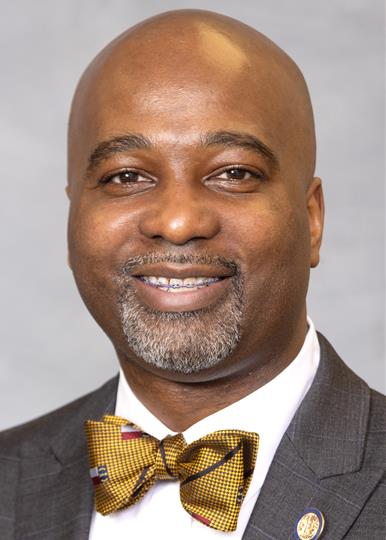
Rep. Zack Hawkins
Sponsored bills
Maddy summaryHB 401 allows North Carolina lottery winners who claim prizes of $50 million or more to keep their personal details (like name and address) confidential for 90 days after claiming the prize. This directly affects only winners of such large jackpots, not smaller prize winners. The bill requires the lottery commission to treat these winners' identifying information as confidential, except when disclosure is legally required - for example, to notify tax authorities (North Carolina Department of Revenue, IRS, or the winner’s state of residence), comply with debt collection laws, or follow court orders. The law does not change tax obligations or eligibility rules for winning the lottery.
Maddy summaryHB 396 establishes a Nursing Fellows Program at Winston-Salem State University (WSSU) to provide forgivable loans to nursing students. The program targets WSSU students pursuing Bachelor of Science in Nursing or Master of Science in Nursing Education degrees who commit to working as nurses or nursing instructors in North Carolina after graduation. Eligible students receive up to $5,000 per semester (or $2,500 per summer) to cover tuition, fees, and books, with loans forgiven upon meeting service requirements. Funds are managed through a dedicated Trust Fund, with specific allocations for administrative costs, mentoring, and program activities. This directly affects WSSU nursing students planning to work in North Carolina healthcare settings.
Maddy summaryHB 403, the "Workers' Rights Act," fundamentally changes employment protections for all North Carolina workers. It abolishes at-will employment (meaning employers can only terminate workers for "just cause"), mandates paid 15-minute breaks for all employees working over 6 hours and a 60-minute paid meal break for longer shifts, and eliminates the subminimum wage for tipped workers by requiring employers to count tips only up to federal limits. The bill also prohibits employers from retaliating against workers who discuss wages or file complaints, and repeals the ban on public employee collective bargaining while creating an Ombuds Office to handle state employee workplace issues. These provisions directly affect every worker in North Carolina and state employees.
Maddy summaryHB 398, the "KinCare Act," allows North Carolina employees to use accrued sick leave to care for family members, directly affecting employers and workers in the state. The bill expands existing sick leave provisions to permit up to five consecutive days per year for caring for defined family members - including children, parents, spouses, domestic partners, or others with close family-like relationships - without requiring the employee’s own illness. Employers must permit this use under the same conditions applied to personal sick leave, while clarifying it does not alter federal Family and Medical Leave Act coverage or apply to certain benefits like workers’ compensation. The law takes effect October 1, 2025.
Maddy summaryHB 407 creates a new special license plate for Sigma Gamma Rho Sorority in North Carolina, featuring the sorority's symbol and the phrase "Greater Service, Greater Progress." It sets a $20 additional fee for this plate (same as other Divine Nine sororities/fraternities), with half the fee going to the Special Registration Plate Account and half to the Collegiate and Cultural Attraction Plate Account. Proceeds from the plate sales will fund the Sigma Gamma Rho Sorority National Education Fund. This bill directly affects vehicle owners who choose this plate, adding it to North Carolina's list of special registration options.
Maddy summaryHB 276 expands the definition of "killed in the line of duty" for firefighters to include deaths caused by specific cancers that previously qualified them for benefits under North Carolina's Firefighters' Cancer Insurance Program. The bill adds seven specific cancers (like mesothelioma and testicular cancer) to the list and includes any cancer diagnosis that already provided benefits under the existing program. It also formally links the Firefighters' Health Benefits Pilot Program to the Cancer Insurance Program, ensuring consistent coverage, and appropriates $2 million annually for related death benefits starting July 1, 2025. This change directly affects firefighters diagnosed with covered cancers and their families, who will now qualify for death benefits under the Public Safety Employees' Death Benefits Act.
Maddy summaryHB 374 allocates $3.95 million to fund a financial assistance program for small local governments through the North Carolina Association of Regional Councils of Governments (NCARCOG). It directs NCARCOG to hire 32 additional finance professionals to help small towns and public authorities with financial compliance, prioritizing those with limited resources on the State Treasurer’s assistance list. The bill also provides $3.9 million for NCARCOG to develop a disaster response plan, including training for local financial administration, assistance with federal disaster funds, and infrastructure repair support. These funds, effective July 1, 2025, aim to improve financial management and disaster resilience for smaller communities across North Carolina.
Maddy summaryHB 367 requires North Carolina's State Crime Laboratory to provide sexual assault victims with updates on the status of their examination kits. Victims will be notified if their kit cannot be tested, if testing is declined for reasons other than untestability, or if the kit is scheduled for destruction. The law mandates that the lab develop procedures for these notifications but specifies victims must provide and maintain current contact information. This law takes effect October 1, 2025, applying to all kits submitted before, on, or after that date.
Maddy summaryHB 361 allocates $1.8 million for training county register of deeds employees, $500,000 for a public awareness campaign about real property fraud, and $30 million in grants to county offices for technology upgrades. The grants will fund digitizing records, purchasing scanning equipment, upgrading software, enhancing digital security, and improving network systems to prevent deed and title fraud. An additional $1 million is reserved for county offices without existing fraud detection systems. The bill becomes effective July 1, 2025, directly affecting county register of deeds offices and the public through reduced fraud risks.