

Maddy summaryHB 682 allows North Carolina to override federal restrictions that block food and cash assistance (TANF) for people convicted of certain drug-related felonies. It directly affects individuals with Class H or I controlled substance felony convictions who complete substance abuse treatment (while incarcerated or in the community) and avoid new drug offenses for six months. The bill requires counties to offer food and cash benefits to eligible individuals who meet these conditions, making treatment participation a requirement for accessing aid. This change aims to support successful reintegration by removing a barrier to basic needs assistance for this group.
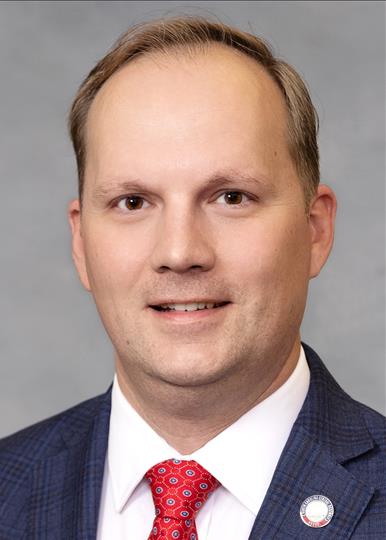
Rep. Allen Chesser
Sponsored bills
Maddy summaryThis bill would regulate hemp-derived consumable products (like edibles, vapes, and beverages) by requiring retailers to obtain permits, limiting THC content to 0.3%, and mandating age verification for all sales. It directly affects vape shops, gas stations, convenience stores, and online sellers currently selling these products to minors. The law creates new enforcement rules for the Commission, requiring proof of age (e.g., driver's license) and banning sales to anyone under 21.
Maddy summaryHB 355 directs North Carolina's Legislative Research Commission (LRC) to study challenges facing rural fire departments, focusing on volunteer recruitment, funding, equipment needs, interdepartmental cooperation, firefighter well-being, and public education. The LRC must examine specific issues like financial incentives for volunteers, equitable resource distribution, mutual aid agreements, and community fire safety programs. It requires regional public hearings and a 90-day comment period before submitting interim and final reports to the 2025 and 2027 General Assemblies. This bill does not change current law but sets up a review process to inform future legislative action.
Maddy summaryThis bill establishes new regulations for hemp-derived consumable products (like edibles, vapes, and beverages) intended for human ingestion or inhalation, limiting THC content to 0.3% or less. It requires retailers to verify ages (21+), use child-resistant "exit packages" at point-of-sale, and obtain licenses from the Alcohol Law Enforcement Division. Manufacturers must use independent labs for testing, and sellers face fines up to $2,000 or license suspension for violations like selling to minors or exceeding THC limits. The rules exclude topical products and hemp seeds, focusing solely on ingestible/inhalable items.
Maddy summaryHB 571 appropriates $500,000 from the state General Fund to the Department of Public Safety for a grant program treating police officers diagnosed with PTSD. It directly affects North Carolina police officers who have received a clinical PTSD diagnosis. The key provision establishes a state-funded grant program to cover treatment costs, with funds allocated for the 2025-2026 fiscal year. The program becomes effective July 1, 2025, and focuses solely on providing financial support for treatment, not on expanding eligibility or altering diagnosis standards.
Maddy summaryHB 540 allocates $2 million in recurring state funds from the General Fund to the UNC Board of Governors for the 2025-2026 fiscal year. This funding will be directed to the Patriot Foundation to support its existing North Carolina Patriot Star Family Scholarship Program. The bill specifically provides financial resources for the program's operation, without creating new eligibility rules or altering the scholarship's structure. It becomes effective July 1, 2025, and directly affects the scholarship program's budget for that fiscal year.
Maddy summaryHB 490 revises North Carolina's community college funding model to prioritize enrollment in workforce-focused programs. It requires the State Board of Community Colleges to allocate base funding plus additional funds based on full-time student enrollment in curriculum, workforce training, and Basic Skills courses, with weighted funding for high-demand fields. The bill also creates an "Enrollment Increase Reserve" to fund colleges with enrollment growth exceeding 5% in targeted programs and permits community colleges to add up to a 10% tuition surcharge for eligible courses, with funds restricted to instructional costs. These changes directly affect community colleges and students in workforce education, effective July 1, 2025.
Maddy summaryHB 486 appropriates $1 million from North Carolina's General Fund to Blue Star Families, Inc., a nonprofit organization, for specific military family support programs. The funds will directly support military spouses through career development (via a Fayetteville chapter), strengthen military families, and provide caregiver services for veterans and military personnel. The allocation is structured as $400,000 for career programs, $300,000 for family strengthening, and $300,000 for caregiver services, all for the 2025-2026 fiscal year. The bill becomes effective July 1, 2025, and focuses solely on funding existing nonprofit services without altering laws or creating new requirements.
Maddy summaryHB 47, the Disaster Recovery Act of 2025 - Part I, allocates $524 million from the Helene Fund to support recovery efforts in North Carolina counties impacted by Hurricane Helene. The bill directs funds to specific programs including home reconstruction ($120 million), agricultural crop loss assistance ($200 million), road and bridge repairs ($100 million), small business infrastructure grants ($55 million), debris removal ($20 million), fire department equipment ($10 million), and tourism promotion ($4 million). These resources directly assist residents, farmers, local governments, and businesses in designated hurricane-affected counties by addressing immediate rebuilding needs and supporting economic recovery. The bill requires programs to align with federal disaster recovery guidelines to maximize potential federal reimbursement, with reporting requirements for certain initiatives.
Maddy summaryHB 450, the Private Property Rights Act, requires private detectives and wildlife protectors to obtain a search warrant or judicial order before installing electronic tracking devices or inspecting certain private property. The bill directly affects private investigators, wildlife protectors, and property owners by mandating judicial authorization for these specific activities. Key provisions amend state laws to clarify that wildlife protectors need warrants for inspections on private land (excluding wildlife refuges or public areas), and private investigators must secure warrants for electronic tracking. It does not change existing constitutional protections against unreasonable searches but adds procedural requirements for these two groups. The law takes effect December 1, 2025.