

Maddy summaryHB 35 designates November of each year as Military Appreciation Month in North Carolina. The bill creates a symbolic recognition within state law, honoring military service members and veterans during this month. It does not establish new programs, funding, or requirements - it simply formally names November for this purpose. The bill affects the state government's official calendar and public recognition efforts, with no direct impact on individuals or organizations.
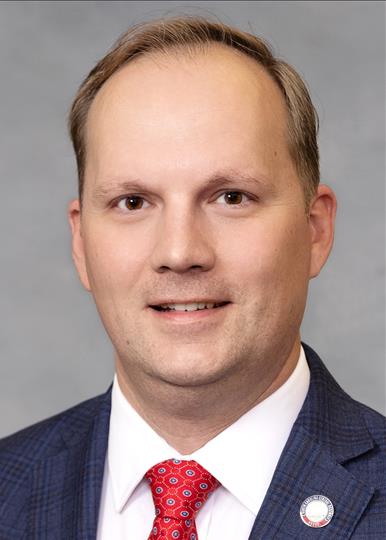
Rep. Allen Chesser
Sponsored bills
Maddy summaryHB 182 creates two key policy changes: First, it allows judges to issue lifetime no-contact orders against defendants convicted of certain violent offenses (including sex offenses requiring registration), requiring a show-cause hearing to determine if the victim fears future contact. Second, it clarifies that caregivers of children under 16 who commit or allow sexual acts with the child face Class D felony charges, specifically expanding penalties for permitting such abuse. The law directly affects victims of violent crimes (through the no-contact protections) and caregivers of children under 16 (through updated felony charges for sexual abuse). These provisions apply to offenses committed on or after December 1, 2025.
Maddy summaryHB 11 would allow North Carolina taxpayers to deduct overtime pay, up to $2,500 in bonus pay (defined as cash awards for workplace dedication), and reported tips from their taxable income. It applies to individuals and married couples filing jointly, with each spouse eligible for separate deductions. The bill specifically defines "bonus pay" to exclude tips and requires taxpayers to provide documentation to claim the deduction. This policy change would take effect for tax returns filed in 2025.
Maddy summaryHB 351 establishes North Carolina's Recovery-Friendly Workplace Program, which helps employers support employees in addiction recovery. Employers (both public and private) can become "participants" or earn "certified" status by completing training, adopting inclusive policies (like flexible leave and confidential treatment access), and implementing evidence-based practices. The program, funded with $300,000 from the Opioid Settlement Fund, provides employers with advisors, model policies, and annual reviews to maintain certification. It directly affects all North Carolina employers covered by workers' compensation and their employees seeking recovery support. The program becomes effective July 1, 2025.
Maddy summaryHB 49, the Filial Debt Fairness Act, clarifies North Carolina's filial responsibility law by explicitly stating that adult children are **not liable for debts their parents incurred** (such as medical bills or loans). The bill amends Section 14-326.1 to clarify that while adult children may still face misdemeanor charges for failing to support a sick or unable-to-work parent (without reasonable cause), they cannot be held responsible for their parents' pre-existing debts. This directly affects adult children who might otherwise be sued for their parents' financial obligations. The law aims to prevent unintended liability for parents' debts while maintaining the existing requirement for children to support parents in need.
Maddy summaryHB 224 renames the "North Carolina Gaming Education Revenue Fund" to the "Indian Gaming Education Revenue Fund" and allocates specific recurring and one-time funds for tribal communities in North Carolina. The bill directs $2 million annually to the North Carolina State Commission of Indian Affairs for operations, $5.25 million annually to seven non-gaming tribes (including the Coharie, Lumbee, and Haliwa-Saponi) for cultural, educational, and economic development, and $400,000 annually to four Urban Indian Organizations for similar purposes. It also provides $100,000 yearly to support the State Advisory Council on Indian Education and $1.1 million nonrecurring funds for specific tribal school projects like the Haliwa-Saponi Tribal School. The bill becomes effective July 1, 2025, with all funds to be used for designated community development purposes.
Maddy summaryHJR 157 is a procedural resolution inviting Governor Josh Stein to address a joint session of the North Carolina General Assembly on March 12, 2025. It directs a committee of five House members and five Senate members to extend the invitation and specifies that the governor's cabinet, Council of State members, and state judges may attend. This resolution does not create new policy or affect any laws; it solely schedules a ceremonial address. The invitation is effective upon ratification, as noted in the resolution's text.
Maddy summaryHB 177 requires North Carolina's State Human Resources Commission (SHRC) to review job requirements across state agencies and identify positions where a four-year college degree is unnecessary. The bill directs the SHRC to replace degree requirements with alternative qualifications like military service, apprenticeships, or trade school training where appropriate, and to remove unnecessary degree language from job postings. This policy change directly affects state job applicants who may qualify through non-degree pathways. The SHRC must report annually starting October 2025 on progress toward reducing these barriers.
Maddy summaryHB 112 raises the maximum allowable speed limit on North Carolina's interstate highways and controlled-access roads from 70 mph to 75 mph, as determined by the Department of Transportation after engineering studies. This directly affects drivers traveling on these roads, as the new 75 mph limit replaces the previous 70 mph cap where the DOT deems it safe. The bill also updates related penalties: speeding over 85 mph on roads with a 75 mph limit becomes a Class 3 misdemeanor, and license suspension rules for excessive speeding (e.g., over 85 mph on 75 mph zones) are adjusted accordingly. The changes apply only to offenses occurring on or after December 1, 2025, and do not affect cases before that date.
Maddy summaryThis bill proposes repealing a literacy test requirement from the North Carolina Constitution, which would affect all voters by removing a historical barrier to voting. The amendment must be approved by voters in the November 2026 election, with the ballot explicitly stating: "Constitutional amendment to remove the literacy test requirement... The federal Voting Rights Act of 1965 prohibits implementation of this requirement." If approved, the change takes effect upon certification by the State Board of Elections. The bill does not alter current voting procedures, as the literacy test has been prohibited by federal law since 1965.