

Maddy summaryHouse Bill 272, known as "The Sergeant Mickey Hutchens Act," allows certain law enforcement, probation/parole, and correctional officers in North Carolina to purchase additional retirement service credit. Officers who hold an advanced law enforcement or corrections certificate and have at least five years of membership service can buy up to four years of creditable service. This purchase applies to members of the Teachers' and State Employees' Retirement System or the Local Governmental Employees' Retirement System. To do so, they must pay a lump sum covering the full cost of the increased retirement system liability and an administrative fee, with the option for their employer to contribute to this cost.
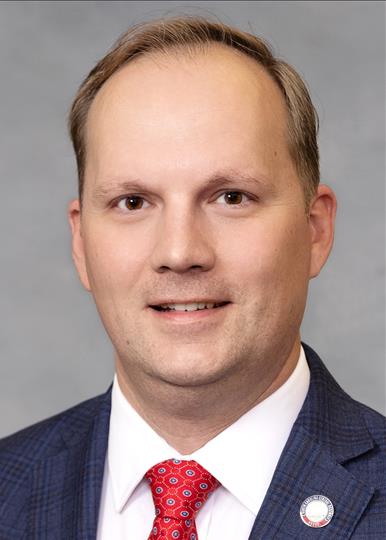
Rep. Allen Chesser
Sponsored bills
Maddy summaryHB 833, "The FRESH Act," directs the Department of Agriculture and Consumer Services to expand its existing Home Processor Program. This expansion will allow individuals participating in the program to produce and sell refrigerated or frozen food items, as well as bakery products containing cream or cream cheese fillings, including cheesecakes. The Department is authorized to adopt temporary rules to implement these changes. All activities under the expanded program will remain subject to applicable food safety laws and inspections.
Maddy summaryThis bill requires public schools and charter schools in North Carolina to allow students from nonpublic schools to enroll part-time for access to specific courses, programs, or services. The law mandates that local school boards create policies for this enrollment and make them available on their websites, while charter schools must also post relevant information online. Schools will receive state funding for part-time students, with full per-pupil funding for those attending one-third or more of instructional time and half funding for those attending less. The legislation also clarifies that part-time nonpublic school students will not count toward a charter school's enrollment growth metrics.
Maddy summaryHB 980 removes barriers to employment by ending North Carolina's practice of suspending driver's licenses for unpaid traffic-related fines, fees, or court appearances. It automatically reinstates licenses suspended under these rules without requiring action from the person, waives associated fees, and requires the DMV to notify affected individuals. The bill also mandates data collection on suspended licenses (disaggregated by race, gender, and zip code) and forgives fines for past "Driving While License Revoked" convictions tied to these suspensions. This directly affects North Carolinians whose licenses were suspended solely for unpaid traffic debts or non-appearance, restoring their ability to drive for work or daily needs.
Maddy summaryHB 874, the North Carolina Healthy Schools Act, prohibits public schools from serving or selling ultra-processed foods containing specific synthetic additives (like artificial dyes and preservatives such as Yellow Dye 5 or Potassium Bromate) during the school day. It directly affects all North Carolina public schools, including district, regional, and charter schools, requiring them to certify compliance with the ban through the Department of Public Instruction. Schools must submit certification forms, and the Department will publish a list of compliant schools online. The ban takes effect for the 2025-2026 school year, though parents may still provide such foods for their children.
Maddy summaryHB 868 requires North Carolina law enforcement to use confirmatory lab tests before relying on field drug tests for arrests or convictions related to drug possession. It mandates that colorimetric field drug tests alone cannot establish probable cause for arrest, initiate charges, lead to conviction, or influence sentencing after January 1, 2026. Law enforcement must adopt policies ensuring cases without a lab-confirmed result lead to release (via citation or written promise to appear) rather than continued detention. The bill directly affects all North Carolina law enforcement agencies and prosecutors handling drug possession cases under G.S. 90-95(a)(3), requiring them to implement these changes by 2026.
Maddy summaryThis bill requires North Carolina state agencies and local governments to only purchase U.S. and North Carolina flags made entirely in the United States using domestically grown or produced materials. It prohibits using public funds for any U.S. or state flags not 100% manufactured in America from domestic materials. The rule applies to all new flag purchases starting October 1, 2025. It directly affects all government offices responsible for buying flags with public money.
Maddy summaryHB 753 allows eligible North Carolina law enforcement officers aged 59.5 or older to continue receiving retirement benefits while remaining actively employed. Retired officers who separated from service for at least six months may return to duty and retain their retirement benefits. The bill requires employers to cover both employee and employer retirement contributions during this period and clarifies that beneficiaries remain eligible for death benefits under specific conditions. It directly affects current and retired state/local law enforcement officers meeting age and service criteria.
Maddy summaryHB 780 appropriates $2 million to expand the All Pro Dad program in North Carolina through Family First, Inc., funding school-based chapters, father-child engagement events, and parenting resources. It also creates the "Responsible Fatherhood NC" program under the Department of Health and Human Services, requiring a nonprofit manager to run a statewide media campaign, provide father-focused resources, and promote existing fatherhood initiatives. The bill directs grants to community organizations addressing fathers' needs - such as employment, child support, and parenting skills - with priority given to areas facing high unemployment, incarceration, or single-parent households. The program directly supports North Carolina fathers and their children, aiming to improve family well-being through increased paternal involvement.
Maddy summaryHB 672 creates a new "team-based practice" model for physician assistants (PAs) in North Carolina, allowing them to practice without direct physician oversight under specific conditions. To qualify, PAs must have over 4,000 hours of clinical experience (including 1,000+ hours in their specialty) and work in practices meeting defined criteria, such as physician ownership and collaborative care structures. The bill revises licensing rules to remove the requirement for PAs in these settings to provide a supervising physician’s contact information, while maintaining supervision requirements for perioperative services. This directly affects PAs seeking to work in team-based medical practices, including hospitals and clinics meeting the new standards.