

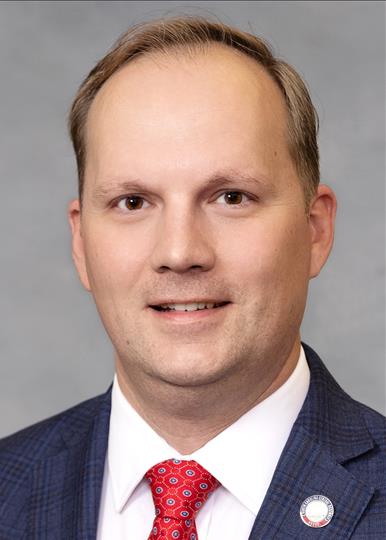
Photo of Allen Chesser
R North Carolina House · District 25 On the 2026 ballot

Rep. Allen Chesser

Compare
Total votes
1,281
all sessions
Attendance
98%
27 missed
Near the chamber average
With party
99%
of cast votes
Higher than 87% of chamber peers
Bipartisan score
1%
crosses aisle rarely
Lower than 89% of chamber peers
Sponsored
164
bills & resolutions
Near the chamber average
Committees
11
assignments
164 bills and resolutions

Sponsored bills

Total
164
Primary
59
Co-sponsor
105
This page
164
matching current filters
Primary HB 1111
In committee · North Carolina House · Lead sponsor
Military Service Buyback Reduction: Teachers.

Maddy summaryThis bill reduces the cost for North Carolina public school teachers to purchase credit for their military service. Under the new provision, eligible veterans would only need to pay 25% of the usual cost, while the state would cover the remaining 75% through general appropriations. The law applies to full-time employees of the Teachers' and State Employees' Retirement System who served in the U.S. Armed Forces and allows them to buy up to four years of service credit. These changes would take effect on July 1, 2027, for any service credit purchases made on or after that date.

In committee Apr 30, 2026 0 co-sponsors
Primary HB 1118
In committee · North Carolina House · Lead sponsor
Workforce Housing Loan Renewal Act.

Maddy summaryThis bill appropriates $35 million in recurring state funds to the North Carolina Housing Finance Agency for the Workforce Housing Loan Program. The funding is designated to support the program's operations and loans for eligible workforce members seeking affordable housing. These funds will become available starting with the 2026-2027 fiscal year. The legislation takes effect on July 1, 2026.

In committee Apr 30, 2026 0 co-sponsors
Co-sponsor HB 1072
In committee · North Carolina House · Co-sponsor
Affordable Housing Infrastructure Development.

Maddy summaryThis bill creates a new loan program in North Carolina to help nonprofit organizations prepare land for affordable housing by offering below-market interest rate loans. The funds, totaling $50 million for the 2026-2027 fiscal year, can only be used for site-related expenses like land acquisition, utility installation, and environmental testing, but not for building the actual homes. To qualify, borrowers must be experienced nonprofits that provide zero-interest mortgages to buyers and ensure at least 40% of units in mixed-income projects are reserved for low- and moderate-income families. The program is designed to support the development of housing for households earning up to 80% of the local area median income.

In committee Apr 29, 2026 1 co-sponsor
Co-sponsor HB 1075
In committee · North Carolina House · Co-sponsor
Persistent Domestic Violence Offender Registry.

Maddy summaryThis bill creates a new program in North Carolina that requires individuals convicted of domestic violence to register on a public list if they have at least one prior domestic violence conviction. The State Bureau of Investigation will maintain this registry, which will include the offender's name, date of birth, conviction details, and a photograph, while keeping addresses and social security numbers private. Registration periods last two years for one prior offense, five years for two prior offenses, and ten years for three or more prior offenses, with fees of $150 paid by the offender to cover registry costs. The law takes effect on December 1, 2026, and applies to offenses committed on or after that date, though prior convictions do not need to have occurred by then.

In committee Apr 29, 2026 1 co-sponsor
Primary HB 1020
In committee · North Carolina House · Lead sponsor
Personal Education Student Account Class Aides and Children of Wartime Veterans Funds.

Maddy summaryThis bill allows parents of students in private schools to use their education savings accounts to pay for one-on-one classroom aides, provided the aide is not a family member or school employee. It also updates the rules for these accounts by clarifying which specific services and expenses are eligible for funding and which are not. The legislation further allocates state funds to increase scholarship amounts for children of wartime veterans and to create new scholarships for them starting in the 2026-2027 school year. These changes apply to the North Carolina Personal Education Student Account program and the Children of Wartime Veterans Scholarship Program.

In committee Apr 22, 2026 0 co-sponsors
Primary HB 1032
In committee · North Carolina House · Lead sponsor
Repeal Two Percent Local Grocery Tax.

Maddy summaryThis bill repeals the authority for North Carolina counties to collect a one percent local sales tax on groceries, effectively exempting food from these local taxes. By removing the option for voters to approve this specific tax, the legislation directly affects county governments and consumers who currently pay this surcharge on food purchases. The change applies to sales made on or after October 1, 2026, and does not alter the existing state sales tax rules.

In committee Apr 22, 2026 0 co-sponsors
Co-sponsor HB 434
Failed · North Carolina House · Co-sponsor
Lower Healthcare Costs.

Maddy summaryHB 434, titled "Lower Healthcare Costs," is a procedural bill focused on updating definitions related to health insurance utilization review in North Carolina. It rewrites statutory definitions (e.g., "medical necessity," "clinical peer," "closely related service") within existing insurance regulations but does not introduce new cost-saving mechanisms or policy changes. The bill directly affects insurers, healthcare providers, and covered individuals by standardizing terminology used in prior authorization processes. As a definition-only update, it has no concrete policy impact on healthcare costs or patient access, and the title does not align with its actual scope.

Failed Apr 6, 2026 1 co-sponsor
Co-sponsor HB 926
Signed into law · North Carolina House · Co-sponsor
Regulatory Reform Act of 2025.

Maddy summaryHB 926, the Regulatory Reform Act of 2025, streamlines regulatory processes for North Carolinians. It allows certified wastewater evaluators (not health departments) to issue site denial letters for septic systems (Section 1), grants surveyors limited legal access to land for boundary surveys (Section 2), and prohibits fees for canceled building inspections when canceled over 24 hours in advance (Section 3). The bill also updates rules for awarding attorney fees in trespass or survey negligence cases (Section 2.5). These changes directly affect homeowners, developers, surveyors, and local inspection departments by reducing administrative steps and costs. The wastewater provision is temporary, expiring when permanent rules are adopted.

Signed into law Oct 6, 2025 1 co-sponsor
Co-sponsor HB 118
In committee · North Carolina House · Co-sponsor
Disabled Veterans Tax Relief Bill.

Maddy summaryHB 118 modifies North Carolina's property tax exemption for disabled veterans, replacing a flat $45,000 exclusion with a percentage-based system tied to the veteran's VA disability rating. It directly affects veterans with a 50% or higher service-connected disability rating (or surviving spouses under specific conditions), allowing them to exclude a portion of their home's appraised value from property taxes - equal to their disability percentage. For example, a veteran with a 70% disability rating would exclude 70% of their home's value from taxes. The bill takes effect for taxes due in 2025 and prohibits combining this relief with other property tax exemptions.

In committee Sep 23, 2025 1 co-sponsor
Co-sponsor HB 192
Passed · North Carolina House · Co-sponsor
Defund Planned Parenthood and Cost Transparency.

Maddy summaryThe bill title "Defund Planned Parenthood and Cost Transparency" does not match the actual content of HB 192, which is focused on education funding. This bill raises teacher salaries for the 2025-2026 school year using a new salary schedule (e.g., $5,000 for 0 years experience, $6,823 for 25+ years) and reinstates education-based supplements for advanced degrees ($126-$253 monthly). It appropriates $1.597 billion for salary increases and $8 million for supplements, while directing the North Carolina Collaboratory to study a student-based funding system by February 2026. The bill directly affects public school teachers, instructional support staff, and school psychologists. The title appears to be incorrect based on the provided bill text.

Passed Sep 22, 2025 1 co-sponsor
Showing 21 to 30 of 164 bills
Previous 1 … 2 3 4 … 17 Next