

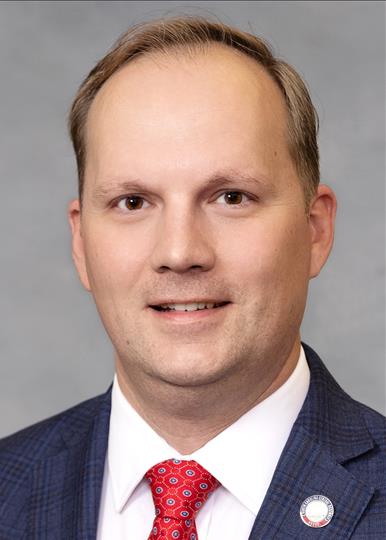
Photo of Allen Chesser
R North Carolina House · District 25 On the 2026 ballot

Rep. Allen Chesser

Compare
Total votes
1,281
all sessions
Attendance
98%
27 missed
Near the chamber average
With party
99%
of cast votes
Higher than 87% of chamber peers
Bipartisan score
1%
crosses aisle rarely
Lower than 89% of chamber peers
Sponsored
164
bills & resolutions
Near the chamber average
Committees
11
assignments
164 bills and resolutions

Sponsored bills

Total
164
Primary
59
Co-sponsor
105
This page
164
matching current filters
Primary HB 1203
In committee · North Carolina House · Lead sponsor
Family Support for Those Who Serve Act.

Maddy summaryThis bill expands tuition waivers at North Carolina community colleges to children of public safety workers who are injured or disabled in the line of duty. It allows children aged 17 to 24 of law enforcement officers, experienced correctional officers, and firefighters to attend classes for free if their parent is permanently and totally disabled due to a traumatic work-related injury. The waiver covers the cost of tuition for the time needed to complete the student's chosen educational program, provided they meet standard admission requirements. The law takes effect with the 2026-2027 academic year.

In committee Jun 10, 2026 0 co-sponsors
Primary HB 1199
In committee · North Carolina House · Lead sponsor
The Seatbelt Act.

Maddy summaryThis bill, known as the SEATBELT Act, requires drivers in North Carolina who have had their licenses revoked or limited due to serious speeding offenses to install an approved Intelligent Speed Assistance system in their vehicles as a condition for regaining driving privileges. The system automatically regulates a vehicle's speed to match posted limits, and drivers must keep it installed and functioning for one year after their license is restored. To comply, individuals must designate specific vehicles for use and provide proof of the system's installation before their license can be issued again. The legislation also establishes strict rules preventing the sale or misuse of data collected by these systems and makes it a crime to tamper with the technology. Additionally, the bill mandates that the costs for installing and monitoring these systems be paid by the driver, though a waiver process is available for those who cannot afford them.

In committee Jun 9, 2026 0 co-sponsors
Co-sponsor HB 1019
Passed · North Carolina House · Co-sponsor
Mike Clampitt 1st Responder Tax Fairness Act.

Maddy summaryThis bill, known as the Mike Clampitt 1st Responder Tax Fairness Act, aims to expand tax exemptions for volunteer fire departments and rescue squads in North Carolina. Specifically, it allows these independent groups, which have two or fewer paid employees and are already exempt from state income tax, to avoid paying a highway use tax on specific emergency vehicles like fire trucks, forest firefighting units, and other emergency service vehicles. The change applies to vehicles when a certificate of title is issued on or after July 1, 2026, ensuring these organizations can acquire necessary equipment without incurring this particular tax. By broadening the existing exemption, the legislation directly benefits volunteer responders who operate outside of local government units.

Passed May 18, 2026 1 co-sponsor
Co-sponsor HB 1086
In committee · North Carolina House · Co-sponsor
Child Care Initiative Funds/Reform/Study.

Maddy summaryThis bill creates a pilot program to train new individuals with no prior experience as lead teachers in North Carolina's licensed child care centers. Funded by state money and requiring a local match, the program offers free, intensive training courses through community colleges in selected counties, with graduates receiving a state credential and potential stipends for completing the course and working for a year. The initiative aims to expand the child care workforce by establishing academies across the state, starting in Johnston and Wayne counties, and includes requirements for local partnerships to select additional sites. Additionally, the bill directs the North Carolina Partnership for Children to study the feasibility of liability insurance for providers and update bidding rules for child care grants.

In committee May 12, 2026 1 co-sponsor
Primary HB 1074
In committee · North Carolina House · Lead sponsor
Prescription Drug Expenses Tax Deduction.

Maddy summaryThis North Carolina bill allows taxpayers to deduct up to $5,000 of unreimbursed costs for prescribed medications and pharmacy fees from their state income tax. The deduction applies to expenses not covered by tax-advantaged accounts like Flexible Spending or Health Savings Accounts and prevents double-dipping if a federal deduction is already claimed for the same year. Effective for tax years starting on or after January 1, 2026, the measure directly affects individuals paying out-of-pocket for prescription drugs who itemize their state taxes.

In committee May 12, 2026 0 co-sponsors
Primary HB 1191
In committee · North Carolina House · Lead sponsor
Fostering Care in NC Act 2026.

Maddy summaryHB 1191, titled the Fostering Care in NC Act 2026, introduces several changes to how North Carolina handles cases involving juveniles and child welfare. The bill increases privacy protections by sealing court records in abuse and neglect cases and clarifying who can access them. It also updates procedures for expunging names from the responsible individuals list and requires courts to schedule permanency planning hearings within 30 days. Additionally, the act mandates that siblings be placed together whenever possible and ensures counties communicate before transferring cases to improve coordination on care and financial support.

In committee May 5, 2026 0 co-sponsors
Primary HB 1186
In committee · North Carolina House · Lead sponsor
Equipping Law Enforcement for Better Drug Detection.

Maddy summaryHB 1186 directs the North Carolina Collaboratory to create a pilot program that provides participating law enforcement agencies with new, more accurate drug-detecting technology to replace traditional color-based field tests. The bill requires these new devices to be portable, avoid relying on visual color changes for identification, and generate digital records for auditing and tracking emerging substances. Additionally, the program must conduct a comprehensive study to measure the technology's impact on case outcomes, officer safety, and the accuracy of drug testing across different communities.

In committee May 5, 2026 0 co-sponsors
Primary HB 1144
In committee · North Carolina House · Lead sponsor
Dominique Moody Safety Act.

Maddy summaryThis bill establishes a Child Welfare Case Escalation Team to provide an extra layer of safety review for juveniles with complex histories of abuse or neglect. The team, composed of state and local representatives, will be activated when cases meet specific risk criteria, such as multiple prior reports, patterns of medical neglect, or a history involving child fatalities. Once triggered, the team will conduct a thorough assessment of the case, identify gaps in services, and collaborate with county social services to develop improved safety plans. This new mechanism aims to ensure consistent quality assurance and better protect vulnerable children by addressing chronic issues that may have been missed in previous interventions.

In committee May 4, 2026 0 co-sponsors
Primary HB 1149
In committee · North Carolina House · Lead sponsor
Keep NC Working Act.

Maddy summaryThis bill, titled the Keep NC Working Act, creates a new Short-Time Compensation Program in North Carolina to help employers avoid layoffs by reducing employee work hours instead. Starting in October 2026, eligible employers can submit a plan to the state Division of Unemployment Insurance to reduce employee hours by between 10% and 60% for up to one year. In exchange for these reduced hours, employees will receive additional unemployment benefits, while employers must ensure that health and retirement benefits continue as if the workers were still working full time. The program requires employers to maintain a clean record with the state regarding unemployment taxes and must have the agreement of any collective bargaining units involved.

In committee May 4, 2026 0 co-sponsors
Co-sponsor HB 1081
In committee · North Carolina House · Co-sponsor
Veterans/Hyperbaric Oxygen Therapy/Funds.

Maddy summaryThis bill establishes a program to provide free hyperbaric oxygen therapy to North Carolina veterans diagnosed with traumatic brain injury or posttraumatic stress disorder. The legislation appropriates $3 million from the state General Fund to a nonprofit organization to deliver approximately 15,000 treatments to an estimated 350 eligible veterans over the 2026-2027 fiscal year. The program includes structured clinical care and requires the provider to submit a detailed report on outcomes and fund usage by June 2027.

In committee Apr 30, 2026 1 co-sponsor
Showing 11 to 20 of 164 bills