

Maddy summaryThis bill creates a new loan program in North Carolina to help nonprofit organizations prepare land for affordable housing by offering below-market interest rate loans. The funds, totaling $50 million for the 2026-2027 fiscal year, can only be used for site-related expenses like land acquisition, utility installation, and environmental testing, but not for building the actual homes. To qualify, borrowers must be experienced nonprofits that provide zero-interest mortgages to buyers and ensure at least 40% of units in mixed-income projects are reserved for low- and moderate-income families. The program is designed to support the development of housing for households earning up to 80% of the local area median income.
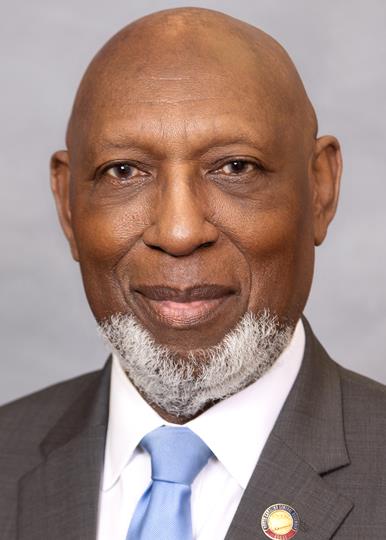
Rep. Shelly Willingham
Sponsored bills
Maddy summaryThis bill creates a new program in North Carolina that requires individuals convicted of domestic violence to register on a public list if they have at least one prior domestic violence conviction. The State Bureau of Investigation will maintain this registry, which will include the offender's name, date of birth, conviction details, and a photograph, while keeping addresses and social security numbers private. Registration periods last two years for one prior offense, five years for two prior offenses, and ten years for three or more prior offenses, with fees of $150 paid by the offender to cover registry costs. The law takes effect on December 1, 2026, and applies to offenses committed on or after that date, though prior convictions do not need to have occurred by then.
Maddy summaryHB 434, titled "Lower Healthcare Costs," is a procedural bill focused on updating definitions related to health insurance utilization review in North Carolina. It rewrites statutory definitions (e.g., "medical necessity," "clinical peer," "closely related service") within existing insurance regulations but does not introduce new cost-saving mechanisms or policy changes. The bill directly affects insurers, healthcare providers, and covered individuals by standardizing terminology used in prior authorization processes. As a definition-only update, it has no concrete policy impact on healthcare costs or patient access, and the title does not align with its actual scope.
Maddy summaryHB 358 allocates $65.5 million from North Carolina's State Emergency Response Fund to support recovery from Tropical Storm Chantal, primarily benefiting Alamance, Caswell, Chatham, Durham, Granville, Moore, Orange, Person, and Wake counties. The funds cover state matching for federal disaster aid ($55 million), direct assistance to individuals ($6 million), a public dashboard tracking spending ($2 million), and repairs to Warren Wilson College and UNC Asheville ($2.5 million) following Hurricane Helene. It requires quarterly reports on fund usage and mandates unspent funds to revert to the Savings Reserve by June 30, 2031. The bill focuses on concrete disaster recovery funding without changing existing policies or creating new programs.
Maddy summaryHB 775 requires background checks for three groups: initial members of charter school boards, new educator license applicants, and public school employees applying for positions. It mandates that applicants pay for criminal history checks through the State Bureau of Investigation before receiving approval for charter school board membership, educator licensure, or school employment. The State Board of Education and charter school Review Board review the results to determine if individuals pose safety risks or lack integrity, with decisions requiring written findings. This bill consolidates existing background check requirements into a single process for these school-related positions, applying only to new applicants and initial board members.
Maddy summaryHB 118 modifies North Carolina's property tax exemption for disabled veterans, replacing a flat $45,000 exclusion with a percentage-based system tied to the veteran's VA disability rating. It directly affects veterans with a 50% or higher service-connected disability rating (or surviving spouses under specific conditions), allowing them to exclude a portion of their home's appraised value from property taxes - equal to their disability percentage. For example, a veteran with a 70% disability rating would exclude 70% of their home's value from taxes. The bill takes effect for taxes due in 2025 and prohibits combining this relief with other property tax exemptions.
Maddy summaryThe bill title "Defund Planned Parenthood and Cost Transparency" does not match the actual content of HB 192, which is focused on education funding. This bill raises teacher salaries for the 2025-2026 school year using a new salary schedule (e.g., $5,000 for 0 years experience, $6,823 for 25+ years) and reinstates education-based supplements for advanced degrees ($126-$253 monthly). It appropriates $1.597 billion for salary increases and $8 million for supplements, while directing the North Carolina Collaboratory to study a student-based funding system by February 2026. The bill directly affects public school teachers, instructional support staff, and school psychologists. The title appears to be incorrect based on the provided bill text.
Maddy summaryHB 546 modernizes North Carolina's Medicaid program by requiring the state to develop team-based care coordination for individuals with alcohol and opioid use disorders, including screening, medication, and recovery support. The bill also allows telehealth-only providers to enroll in Medicaid without needing a physical office in the state and mandates a statewide specialty plan for children in foster care or receiving adoption assistance, to be implemented by December 2025. These changes directly affect Medicaid beneficiaries with substance use disorders, telehealth providers, and eligible children and families. The Department of Health and Human Services must report on the implementation of the substance use care and telehealth provisions by October 1, 2025.
Maddy summaryHB 763, the Neighbor State License Recognition Act, allows professionals licensed in Georgia, South Carolina, Tennessee, Virginia, or West Virginia to obtain a North Carolina license more easily if they move to the state. It applies to most licensed occupations (excluding healthcare, law, architecture, engineering, and others listed in the bill) and requires applicants to have held a current license in one of those states for at least one year, be in good standing, and meet competency standards through their home state's requirements. The bill streamlines the process by eliminating redundant exams or paperwork for qualifying applicants, while requiring licensing boards to publish clear eligibility criteria online. The bill is currently pending in committee and has not yet become law.
Maddy summaryHB 768 clarifies exemptions from in-building emergency responder communication system requirements in North Carolina's fire code. It exempts specific small buildings: R-2 apartment buildings of Type V construction meeting egress rules, and hotels/motels under two stories with direct exterior egress from each unit. The bill also provides rules for disconnecting existing communication systems in these exempt buildings and requires the Building Code Council to adopt formal rules incorporating these changes. These provisions directly affect property owners and developers of qualifying residential buildings by reducing compliance requirements.