

Maddy summaryHB 617 creates a $20 million grant program for North Carolina small farmers with gross income under $300,000, funding equipment (like harvest machinery), infrastructure (such as fencing), and cold storage. It also lowers the income threshold for farm sales tax exemption from $10,000 to $7,500 annually, expanding eligibility for tax relief. The bill directly affects small farmers meeting these income criteria by providing financial support through grants and reduced tax burdens. Grants require applications and prioritize those facing economic hardship, with funding allocated for specific purposes like equipment and the FarmsSHARE program.
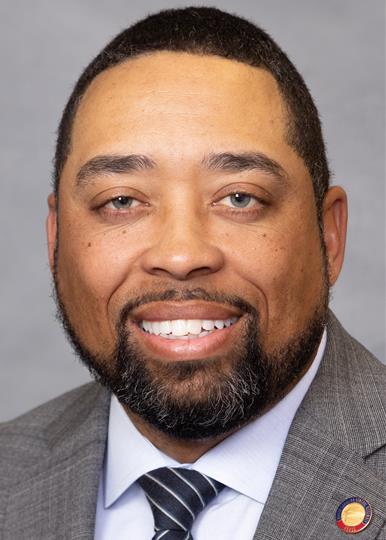
Rep. Ray Jeffers
Sponsored bills
Maddy summaryHB 571 appropriates $500,000 from the state General Fund to the Department of Public Safety for a grant program treating police officers diagnosed with PTSD. It directly affects North Carolina police officers who have received a clinical PTSD diagnosis. The key provision establishes a state-funded grant program to cover treatment costs, with funds allocated for the 2025-2026 fiscal year. The program becomes effective July 1, 2025, and focuses solely on providing financial support for treatment, not on expanding eligibility or altering diagnosis standards.
Maddy summaryHB 564 provides a 2% cost-of-living adjustment for retirees in North Carolina's Teachers' and State Employees' Retirement System, Consolidated Judicial Retirement System, and Legislative Retirement System. It increases retirement payments for retirees who retired on or before specific dates (July 1, 2024, for most systems, or January 1, 2025, for the Legislative system) and offers a prorated increase for those retiring between July 1, 2024, and June 30, 2025. The bill appropriates $106.2 million from the General Fund to fund this adjustment, effective July 1, 2025. This policy change directly affects current retirees in these systems by increasing their monthly benefits.
Maddy summaryHB 521 would require most North Carolina employers to provide earned paid sick leave to workers. It mandates that employees accrue one hour of paid sick time for every 30 hours worked, with limits of 32 hours per year for small businesses (10 or fewer employees) and 56 hours for larger employers. The leave covers the employee's own health needs, care for immediate family members, or situations related to domestic violence, sexual assault, or stalking. Exemptions include volunteers, certain exempt employees under wage laws, and domestic workers employed in a private residence. The bill directly affects over 1.6 million private-sector workers in North Carolina, particularly low-wage and high-contact industry workers who currently lack access to paid sick days.
Maddy summaryHB 522 prohibits crisis pregnancy centers (CPCs) in North Carolina from falsely advertising that they provide abortion or emergency contraceptive services when they do not. It defines this as a deceptive practice, requiring CPCs to clearly disclose staff qualifications and service offerings (like abortion care) on-site or via corrective advertising. The bill establishes a complaint process for the Attorney General to enforce violations, with civil penalties up to $5,000 per violation, and mandates a state health department evaluation of CPCs’ impact on reproductive healthcare access by 2026. This directly affects CPCs operating in the state, particularly those receiving public funds and targeting marginalized communities.
Maddy summaryHB 525 reorganizes North Carolina's Advisory Council on Rare Diseases by moving it from the University of North Carolina at Chapel Hill School of Medicine to the Department of Health and Human Services (DHHS) and appropriates funds to cover its operating costs. The council, composed of 19 diverse members including patients, caregivers, medical professionals, researchers, and industry representatives, directly serves the rare disease community by advising state leaders on research, treatment, and policy. Key provisions include requiring the council to coordinate statewide efforts on rare disease awareness, incidence tracking, and policy initiatives, and to submit annual reports to the Governor, DHHS, and legislative committees. This bill formalizes DHHS oversight of the council and ensures dedicated funding for its operations, streamlining coordination with state health programs.
Maddy summaryHB 523 allows certified school social workers in North Carolina public schools to qualify for education-based salary supplements if they hold a master's degree (or higher), regardless of whether a master's degree is required for their state license. This directly affects school social workers who meet the degree requirement but previously might have been ineligible due to licensure rules. The bill amends state law to include them in the eligibility group for these supplements, which were previously limited to certain roles like school nurses or personnel where a master's degree was licensure-required. The law appropriates $500,000 for the 2025-2026 school year to fund this change and takes effect July 1, 2025.
Maddy summaryHB 542 appropriates $7.5 million annually from the ARPA Temporary Savings Fund for the 2025-2027 fiscal biennium to expand mental and behavioral health services for children, families, and staff in North Carolina child care facilities and out-of-school programs. The funds, managed by the North Carolina Partnership for Children (NCPC), must supplement existing services and cannot replace current funding, with unused funds remaining available until fully spent. NCPC must distribute the funds to local partnerships and submit annual progress reports detailing services provided, participants served, and recommendations for future initiatives. The bill also establishes a special fund to hold unexpended funds, allowing NCPC to retain up to $5 million in cash annually for future use.
Maddy summaryHB 531 appropriates $4 million annually to expand North Carolina's New Teacher Support Program, directly benefiting new teachers with alternative licenses (such as residency or emergency permits) and their local school districts. The bill provides three key supports: assigned regional instructional coaches, professional development aligned with teachers' needs, and a beginning teacher summit. It prioritizes schools in designated high-need counties to address a 15% first-year attrition rate among new teachers. This funding eliminates cost barriers for schools and teachers, making program participation free and increasing access to evidence-based support.
Maddy summaryHB 514 defines the scope of practice for Advanced Practice Registered Nurses (APRNs) in North Carolina, including nurse practitioners (NPs), certified nurse midwives (CNMs), certified registered nurse anesthetists (CRNAs), and clinical nurse specialists (CNSs). The bill explicitly outlines the specific responsibilities for each role - such as CNMs managing reproductive health care, NPs diagnosing and treating illnesses, and CRNAs administering anesthesia - removing ambiguity in current law. It directly affects over 20,000 APRNs in North Carolina who currently face restrictions due to undefined practice parameters. The legislation aims to align North Carolina with 36 other states that have clarified APRN authority without compromising patient safety, as supported by research cited in the bill. This statutory definition is intended to improve healthcare access and reduce costs by enabling APRNs to practice to the full extent of their training.