

Maddy summaryHB 683 expands North Carolina's property tax exclusion for disabled veterans by removing the $45,000 cap and excluding the **entire appraised value** of a qualifying veteran's primary residence from property taxes. It directly affects **disabled veterans** (with VA-certified service-connected disabilities) and their **unremarried surviving spouses**, who previously could only exclude the first $45,000 of their home's value. The bill requires the state to **reimburse local governments** for lost tax revenue through a "hold harmless amount" calculated by multiplying the excluded value by the local tax rate, with counties reporting this by September 1 and receiving funds by December 31 annually. This change takes effect for taxes due in 2026 and ensures no net revenue loss for local governments.
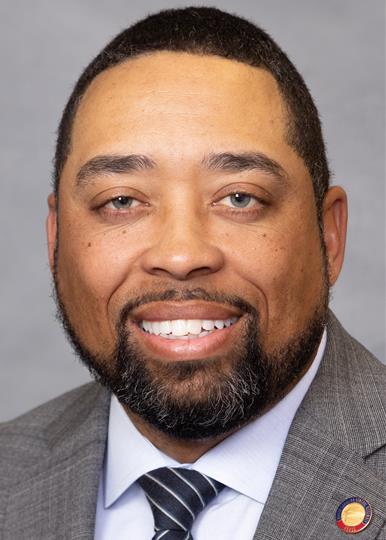
Rep. Ray Jeffers
Sponsored bills
Maddy summaryHB 685, the Rural NC Reinvestment Act, allocates $605 million in nonrecurring state funds for rural North Carolina communities during the 2025-2026 fiscal year. It provides grants for water/sewer infrastructure ($200M), law enforcement/fire equipment ($10M), economic development land ($20M), rural school construction ($200M), broadband expansion ($50M), early childhood education ($100M), and physician placement ($5M). Local governments, schools, emergency services, and healthcare providers in rural areas directly receive these funds, with allocations prioritized based on need, efficiency, and community impact. The bill becomes effective July 1, 2025, focusing on tangible infrastructure and service improvements without creating new regulations.
Maddy summaryHB 752 establishes two new funds to support transportation infrastructure: a $50 million Rail Fund for railroad upgrades, connections, and equipment, and an Airport Fund for airport capital improvements and flight incentives. The Rail Fund prioritizes projects that boost economic growth, with 60% of annual allocations reserved for matching federal grants and 30% for planning. The Airport Fund limits 80% of funds to capital projects (like runway upgrades), 17% to attract strategic flights, and up to 20% to safety improvements. Both funds require competitive allocation based on projected job creation and economic impact, with annual reports to lawmakers. This bill directly affects rail operators, airports, and industries relying on transportation networks across North Carolina.
Maddy summaryHB 639 requires all University of North Carolina (UNC) educator preparation programs to give first priority in admissions to applicants who qualify as North Carolina residents for tuition purposes under state law. This directly affects UNC schools offering teacher training programs and prospective in-state students applying to those programs starting in the 2025-2026 academic year. The bill mandates that programs follow the state's standardized residency determination process to verify applicant status. It does not change tuition rates but alters admission priority based solely on residency eligibility.
Maddy summaryHB 628 reenacts North Carolina's state-level child tax credit, which expired, to provide financial support to families with children. It directly affects low- and middle-income North Carolina residents who qualify under federal child tax credit rules, offering up to $250 per child annually based on household income. Key provisions include income-based credit amounts (e.g., $250 for married couples filing jointly with under $40,000 income) that phase out at higher earnings, and the credit is refundable - meaning families may receive cash payments even if they owe no state tax. The bill takes effect for 2025 tax years and mirrors the federal credit structure without creating new policy.
Maddy summaryHB 300 establishes a program to reimburse owners of retired first responder dogs for veterinary care. It directly affects owners of canines that served with law enforcement, fire departments, or correctional agencies in roles like narcotics detection or search and rescue, after retiring on or after July 1, 2024. The bill requires registration of the dog and owner with the Department of Public Safety, then allows reimbursement of up to $1,500 annually for covered care - including routine check-ups, vaccinations, emergencies, surgeries, and euthanasia. Owners must submit itemized vet bills within 90 days of service.
Maddy summaryHB 599 provides a 7.5% across-the-board salary increase for all North Carolina Forest Service (NCFS) employees, directly affecting approximately 500+ state workers. The bill appropriates $2.6 million for the 2025-2026 fiscal year (effective July 1, 2025) and an additional $5.2 million for 2026-2027 (effective July 1, 2026) from the state general fund. These increases are funded through recurring annual appropriations, meaning the funding is guaranteed each year. The bill requires no new policy changes but allocates specific state budget resources to adjust employee compensation.
Maddy summaryHB 619, the Health Care Security Act, repeals a law that would have ended Medicaid expansion coverage in North Carolina if federal funding dropped below 90%. This change directly affects the state's Medicaid expansion population, ensuring their coverage remains secure regardless of federal funding fluctuations. The bill removes a specific statutory trigger (G.S. 108A-54.3C) that previously threatened automatic discontinuation of benefits. It does not create new programs or alter eligibility but prevents coverage loss due to federal funding changes. The act becomes effective upon enactment.
Maddy summaryHB 601 appropriates $10 million annually from North Carolina's General Fund (2025-2027) to fund grants for Disabled American Veterans (DAV) chapters. The bill provides up to $1 million per chapter per year to renovate or expand facilities and offer additional resources directly to disabled veterans served by these nonprofit chapters. Grants must be distributed statewide, with unspent funds rolling over annually instead of returning to the state treasury. The Department of Military and Veterans Affairs must report annually on grant recipients, amounts, and county distribution starting in 2026.
Maddy summaryHB 604 creates two grant programs to support economic development: the Rural Community Development Grant Program and the Downtown Revitalization Grant Program. Both programs allocate $40 million each from the state budget for 2025-2026, providing grants to local governments (counties and municipalities) to fund projects that improve community amenities like grocery stores, childcare, parks, or downtown infrastructure. Grants require a 1:1 local match, max $2 million per award, and must align with comprehensive plans for revitalization or community growth. The programs aim to reverse rural depopulation, attract business investment, and enhance downtown livability through targeted, competitive funding.