

Maddy summaryHB 264, the Wire Fraud Prevention Act, requires banks to verify payment orders through specific security procedures (like verbal checks with customers and beneficiaries) before processing transfers. It mandates that banks refund full amounts for unauthorized payments within 90 days of notification, or 25% within 30 days for certain cases, while customers must report issues promptly to avoid losing interest. The law also obligates beneficiary banks to pay recipients within specific timeframes (including delaying full payment for new accounts over $100,000) and notify recipients of payment receipts by midnight the next business day. This directly affects banks handling wire transfers and their customers, with changes taking effect October 1, 2025.
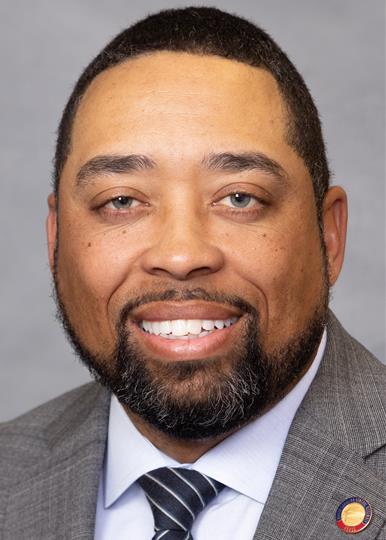
Rep. Ray Jeffers
Sponsored bills
Maddy summaryHB 807 raises teacher salaries for the 2025-2026 school year with new pay scales based on experience and adds supplements for certified teachers, school nurses, counselors, and specialists. It allocates $89.4 million annually and $109.2 million as a one-time fund to provide weighted, per-child funding for children with disabilities based on the cost of services provided. The bill also mandates free breakfast and lunch for all public school students, funded through state appropriations tied to school food authority evaluations, and includes funding for a one-to-one device refresh in public schools.
Maddy summaryHB 783 appropriates $100,000 from North Carolina's General Fund for Sidekicks Academy, Inc. to support its Durham Public Schools program. The funds will cover $90,000 for student training gear, safety equipment, tournaments, and staff salaries, plus $10,000 for field trips to Taekwondo tournaments, museums, and college events. The program directly serves marginalized students by combining martial arts training, character development, and community support to create a safe learning environment. This is a funding measure with no policy changes, solely providing financial support to an existing community program.
Maddy summaryHB 786, the "Working Families Act," reduces child care costs for low-income families by lowering parent copayments from 10% to 7% of income (effective 2025), reinstates a refundable state child tax credit with income-based payments (effective 2025), and phases up North Carolina’s minimum wage to $15/hour by 2030 with annual inflation adjustments. It also increases income limits for property tax relief, creates a homebuyers’ assistance program for public servants (like firefighters and EMTs) as first-time buyers, and establishes a paid family leave insurance program funded through an employer grant program. The bill directly affects working families, hourly workers, public-sector employees, and households using subsidized child care or property tax relief. Key mechanisms include phased wage increases, income-tiered tax credits, and targeted housing support, all designed to reduce financial strain on low-to-moderate-income households.
Maddy summaryHB 774 ("School Breakfast for All") mandates that all North Carolina public schools (pre-K through 12) provide free breakfast to every student, eliminating costs for families. It establishes a Farm-to-Table Initiative requiring schools to partner with local farmers for fresh, locally sourced ingredients in breakfast meals. The bill allocates $39 million in recurring state funds for the 2025-2026 fiscal year to cover program costs, while requiring annual reports on participation rates, costs, and impacts on student health and academic performance. This directly affects all public school students, school districts, and North Carolina agricultural producers.
Maddy summaryHB 753 allows eligible North Carolina law enforcement officers aged 59.5 or older to continue receiving retirement benefits while remaining actively employed. Retired officers who separated from service for at least six months may return to duty and retain their retirement benefits. The bill requires employers to cover both employee and employer retirement contributions during this period and clarifies that beneficiaries remain eligible for death benefits under specific conditions. It directly affects current and retired state/local law enforcement officers meeting age and service criteria.
Maddy summaryHB 731 appropriates $150,000 in one-time state funds for the Pauli Murray Center for History and Social Justice in Durham. The bill directs this grant specifically to develop the "Pauli Murray Center Green," which will improve physical access to the center and install drainage systems to manage stormwater. This funding, effective July 1, 2025, supports the center's infrastructure without altering broader policies or affecting residents or businesses directly.
Maddy summaryHB 688 creates a dedicated annual appropriation of $100,000 from the state General Fund to the Parks and Recreation Trust Fund specifically for inclusive playground projects. It directly affects local governments, public schools, and public authorities (as defined in state law) seeking to build or adapt playgrounds to meet the needs of people with disabilities. The bill provides grants of up to $5,000 per project, requiring recipients to match each $5 in state funds with $1 in local funds. This funding operates separately from other Trust Fund allocations, ensuring dedicated resources for accessibility improvements without reducing existing funding for state parks or coastal access. The bill becomes effective July 1, 2025.
Maddy summaryHB 713 mandates that all North Carolina public schools provide free breakfast and lunch to every student, eliminating meal fees for all. This affects every student enrolled in public schools, including those in charter schools and regional school units, starting with the 2025-2026 school year. The bill appropriates $144 million from the state General Fund to cover costs, with funds allocated based on school size, student eligibility for free/reduced meals, and nutritional quality standards. Schools must comply with federal nutrition guidelines while using state funds to supplement, not replace, existing meal program funding.
Maddy summaryHB 715 appropriates $13.3 million annually from the General Fund to expand access to North Carolina's Prekindergarten (NC Pre-K) program for eligible children. The funding, allocated to the state's child development agency, will create additional program slots for children seeking enrollment starting July 1, 2025. This bill directly affects low-income 4-year-olds who qualify for the NC Pre-K program by increasing available spots through dedicated state funding. The legislation focuses solely on providing financial resources for program expansion, with no changes to eligibility criteria or program structure.