

Maddy summaryHB 569 requires PFAS manufacturers (those who produce PFAS compounds like GenX) to pay public water systems for cleaning up PFAS contamination in drinking water when levels exceed EPA safety limits. It allows the Environmental Quality Secretary to order polluters to cover actual cleanup costs, including technology to reduce PFAS levels, and applies retroactively to expenses since 2017. The bill appropriates $300,000 for implementation and mandates annual reports on fund use, with water systems refunding ratepayers when manufacturers cover costs. This directly affects water systems burdened by PFAS cleanup, PFAS manufacturers deemed responsible, and ratepayers who may see reduced future water rates.
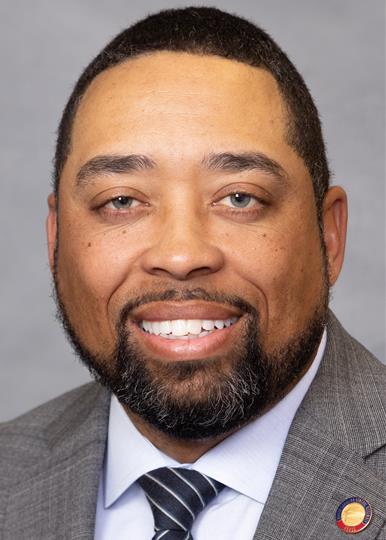
Rep. Ray Jeffers
Sponsored bills
Maddy summaryHB 572 authorizes the Department of Military and Veterans Affairs to establish a statewide pilot program providing Electroencephalogram combined Transcranial Magnetic Stimulation (eTMS) treatment. This program is for veterans, first responders, and their immediate family members experiencing conditions such as substance use disorders, mental illness, sleep disorders, traumatic brain injuries, and PTSD. The Department will select a provider to create a network for in-person and off-site care, aiming for statewide access. Participants in the program will also receive neurophysiological monitoring, counseling, wellness programming, and access to a peer-to-peer support network. The selected provider must collect and report treatment outcomes and expenditures to the Department and legislative committees by September 15, 2026.
Maddy summaryHB 121 provides local boards of education with additional flexibility in adopting their school calendars. It removes the current state-mandated earliest opening date for students (the Monday closest to August 26) and the latest closing date (the Friday closest to June 11). This change allows local boards to determine the specific opening and closing dates for public schools under their authority. The bill directly affects public schools and students in North Carolina and would apply starting with the 2025-2026 school year.
Maddy summaryHouse Bill 520 aims to protect North Carolina citizens and businesses from deceptive telemarketing practices, particularly those involving misleading caller ID. The bill establishes that a telephone number is the property of the subscriber and prohibits telephone solicitors from misrepresenting the origin of a call or transmitting misleading caller identification information. It also prevents telephone carriers from knowingly providing subscriber numbers to entities that will violate these provisions. Individuals who receive calls in violation of the misleading caller ID rules can sue for civil damages, including an additional $10,000 fine for each knowing violation. Knowing violations of the caller ID provision are also classified as a Class H felony.
Maddy summaryHB 552 establishes the Agricultural Manufacturing Investment Grant Account within North Carolina's One North Carolina Fund, allocating up to $5 million for new economic development incentives. This account provides competitive grants to eligible agricultural manufacturers in the state. The Department of Commerce will administer these grants, prioritizing projects in less developed areas, those using advanced agricultural technologies, or those with significant research and development. To qualify, recipients must commit to investing at least $5 million of private funds, employ a minimum of 25 full-time employees, and meet specific wage requirements. Grants are capped at $100,000 annually per recipient for up to five years.
Maddy summaryHouse Bill 283 establishes the Small Business Investment Grant (SBIG) Program within the One North Carolina Fund, designed to provide financial assistance to eligible small businesses looking to establish or expand facilities in the state. The bill allocates up to $10 million from the Fund to this new account. Through the SBIG Program, competitive grants are offered to businesses meeting specific criteria, such as having 250 or fewer employees or less than $5 million in annual revenue, investing $10-$30 million, and creating new jobs with competitive wages. Grants are capped at $500,000 annually per recipient, up to $2.5 million total, over a maximum of five years. Additionally, the bill renames the "One North Carolina Small Business Account" to the "Small Business Research and Technology Account," which continues to support federal SBIR/STTR grant incentive and matching programs.
Maddy summaryHB 94 allows disabled veterans and their unremarried surviving spouses to prequalify for the disabled veteran property tax homestead exclusion. This means individuals can apply to determine their eligibility for the tax benefit before they purchase a permanent residence. Applicants submit a prequalification form with their disability certification, and the county assessor must notify them of their eligibility within 30 days. The bill aims to help taxpayers and lenders account for this tax relief when making home purchase decisions. After prequalification, a separate application for the exclusion is still required once a permanent residence is acquired.
Maddy summaryHB 297, titled "Breast Cancer Prevention Imaging Parity," aims to ensure equal health insurance coverage for different types of breast cancer imaging. The bill mandates that health benefit plans apply the same cost-sharing requirements (like deductibles and copayments) for diagnostic and supplemental breast examinations, such as MRIs and ultrasounds, as they do for routine screening mammograms. This ensures individuals needing these additional medically necessary tests do not face higher out-of-pocket costs compared to standard screenings. It also maintains existing coverage for cervical cancer screenings and includes provisions for high-deductible health plans.
Maddy summaryHB 306 authorizes the Towns of Blowing Rock and Boone, Watauga County, and the Watauga County Board of Education to construct and provide affordable housing for their employees, including public school teachers. These local government units can build housing on their own property, partner with other entities, or contract with businesses for development. They are permitted to rent or sell these units exclusively to their employees, offering below-market rates, financing, and placing resale restrictions. All housing constructed under this act must comply with applicable building codes and zoning ordinances.
Maddy summaryHouse Bill 146 amends North Carolina's driver's license renewal process. It allows active duty members of the U.S. Armed Forces, or reserve components serving on active duty and stationed outside North Carolina, to renew their driver's licenses remotely multiple times in a row. Currently, a remote renewal requires the previous renewal to have been done in person, but this bill removes that restriction for eligible military personnel. This change aims to make it easier for these individuals to maintain their licenses while serving away from the state. The act becomes effective October 1, 2025, applying to licenses renewed on or after that date.